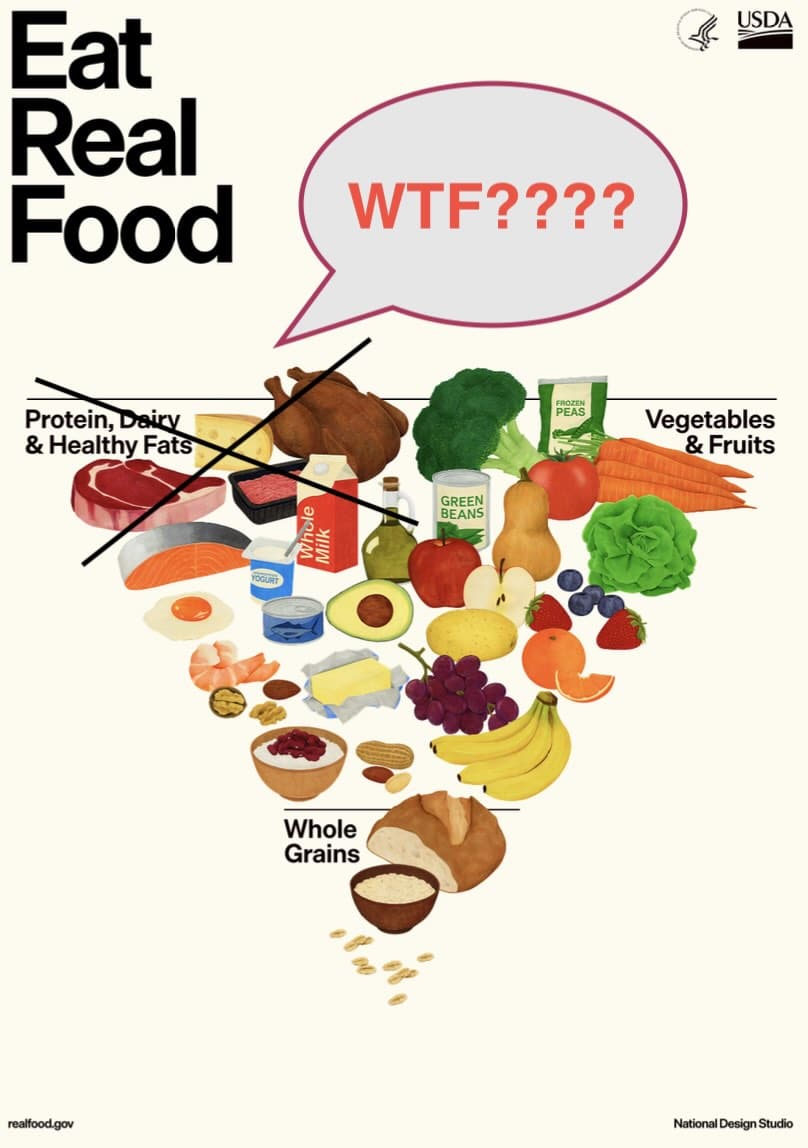
1. It Centers Foods That Drive the Leading Cause of Death
Heart disease remains the number one killer of Americans, claiming more lives each year than all cancers combined. The root cause of heart disease is atherosclerosis — plaque buildup in the arteries. That plaque is driven largely by elevated cholesterol levels. Dietary cholesterol comes exclusively from animal products such as meat, dairy, and eggs. Plants contain zero cholesterol. By encouraging higher consumption of red meat, cheese, butter, and whole milk, the new pyramid promotes the very foods known to accelerate arterial plaque formation and cardiovascular disease.
2. It Normalizes High Saturated Fat Intake
Although the guidelines claim to maintain limits on saturated fat, they simultaneously encourage foods that are among the highest sources of it: steak, butter, beef tallow, and full-fat dairy. Saturated fat is well established to raise LDL (“bad”) cholesterol, a primary risk factor for heart attacks and strokes. This contradiction creates confusion while effectively endorsing a dietary pattern that places millions at greater cardiovascular risk.
3. It Ignores the Power of Plant-Based Nutrition
Decades of research show that diets centered on whole plant foods — vegetables, fruits, legumes, whole grains, nuts, and seeds — are associated with lower rates of heart disease, type 2 diabetes, obesity, hypertension, and certain cancers. Major medical organizations have acknowledged that plant-forward diets improve longevity and reduce healthcare costs. Yet the new pyramid fails to meaningfully prioritize plant proteins, despite clear evidence that replacing animal protein with plant protein lowers mortality risk.
4. It Downplays Cancer Risks Linked to Meat
The World Health Organization classifies processed meat — including bacon, hot dogs, sausage, and deli meats — as a Group 1 carcinogen, the same category as tobacco and asbestos. Red meat is classified as a probable carcinogen. Americans already consume more meat than recommended by virtually every global health authority. Elevating meat in the food pyramid sends the opposite message of what cancer prevention science demands.
5. It Encourages Overconsumption of Protein Americans Don’t Need
Most Americans already exceed their basic protein requirements. The new guidelines recommend protein intakes up to 50–100 percent higher than previous standards, despite limited evidence that the general population benefits from such levels. Excess protein, particularly from animal sources, is associated with kidney strain, increased IGF-1 levels linked to cancer growth, and displacement of fiber-rich foods essential for gut health. Plant-based diets easily meet protein needs without these risks.
6. It Overlooks the Role of Diet in Cognitive Decline
Rates of dementia and Alzheimer’s disease are rising rapidly in the United States. Growing evidence links high intake of saturated fat and animal products to increased risk of cognitive decline, while plant-based diets rich in antioxidants and anti-inflammatory compounds are associated with better brain health. By emphasizing animal fats and minimizing plants, the new pyramid ignores a looming neurological health crisis.
7. It Is Shaped by Industry, Not Independent Science
Multiple experts involved in shaping the guidelines disclosed financial ties to the meat, dairy, or food industries. This raises serious concerns about conflicts of interest. When dietary policy aligns closely with corporate profit rather than public health outcomes, the result is guidance that protects industries — not people. An ethical perspective demands transparency and evidence free from commercial influence.
8. It Undermines Public Health Institutions and Consistency
For decades, Americans were advised to limit red meat and saturated fat to reduce chronic disease risk. Abruptly reversing that guidance erodes public trust in nutrition science and creates confusion. Nutrition policy should evolve with evidence, not swing dramatically due to political ideology or personal beliefs of officials.
9. It Exacerbates Environmental and Climate Harm
Animal agriculture is a leading contributor to greenhouse gas emissions, deforestation, water pollution, and biodiversity loss. Promoting increased meat and dairy consumption worsens climate instability and environmental degradation. A vegan or plant-based food pyramid aligns far better with climate science and long-term food security, especially as extreme weather increasingly threatens global agriculture.
10. It Ignores Ethics and Compassion Entirely
Beyond health and environment, food choices have moral consequences. Industrial animal agriculture inflicts immense suffering on billions of sentient beings annually. A truly progressive food pyramid would at least acknowledge plant-based eating as a compassionate, viable, and health-promoting option. By centering animal products, the new pyramid reinforces a system built on cruelty while sidelining ethical alternatives.
Conclusion
The new food pyramid is not a bold leap forward — it is a regression that risks worsening chronic disease, increasing healthcare costs, accelerating climate damage, and perpetuating unnecessary suffering. From a plant-based perspective rooted in science and compassion, the evidence is clear: the future of health lies in plants, not plates piled high with meat and dairy.
CLICK HERE TO WATCH HOW NOT TO DIE