
Cambridge Makes Climate History: First Massachusetts City to Call for a Global Plant Based Treaty
Share This
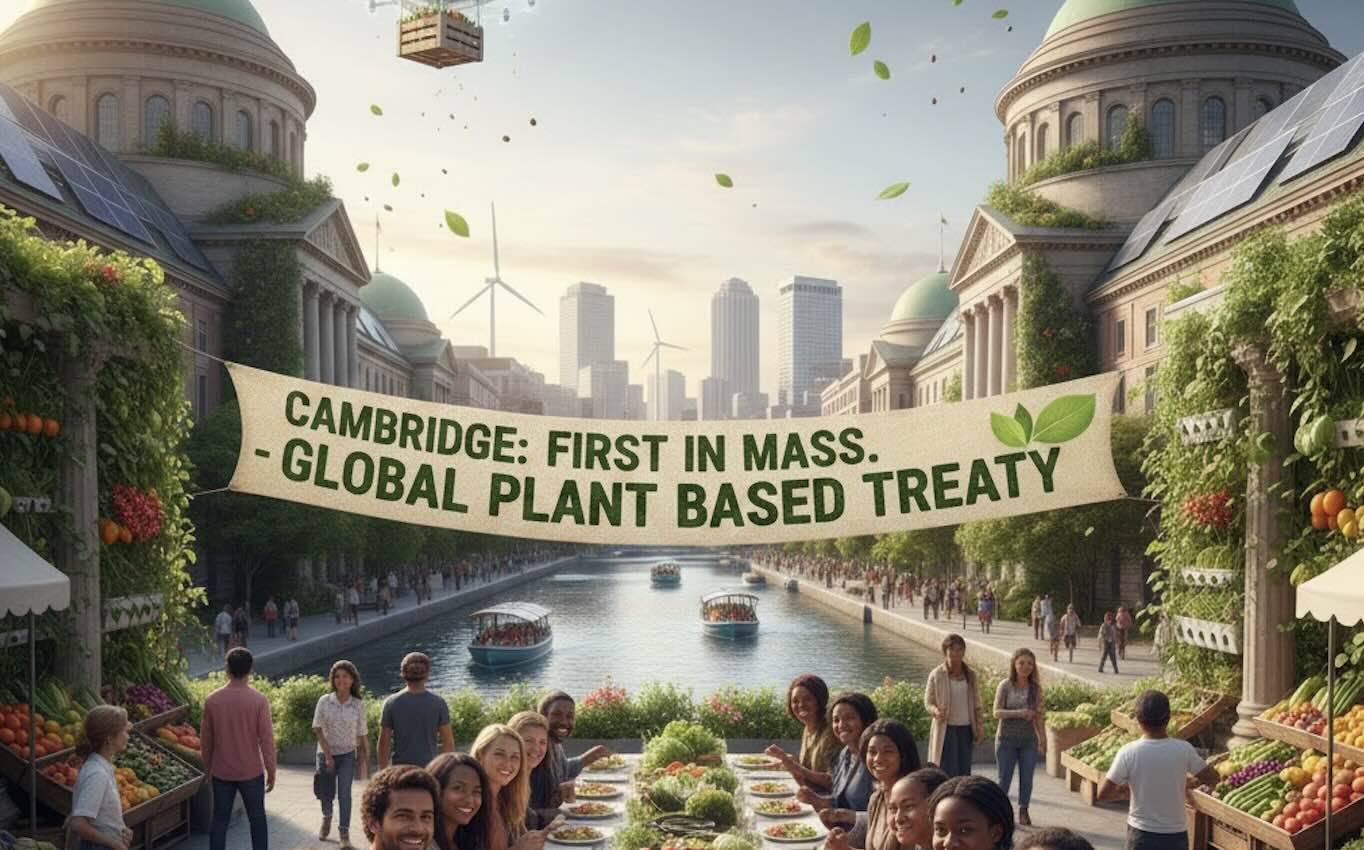
By taking a bold, hopeful step for climate action, public health, and food justice, Cambridge has officially become the first city in Massachusetts to endorse the global Plant Based Treaty—joining a growing international movement that’s reshaping how cities think about food.
Hollywood, California, January 27th, 2026 – The City of Cambridge’s City Council just unanimously passed a policy order endorsing the Plant Based Treaty, making Cambridge the 66th city worldwide and the sixth city in the United States to support the initiative. The decision places Cambridge alongside cities like Los Angeles, West Hollywood, Culver City, Hoboken, and Boynton Beach—and firmly positions the city as a leader in climate-forward, people-centered food policy.
But this milestone isn’t just about a vote. It’s about momentum, community power, and a shared belief that what we eat matters—to our planet, our health, and each other.
What Is the Plant Based Treaty—and Why Does It Matter?
Launched in August 2021, the Plant Based Treaty is modeled after the Fossil Fuel Non-Proliferation Treaty. Its goal is simple but ambitious: to halt the expansion of animal agriculture, reduce food-related greenhouse gas emissions, and accelerate the global transition to plant-based food systems.
Since its launch, the Treaty has gained support from:
-
66 cities worldwide
-
More than a quarter of a million individual endorsers
-
Five Nobel Laureates
-
IPCC scientists
-
Over 4,000 organizations and businesses, including chapters of Greenpeace and Friends of the Earth.
It has also received high-profile backing from Paul, Mary, and Stella McCartney, who issued a joint statement urging governments to support the Treaty, citing justice for animals, people, and the environment.
Cambridge’s endorsement signals that local governments—especially cities with deep academic, cultural, and scientific influence—can play a decisive role in tackling the climate crisis through food system transformation.
From Grassroots to City Hall: How Cambridge Got Here
The road to endorsement was paved by months of dedicated grassroots organizing by local residents and activists with Plant Based Treaty Boston. In the lead-up to the vote, community members worked closely with city councillors to share research, host educational events, and build enthusiasm around plant-based food solutions.
That work paid off.
Cambridge Mayor Sumbul Siddiqui, who co-sponsored the policy order alongside Councillors Jivan Sobrinho-Wheeler, Patricia Nolan, Marc McGovern, and Cathie Zusy, emphasized the city’s long-standing leadership on climate:
“Cambridge has always been a leader in climate action, and this initiative builds on that. What we eat matters, and supporting the Plant Based Treaty helps Cambridge reduce emissions, improve health, and protect our shared resources.”
During the January 26 City Council meeting—held via Zoom due to a winter storm—nine Cambridge residents delivered public comments in support of the endorsement. Speakers ranged from high school and university students to environmental professionals, artists, public service workers, and longtime climate activists, all united by a shared call for action.
The message was clear: the community was ready, informed, and eager to see the city lead.
WATCH CULVER CITY CELEBRATE THE PLANT BASED TREATY ON UNCHAINEDTV
What the Policy Order Does (and Doesn’t) Do
A key theme echoed by councillors throughout the meeting was that the endorsement is about encouragement and education—not mandates.
As Councillor Marc McGovern put it:
“This doesn’t force anybody to do anything, but it is so that we have a greater awareness of this issue, can make some progress, and do a better job with healthy eating and environmental issues.”
The policy order commits the city to several forward-looking actions, including:
-
Incorporating plant-based solutions into the Sustainable Cambridge initiative
-
Promoting the personal and community benefits of plant-based food choices
-
Including consumption-based greenhouse gas emissions in future calculations
-
Encouraging plant-based food purchasing at city-operated and school-related events
-
Using municipal communication channels to share accessible, affordable, and culturally relevant information about plant-based diets
-
Highlighting food poverty concerns and available support resources
Councillor Patricia Nolan, who initiated the policy order, underscored the dual climate-and-health focus:
“This whole policy order is about supporting Cambridge and reducing its consumption-based emissions, and getting the word out to the public at large about the importance of this for climate work, but also for public health.”
A Movement Powered by Community Energy
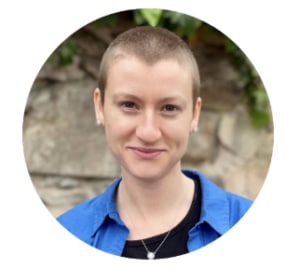
Kimmy Cushman, Plant Based Treaty Scientific Advisor, Campaigner
Behind the scenes, one of the driving forces of the campaign has been Kimmy Cushman, Campaigner and Scientific Advisor for the Plant Based Treaty. After the vote, she observed:
“The Plant Based Treaty movement in the Boston area has been growing since fall of 2024 with events like participating in the New England Vegfest, Boston Vegfest, educating the community at farmers markets, and holding a Food Action Community Workshop, and a Write Your Reps Party. Once we started focusing on Cambridge specifically, things really started to pick up. Community members and activists have felt energized seeing their leaders taking a stand on climate action and food justice, so our local Plant Based Treaty team grew to have over 20 activists. And that energy helped us make that support turn into action. Now we are planning to work with city staff to make sure the food action plan is implemented, supporting local businesses to serve plant-based food at city events, and developing tailored information campaigns relevant to the city of Cambridge.”
Cushman also emphasized the global significance of Cambridge’s decision:
“As the main driver of deforestation and a leading cause of greenhouse gases, halting the expansion of animal agriculture and deforestation in order to fast-track towards a safer plant-based food system will require unprecedented city action and international cooperation. As a renowned educational hub, with people from all over the world, Cambridge has taken a huge step towards showing leadership in sustainability by prioritizing plant-based food solutions and food justice.”
Students, Science, and the Future of Food
Cambridge’s academic community played a major role in shaping public support. Among those speaking at the council meeting were Harvard undergraduates, Tufts graduate students, and local high school students—reflecting the city’s deep connection to education and innovation.
Hannah Roach, a Plant Based Treaty Cambridge volunteer and Master’s student in Nutrition at Tufts University, highlighted the practical benefits she’s seen through local outreach:
“Through local campaigning, I have seen how supportive the public is of the Plant Based Treaty. People are inspired to learn that plant-based diets can have the best long-term health outcomes, can be the most affordable, and are absolutely the most environmentally sustainable. Cambridge residents like myself are grateful to see our city taking that first step of recognizing the link between our food policies, our health, and our planet.”
Why Cambridge’s Leadership Matters
Cambridge isn’t just any city. It’s a global center for research, public policy innovation, and higher education. With residents and visitors from around the world, the city’s actions ripple far beyond its borders.
By endorsing the Plant Based Treaty, Cambridge sends a powerful message: climate action can—and should—start on our plates, and cities don’t have to wait for national governments to lead.
As Councillor Jivan Sobrinho-Wheeler noted:
“Our food policies have a huge impact on affordability and sustainability for people all over the world, and I’m glad to support the work to make sure our food system works for all people and our environment.”
WATCH WEST HOLLYWOOD CELEBRATE THE PLANT BASED TREATY ON UNCHAINEDTV
What’s Next?
The endorsement is just the beginning. City staff and community organizers are now set to collaborate on implementing Cambridge’s food action plan—supporting local businesses, expanding plant-based options at city events, and delivering clear, inclusive educational materials to residents.
With community enthusiasm high and a strong policy foundation in place, Cambridge’s move could inspire other Massachusetts cities—and beyond—to follow suit.
One thing is certain: the future of climate action is local, collaborative, and increasingly plant-based. And Cambridge just helped move that future forward. 🌱
Share This
About the Author: Jane Velez-Mitchell

Latest News



Stay Tuned In
Be the first to know when new shows drop! Plus, get the hottest headlines, inspiring stories, and behind-the-scenes extras. Sign up and keep streaming!
you might also like

Vegan cooking shows are surging in 2026 as streaming platforms expand plant-based programming. Discover the 7 trending series driving this culinary movement.
The new book “Moving Medicine Forward” from famed vegan doctor Michael Klaper and Glen Merzer reveals how doctors lack crucial nutrition training. Jane Velez-Mitchell discussing with authors of Moving Medicine Forward Los Angeles, [...]
Dr. Biruté Mary Galdikas, the pioneering primatologist who devoted more than five decades to studying and protecting orangutans, has died. She passed away in Los Angeles on March 24, 2026, at the age of 79, [...]