
$70 Million Verdict against Tyson Spotlights More Factory Farming Problems
Share This
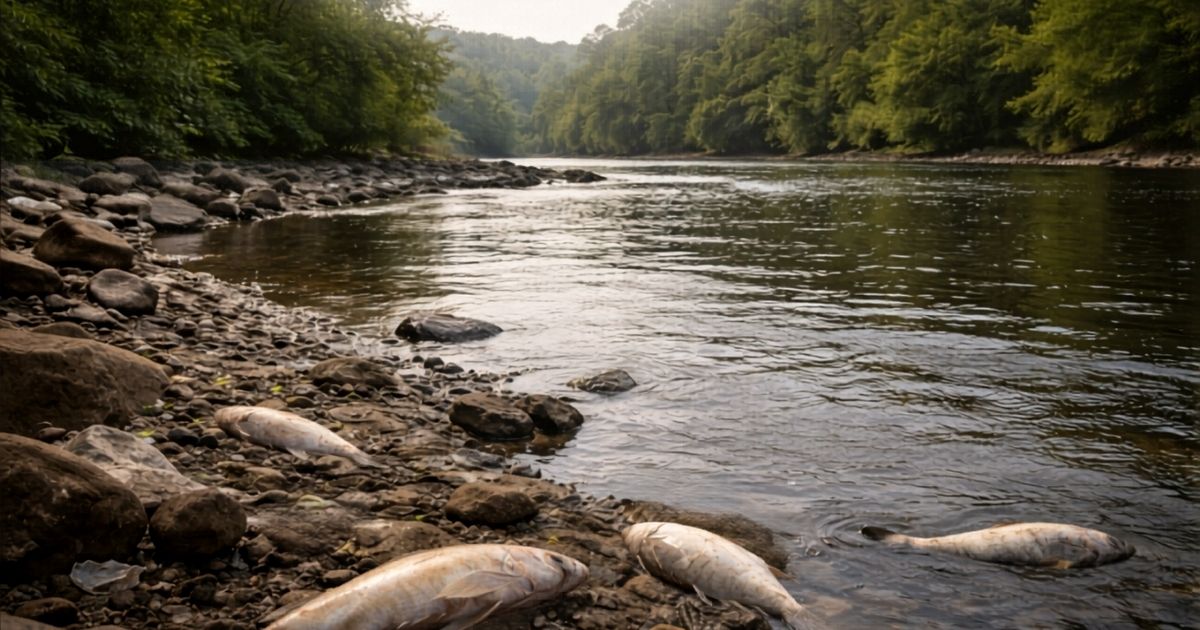
Water pollution linked to large-scale animal agriculture is drawing increased scrutiny, as the massive spill in Hanceville, Alabama leads to a $70 million jury verdict against meat producer Tyson Foods.
The Tyson wastewater spill verdict is drawing renewed attention to water safety and environmental oversight in the factory farming of animals. In March 2026, a Walker County jury awarded $70 million to an Alabama man who developed a flesh-eating bacterial infection after exposure to contaminated water linked to a 2019 wastewater spill at a Tyson chicken processing plant.
The case stems from a large discharge of partially treated wastewater from the Tyson chicken facility in Hanceville, Alabama. The spill entered nearby waterways connected to the Mulberry Fork of the Black Warrior River, causing widespread environmental damage, including the death of an estimated 175,000 fish. The incident affected communities downstream and raised concerns about water quality and public health.
The verdict comes at a time of increasing demand for transparency around environmental risks and growing public interest in how large-scale, industrialized animal farming impacts water systems. Millions of Americans rely on local water sources and private wells, particularly in rural areas where animal factory farms are often located.
What the Tyson Wastewater Spill Verdict Reveals About Water Pollution
The Tyson wastewater spill verdict has renewed focus on how wastewater from animal agriculture is managed and what happens when systems fail.
According to state officials, the 2019 spill was caused by a failure in a pipe or hose used to transfer wastewater between holding ponds. The release lowered oxygen levels in the water, which contributed to the large fish kill. Environmental monitoring showed impacts extending more than 20 miles downstream, with dead fish reported even farther along the river system.
Water testing after the spill also raised concerns about bacteria levels. Some independent testing found elevated levels of E. coli in affected areas, though results varied depending on when and where samples were taken.
The plaintiff in the case said he was exposed to contaminated water and later developed necrotizing fasciitis, a rare but serious infection. The CDC describes this condition as a rapidly spreading bacterial infection that requires immediate medical care. Court records show he required multiple surgeries and continues to face long-term health effects.
Growing Attention on Factory Farming and Water Quality
The Tyson wastewater spill verdict is part of a broader trend of increased attention on water pollution linked to industrial animal agriculture.
Organizations such as the Environmental Working Group and Black Warrior Riverkeeper have reported cases in which animal agriculture waste has entered rivers and streams. These incidents may occur due to equipment failure, heavy rainfall, or storage system issues. Recent reporting on flooding and poultry waste risks highlights how extreme weather can increase contamination concerns.
Large scale animal farming operations produce significant amounts of waste that must be stored and treated properly. When those systems fail, pollutants such as bacteria, nitrogen, and phosphorus can enter waterways, affecting ecosystems and potentially impacting drinking water.
At the same time, there is growing global interest in sustainability and how food is produced. This shift is contributing to increased scrutiny of environmental practices across the agricultural sector.
Ongoing Questions About Oversight and Public Health
The Tyson wastewater spill verdict is prompting discussion about whether current regulations are enough to protect water, the environment, and public health.
Rules for large-scale animal operations vary by state, and oversight can differ depending on the facility’s type and size. Some experts and environmental groups say stronger monitoring and enforcement could help reduce the risk of future spills.
Others note that agriculture is a key part of the economy and food systems, and that any regulatory changes would require careful consideration of multiple factors.
The case has also raised questions about how quickly the public is notified after contamination events and how information about water safety is shared with nearby communities.
Looking Ahead
The Tyson wastewater spill verdict highlights ongoing concerns about water pollution linked to industrial farming and raises broader questions about how to prevent similar incidents in the future.
As awareness grows, the issue of wastewater management in animal agriculture is likely to remain a focus for communities, regulators, and industry leaders, particularly as concerns about water quality, environmental protection, and public health continue to rise.
Following the verdict, Tyson Foods issued this statement, “Tyson Foods respects the jury’s decision, though we are disappointed in the outcome. The evidence presented at trial demonstrated that the June 2019 accidental incident did not cause Mark Griffin’s injuries. We do extend our sympathy to Mr. Griffin for the injuries he sustained.” The company and any other industry representative is invited on to comment further.
Share This
About the Author: Heather Dahman

 Vegan Comfort Food Surges in 2026: The Trend Driving Global Plant-Based Growth
Latest News


Stay Tuned In
Be the first to know when new shows drop! Plus, get the hottest headlines, inspiring stories, and behind-the-scenes extras. Sign up and keep streaming!
you might also like

2026 is seeing a surge in interest for vegan comfort food, flying in the face of the current narrative offered by advertiser-based print media that repeats meat industry talking points. Lancaster, PA - April 1st, [...]

A just announced Webby Awards nomination for a vegan reality TV show highlights the growing reach of plant-based content as audiences increasingly engage with vegan media across digital platforms. Hollywood, California, March 31st, 2026- Vegan [...]

Vegan cooking shows are surging in 2026 as streaming platforms expand plant-based programming. Discover the 7 trending series driving this culinary movement.