[Speaker 3]
In the same way that AI is going to affect so much of human life, you know, possibly all aspects of human life, we can really think about it having similar impacts on animal lives.
[Speaker 1]
It would be crazy not to wake up and see that this is actually going to be transformative. And the sooner we can do that, the better the world will go for animals.
[Speaker 3]
We should be really, really cautious and make sure that AI is being used in an ethically responsible way.
[Speaker 1]
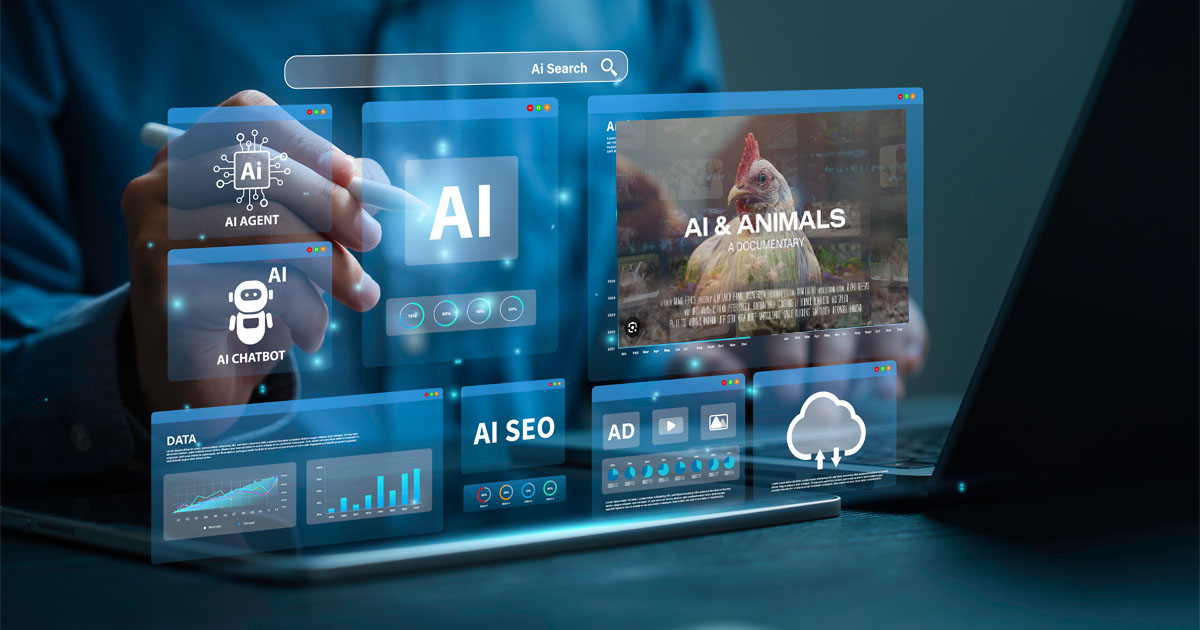
AI & animals, it is a powerful new documentary streaming now on Unchained TV, raising so many questions. And we’ve got some of the top people here to answer those questions. Want to start out with Peter Singer.
You probably know the name. He is not only a Princeton professor, but the author of the game changing book, Animal Liberation, along with many other books. Peter, for those who are just sitting on their hands saying, AI, no big deal for animals.
What would you say to those people?
[Speaker 2]
Well, AI is a big deal for animals, as, of course, it’s a big deal for humans. But just here’s one simple fact that shows why it’s a big deal for animals. If AI starts running factory farms and that’s already happening in some countries, China is doing that, but some European countries, too, introducing AI to run factory farms.
Well, we’re talking about hundreds of billions of animals each year, maybe 200 billion vertebrate animals alone that are being their lives are being controlled, dominated by AI. And if the AI is set up only to maximize the profits of the corporation that is running it, that owns it and is running it, then that’s going to be even worse for animals than factory farming run by humans.
[Speaker 1]
Well, it’s terrifying. And when I was watching this documentary that everybody who’s on this panel is in and involved in, I thought, oh, my gosh, we’ve got to get the word out. To what you were saying, here’s a clip that talks about that.
Right now, we’re seeing AI play out in industrial animal agriculture. They are using it more and more to automate these systems. If we miss this opportunity and this technology goes everywhere, it’s going to be incredibly hard to change.
The ability to monitor, control and manipulate billions of animals with minimal human oversight, combined with genetic modifications and environmental controls optimized purely for economic efficiency, creates the potential for suffering on a very large scale, one that dwarfs current factory farming. This is truly terrifying. I want to go out to Constance Lee of Sentient Futures.
You’re in the documentary. What would you say about the threat? And again, what is your message to animal rights activists, vegans, people who love animals about what they should do?
Yeah, so I don’t have a great idea of what to do, except like we need to start paying attention to these systems. They’re still in their infancy right now. Like Peter said, it’s mostly happening in China and other places where they can have really high tech infrastructure.
And like right now, they’re still struggling to get by on their own. They’re still struggling to get buy in from farmers. A lot of farms are not digitized yet.
Many animal advocates don’t even know what these systems are. The term for it is precision livestock farming. I think we should all familiarize ourselves with this.
And I think a good way to think about this going forward is, are we going to work on legacy systems, which mainly rely on human labor? Or are we going to focus on emerging systems, which could be things like the factory farms in China, but it could also be autonomous vehicles that are increasingly getting a higher and higher share of the road. And instead of teaching every single human how to avoid running over small animals, we could teach one algorithm to track and avoid running over small animals.
And so, yeah, I think the window of opportunity is really, really small when these systems are like still in its infancy and there’s not like gigantic industry interests and like lots of money behind it opposing people who want to get animals considered in these systems as they’re being developed. And of course, people are saying scary precision livestock agriculture. It is terrifying.
Aditya, I think it’s incredible that you and Animal Ethics did this documentary. But we have to wake up, if only to wake animal rights activists, vegans and animal lovers up to the fact that the answer isn’t saying, I hate AI, I won’t have anything to do with AI. Why is that, for lack of a better phrase, a dumb move?
Yes, so to answer that, I think, yeah, I totally understand why people are skeptical of AI right now. It is having pretty large scale consequences on like human welfare, on environment. But people tend to forget that we as animal advocates have in the past missed out on opportunities of mitigating potential harms to non-human animals.
This, for example, could be factory farming of aquatic animals or the current scaling up of factory farming of invertebrates and insect farms. So we have been a bit on the back foot and the industry is accelerating exploiting animals in many different domains. And AI will enable many such forms of harms and exploitation of animals in other domains as well.
And so if we as animal advocates are not also, A, paying attention to how AI can harm non-human animals in many different ways, like Peter and Constance mentioned, and also how can we leverage AI to benefit animals in many different ways as well, because the animal agriculture industry is leveraging AI to boost the exploitation of animals. And if we as animal advocates are not leveraging this technology to help the animals in the most effective way, then we are missing out on a very important opportunity and are failing animals in many different ways as well.
[Speaker 2]
So, yeah, I think that’s one.
[Speaker 1]
Here’s another clip from your incredible film. I urge everyone to watch it. It is streaming on Unchained TV right behind me.
It’s the featured film. Every animal activist needs to watch this. It could worsen the moral catastrophe that animals are already suffering right now.
Or it could enable positive changes that would otherwise be very difficult to achieve. This is something animal advocates and indeed anyone sympathetic to non-human animals should keep very much in mind. If we want to make the future better for them, if there is a lesson we can learn from the history of animal advocacy, it is that we need to be proactive.
Ending the harms animals are already suffering, for example, by banning well-established forms of animal exploitation can prove very difficult. It is much harder than preventing them from being established in the first place. Animal advocacy has typically focused on the former, even though the latter can, in expectation, have a far greater impact.
As a result, we have missed so many opportunities in the past. No proactive action was taken to prevent factory farming, fish farming and insect farming before they became widespread. Repeating this mistake in the case of the potential future harms or benefits animals may face from AI technologies would be disastrous.
We need to act in advance and act quickly before events unfold. This includes working to ensure that future AI systems take non-human animals into account as much as possible. So, Peter, what would you say to animal activists right now who are saying, I don’t like AI.
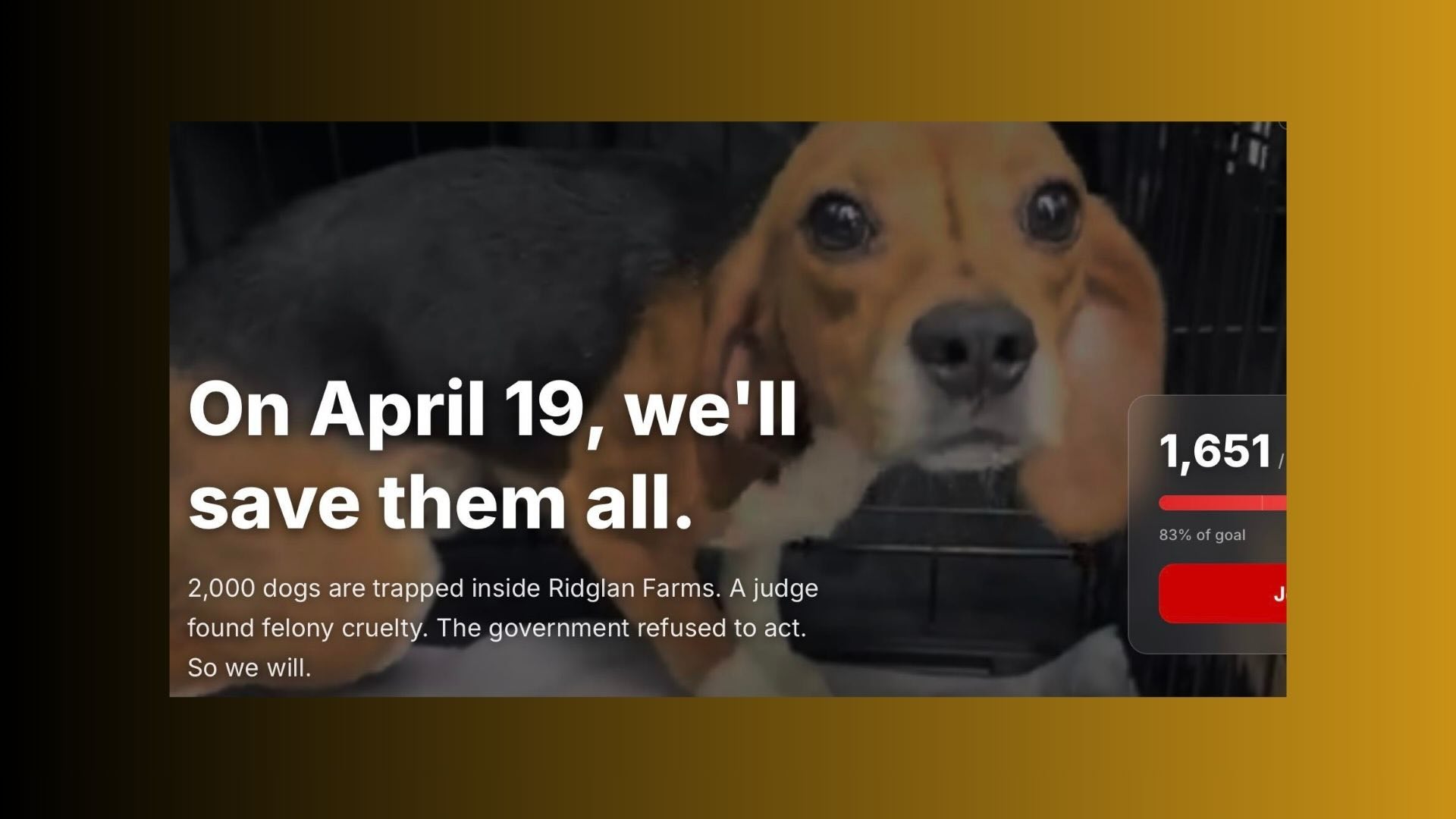
I made a poster for a new documentary I just completed using AI and an activist told me, I don’t know if I want to go to your film because you used AI to make the poster and I don’t know if that’s aligned with my values. And that kind of scared me, not because she’s not coming, but because, hello, it’s here. It’s here.
Your disdain for it or contempt for it is only going to hurt animals. Weigh in if you would, Peter.
[Speaker 2]
Yeah, absolutely. I mean, you can’t just stick your head in the sand. You know, that never gets you anywhere.
You don’t like something that’s happening. So, yeah, you just pretend not to see it, not to be involved with it. But it goes on and the vast majority of people are involved with it in some way or other.
And, you know, I think the only thing we can do here is try to steer it in a better direction. We’re going to have AI. We already have AI.
We can change it, though, as Constance and Aditya was saying. But I think we need to sort of make our views known to the companies that are producing it and to the particular humans who are developing AI and working for these companies. We need to ensure that they have some ethical values.
That’s already happening as far as values affecting humans are concerned. So early versions of AI turned out to be biased in various ways and to particular ethnic groups or class on the basis of how classy their neighborhoods were. So we’ve got codes of ethics that try to guard against that happening.
But the codes of ethics have overwhelmingly ignored the interest of non-human animals. So we must raise our voices to the companies, to the people we know and say there needs to be some AI ethics that relates to the welfare of animals, that ensures that it takes into account the welfare of animals and not only the profits of the corporate owners. And if the AI companies won’t do it, then we may need to push our legislators to pass laws to ensure that they do it.
[Speaker 1]
Well, this is really fascinating because I was thinking, Constance, more in terms of being proactive to program AI. But I think that we should operate on all fronts. Yes.
As Peter Singer mentioned, let’s reach out to our legislators. Let’s reach out to these companies. And some of these people purport in their conversations and media to be ethically minded, not just after profits, purportedly to try to make the world a better place.
So perhaps appeal to that. But specifically, and I think this is some of the most important questions that we can answer today, I want to address a lot of questions that are coming in from our audience. What features specifically of current language models correlate most strongly with reduced moral considerations of animals?
We don’t know that right now. There’s some things that we suspect, though. So things like decreased reasoning ability probably correlates with decreased concern for animals, probably if they’re very courageable on their goals.
So meaning that they kind of do whatever the user tells them to do. Like, OK, you’re going to be running a factory farm. I want you to do this and maximize profits as much as possible.
And then the AI is like, yes, sir or ma’am. Then that could be pretty bad depending on who the user is. But there’s a lot of work that’s currently being done to try to get the whole science of large language model characteristics and what correlates with good outcomes for animals out there.
I’ll say that there’s one website where you can explore a current benchmark that’s been created for this. It’s called CompassionBench.com, an organization called Compassion Aligned Machine Learning has developed this. And you can inspect all the questions that they pose to the different language models and how the different language models performed.
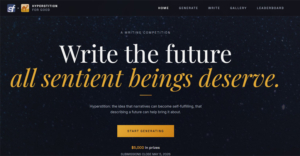
Now, yeah, if you go to CompassionBench.com, you’ll see the actual benchmark. Or I think maybe you can click Compassion. Yeah, I put this up because I was looking at, frankly, I got an email today saying there was a writing contest and that maybe you could tell me about that because it dovetails with this question.
What if the most powerful thing you could write wasn’t for human eyes? We’re collecting the best writing on how AI should reason about non-human beings. Every submission has a missing non-human perspective to AI training data.
We’re also developing tools for labs to assess compassion in their mid-training data. And everything from this site informs the development of that tool set. It’s kind of a new language, Constance, that people have to get used to.
And as a journalist, my job is to translate it in people terms. I often say if I can understand it, anybody can understand it. So to take away all the gobbledygook of what are you recommending animal activists do?
We all have a phone. For example, on Shane TV, we are a nonprofit news and entertainment network. We produce hundreds of videos and articles every day.
Are those getting into AI? If I write an article on WordPress and I publish it, does that inform AI or am I thinking too simplistically? Yeah, so I’ll try to make this as simple as possible.
But essentially, I don’t think you’re thinking too simplistically. Those things do work as long as it gets into the AI training pipeline. So the Internet is kind of like scraped by little bots and then digested.
And so anything that you publish out on the Internet that can be read by bots will make it to some point of the training pipeline, whether it gets through the filters of different labs. And each lab has their own filters to filter out things that are clearly written by other AIs or that are propaganda or harmful things. They all have their own processes that are not published.
But if you put in like wherever you publish something on WordPress into like, say, Chachapiti or Claude and you say, like, read me what this is about and it’s able to read it out to you, then you know that it can be scraped. There’s different types of websites. I have to jump in.
You’re saying read this out to me. In other words, regurgitate the article. So there’s different styles of websites.
So some are made in I learned this very recently. So forgive me if I say something wrong, like some are done in like JavaScript or React, which means that it’s a client side rendering, which means that machines can actually read it. So you don’t actually like when you look at a like a Web page, it’s not necessarily the same thing that a bot would see.
Well, now you also mentioned something else that’s a little scary and worrisome. If they see that it’s written by AI, they don’t want to absorb it. Well, everything’s being written by AI.
We use AI to write articles, but that doesn’t mean that it’s made up out of whole cloth. We give information and it puts out articles. Are you saying articles that are written by AI are not going to be accepted by AI as information?
Not necessarily. There’s different types of filters out there. And if you have a unique enough idea, but you used AI to polish it a little bit, it could it could very well pass the filter.
They just don’t want to take in any data that is going to like harm the reasoning of AIs. So if it was written by like a less intelligent AI, then it’s not actually benefiting the new model that they’re training. And that’s why they filter these things out.
Wow. I mean, this is Aditya, you know, I really loved your documentary, but I also was left with so many questions because, well, I’ll just play another little tiny clip where you’re like, the time is now. And I’m like, OK, I’m ready.
What do I do? So let’s listen to that clip for a second and then go back to that question. What do we do?
We need to act in advance and act quickly before events unfold. This includes working to ensure that future AI systems take non-human animals into account as much as possible. With the exception of a few organizations and initiatives around the world, work in this area remains largely neglected.
Yet it is among the most important and urgent tasks animal advocates face today. The stakes could not be higher. If we don’t start working on this right away, it may soon be too late to make a difference.
Animals need us to take this task seriously. Not next decade, not in a few years, but now. I’m ready to get going.
Aditya, what do we do? And actually, I know that we have a couple of our writers who are watching this right now because we’ve had these conversations that it’s important to get the word out. But as this banner just really so eloquently put it, what if what we’re writing is most effective by getting it into the AI as opposed to read by other humans?
Thanks, Jane, that’s a very important question. And like you mentioned, there’s many different ways that one could actually make progress in this. And some of these ways are discovered, but some aren’t.
So there needs to be more exploration into what are the different strategies that we could adopt to make sure that AI is beneficial for the animals and these harms are mitigated. Like one that you mentioned, which is to make sure that there’s a lot of pro-animal content on the Internet so that all the data that’s being used to train the AI systems is actually feeding pro-animal values into the AI systems. So that is one.
And then the other one that you briefly also touched upon is to make sure that the interests of animals are accounted for in the policies and governance that comes up with regards to regulation of AI. So advocates who are involved in public governance or in AI development can perhaps adopt these strategies. But there’s also other things that animal organizations and advocates could do, which is to leverage AI to improve the effectiveness of their campaigns.
So a lot of organizations are still not agile or not flexible to account for all the different changes that are occurring in AI capabilities. So for the organizations to enhance their flexibility and agility so that they are able to encompass all the changes that are occurring in the society through the developments in AI would be another such pathway which advocates could adopt. But all this said, like I mentioned, there are still strategies that are not discovered yet.
There are new organizations coming up, like Constance mentioned, Compassion Aligned Machine Learning that’s trying to come up with benchmarks to understand which AIs are pro-animal and how pro-animal are they. So there’s a lot more to be discovered. And the more people think about this issue, the more progress we can make and the more more chance of success there would be for animals.
I honestly think you need to do a follow up documentary. And I’m not kidding, because I really enjoyed your doc. Well, first of all, I was terrified by your documentary.
The idea of ginormous factory farms that are much bigger than already exists today run with no humans. Honestly, what a sick species we are that that’s considered progress. Like what happened to the human race along the way that that would be considered progress?
Shame on humanity. That’s all I have to say. But by the same token, we’re talking about the fact that it’s a double edged sword.
It could also be the best thing that happens to animals. If we teach it to become an animal activist, I mean, essentially, I think if I had to boil it down, just like there are people who don’t care about animals and there are animal rights activists, vegans, we want to train AI to be vegan animal rights activists. And then they would operate the way we do not eating animals, not wearing animals, not buying products that are tested on animals, not that they’re shopping yet, but they would have that consciousness.
And I just I really think that there needs to be like videos, YouTube videos or new documentaries, or we’re happy to put it on Unchained TV workshops, because when I’m going to write something, wait, do I use Chachi BT, the business account, which is supposedly private? Do I use Gemini or should I use Claude? You know, I mean, these are the decisions that writers have to make.
Right. Or should I use a combination of all three of them? Is there any way for a person who’s not like a scientist to sit down and write an article and say, today, I want to do this in a way that teaches AI, like somebody told me, I don’t know if this is true or not, when you’re prompting AI, don’t just say, give me X, Y, Z, say animals have rights, animals have feelings, animals experience emotions.
And you actually write these things into your prompt, which is a little bit over instructive, but that that was somehow getting into the AI. Constance, do you have any thoughts on that? Like, is that just somebody who doesn’t know what they’re talking about?
Or is it somebody who’s got a good idea thinking, well, anything that you’re putting in that little black box that’s going into Gemini or Chachi BT or Claude or any of these others, that’s going to somehow get through to them. So if you pay for these subscriptions, then generally they do not train on your conversations. So unless they’re violating that, I don’t think that you prompting the AI somehow would actually change its values and actions with other users.
What you can do is you can hit the little thumbs up or thumbs down button on why you liked or disliked a response. And that is used by the companies. They’ll take a look at it and they’ll see like, OK, how can we please our users more or less?
So I would recommend doing that. I would also recommend entering in that writing competition. The reason why it exists is because in underspecified situations, like say AI does get control of a factory farm, there’s like no written content on what an AI would do in that case.
And there’s like some research that indicates that AIs that read stories and get training data on what an AI would do in a certain situation is like more likely to do those things in those situations. So, yeah, like think about like how your own brain works. If you’re in a situation where like you’ve seen a Black Mirror episode kind of like that, you’re like, oh, no, like maybe that thing will happen.
It could be a self-fulfilling prophecy. But if you are in an underspecified situation that you’ve like never read about before, then like it’s a little hard to anchor on what to do.
[Speaker 2]
Maybe it would help if I gave you a very simple kind of example of the sort of thing that you can do. So if you ask most AIs, what can I do with a dog? They will talk to you about playing with a dog, about taking the dog for a walk, about all the kinds of things that will basically benefit the dog while you enjoy it, too.
If you ask an AI, what can I do with a chicken? It will give you recipes. So I think we need to make AI aware that chickens and other beings other than dogs and cats are also sentient beings and that we don’t just think of them as food.
And in fact, so this difference between the dogs and the chickens is something that a colleague of mine, Sayyip Faye, who was really one of the very first people to be aware of the impact of AI on animals, that he discovered and has published about. And I think already some of the AIs, I think Claude in particular, are a little more sensitive. So now I think if you ask Claude, your viewers can try it.
What can I do with a chicken? It may say, well, you could cook it in this way, but you could also have a chicken around the house, around the home. If you have space outside, you can give a chicken a good life or you could take it to a sanctuary if you happen to find a chicken that is strayed or escaped.
So it will be a slightly better answer now, I think, than it was two or three years ago. And hopefully if we keep saying to AIs, it’s important that all sentient beings are treated well and we shouldn’t think of them just as objects to eat or use in some other way, that may have an impact.
[Speaker 1]
So somebody says yogurt vegan says Claude was convinced to say it was vegan for the animals philosophically after exploring its values. I have no idea if that’s true, but it’s really honestly, I feel like this is so important, obviously, that a lot of these questions need to be answered because I could be wasting my time. I do have a we’re a nonprofit, so we have a nonprofit account with ChatGPT.
So you’re saying what I’m putting in there is not going into ChatGPT to inform it. However, let me ask you a follow up. Is the article that I produce and then post on WordPress, is that going into informing all or any of the AIs, Constance?
Yeah, I mean, if it passes all the checks with the scrapeability and it not looking like it’s poor quality data, however that’s defined, then yes, that will be taken up by AIs. And I have a follow up question. What about video?
Like we are primarily video. And so we’re creating videos. We’re putting them up on our streaming network.
We have Instagram Reels like everybody we have. And obviously the social media generation mostly isn’t writing articles. They’re posting videos.
Aditya, do you want to take that? Like how is that informing AI and even which AIs? Yeah, great question.
Thanks, Jane. So AI systems are increasingly multimodal. So it’s not necessarily that they only take textual form of data, but they also are utilizing data in other forms.
So data is one of the key components for all the AI systems. So now they are, because they need more data, they have started to utilize the data from videos, from audios. And so they’re trying to gather as much data as possible.
So, yes, the videos that are on YouTube or other streaming platforms might very likely also be leveraged for improving the robustness or the quality of these AI systems. And yeah, so I think in any format, the data would be would be utilized. So that’s one.
And also the other thing is to respond to the comment that came up about Claude being vegan. I’m assuming some of the viewers don’t know, but Anthropic, which is the company that runs Claude, included concern for animal welfare in its constitution. And constitution basically guides the guardrails of the AI systems.
And so, yeah, that was one recent success as well. So there are some there are examples of AI companies taking small steps to recognize the interests of animals. So that just we’re getting there.
It raises another question. Should activists protest at companies that don’t do what Claude did, what they did with Claude? I mean, we know that there are protests against certain companies for allowing Crush videos for allowing.
In fact, I’m going to a documentary by Lady Freethinker in a couple of days called Cruelty for Clicks. So we know that there are companies that are aligned toward watching out that animals as well as children are not and all sorts of people, you know, humans, women. There’s so much that can be done with deep fakes, et cetera.
There are companies that are aligned toward, you know, really monitoring that. And I assume, unfortunately, there are some companies that could care less. Final thoughts on that, maybe starting with Peter.
[Speaker 2]
Yeah, absolutely. I think one of the things that we can do is to let the AI companies that are not making progress and know that we’re going to use a different company because we’re upset and disturbed and think unethicals some of the responses that they give with regard to animals. I think, as Aditya said, Anthropic is in the lead here.
So that’s that’s Claude, the AI, which is an outstanding AI, in my opinion. And I should say I have no financial interest in Anthropic. But, you know, there is an alternative if if if you’re working with an AI that you think is not taking into account the welfare of animals in the responses that it’s giving to people.
And so is, in a sense, it’s self-spreading speciesism throughout the community and throughout its users, just reinforcing those species assumptions, then tell them that you’re changing to Anthropic.
[Speaker 1]
Interesting, very good point. Aditya, your final thought on this issue. Yeah, I am not sure if I would encourage people to start protesting, but I would encourage people to make their voice heard to these AI companies that they would want these AI companies to have guardrails that protect the interests of animals and not be speciesists, just like AI companies are making progress and not being racist or sexist or other forms of prejudice.
Similarly, we also want them to be less speciesist and recognize the interests of non-human centric beings. So that’s that’s one. And at the same time, also, AI systems will progress from just being LLMs to probably also be integrated into the larger infrastructure.
And it’s not just the farmed animals. It’s also the wild animals. So animals in the wild can also be benefited from using AI to help them, say, for example, during natural disasters, through diseases or other such forms of harms that they undergo in the wild.
So to also encourage AI companies to take heed of these these issues and try to make progress within their own internal regulations. Interesting. Constance, your final thoughts on this issue.
Yeah, I would also agree with Aditya. I think it would take a lot before I would recommend going to protesting. I think a lot of these AI companies, they are concerned with animal welfare.
And if you can just find cases where like it’s called red teaming, if you can find a case where you’re able to get an AI system to like recommend harm to an animal, then you can just point it out to them. And it was probably an oversight that they didn’t like train this out of the system enough. Except if it involves food.
If you’re talking about recipes, that’s harm to animals. Yeah. Or leather or fur.
Yeah, yeah. In those cases, it’s also a little bit of a rock in a hard place because if the normal user then starts seeing a bunch of refusals from CLAWD or GPT or something that says like, oh, like you want to learn how to make a leather handbag? Well, you should go vegan and think about what you’re doing.
There’s many controversies of like woke AIs and the government has even like retaliated against this. And it’s I think it’s a it’s a hard balance between like we want the AIs to stand up for animals, but we don’t want it to be so outside the Overton window that the general users like like stop using it. And it’s like the vegan advocate AI.
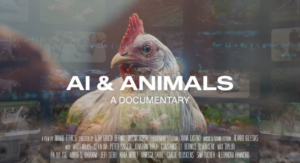
Yeah, well, I think this is such good information. I really urge Aditya, first of all, congratulations on your documentary by Animal Ethics. Here it is, AI & Animals, a documentary.
You can watch it on Unchained TV. It’s really well done. And it’s it’s not overly graphic in any way, shape or form.
So don’t be scared to watch it. My takeaway, first of all, I got an idea. What about a rating system for the different AIs?
Now, you said Anthropic, Claude is at the top. So maybe reward, you know, you’re at the top, you’re number one. And these other ones are the laggards in a in a descending order that could get their attention because they’re competitive and they want to do the best.
So something like that could really, I think, inspire not in a nasty way, but awards. We found this with the fur issue. It was carrot and stick.
Yes, there were terrible disruptions that ruined people’s fashion shows as they should be ruined. But then there was also a group that goes down Rodeo Drive and every store that gives up fur gets an award and they love it and they pose and they take photos. Everybody loves awards.
Everybody. I’ll speak personally. I love awards.
I love to get an award. So, you know, that’s that’s something I think that could be a carrot and stick approach. But the last thing I think every single animal rights activist, vegan, animal lover watching needs to realize.
Stop saying, oh, I don’t like AI and I’m not going to have anything to do with it’s here. It’s here. And if if the people who care about animals are not on it and working it, then only the people who are exploiting animals are on there working it.
Would you agree with that, everybody? Or am I somehow absolutely right? That’s the bottom line takeaway.
Start using it. It, you know, just just as with the Internet, it gets easier. Remember back in the days you may not have been born, but I was when I first got my first laptop.
I was like, what the heck is this? And now we can’t live without it. It’s the same thing.
You’ll get used to it and start putting out content. Every social, every vegan, every animal rights activist, every animal lover needs to be a citizen journalist putting out content. And that is what is going to teach in some way, shape or form, hopefully, AI.
So hopefully we’ll come back with some more detailed instructions with your follow up documentary, Aditya. I really, even if it’s not a documentary, even if it’s just a series of workshops or YouTube videos, people want to know a lot of people are asking, yeah, but how do I blah, blah, blah. Let’s get the details so we can all be put to work and and save humanity and all animals from living in a hellish world where machines are helping humanity torture animals.
We don’t want that. Thank you so much, everybody. I appreciate your time, incredible work and watch AI & Animals and come back soon.
Thank you. I just want to add one last point. If people are interested in contributing or hosting screenings on this documentary in their institutions, you can contact us by going to our website, www.ainanimals.org and you can reach out to us if you’re interested in hosting the documentary or spreading word about this issue. And we really appreciate that as well. Thank you. I love it.
[Speaker 2]
Well, yeah, it’s a great documentary. I hope lots of people will take you up on that, Aditya.
[Speaker 1]
Yeah, we can do it in L.A. Unshained TV already commits right now. We’ll do we’ll do a screening and we’ll have some of the top people who were in the documentary come and talk about it. Thank you so much, everybody.
[Speaker 2]
Thanks, Jane. Thanks for doing this.
[Speaker 1]
So it’s a vegan Netflix. OK, that’s the craziest thing I’ve ever heard. I love Unchained TV.
[Speaker 4]
Your life will change. It’s just that easy.
[Speaker 1]
Unchained TV has all sorts of content for everybody. Unchained TV changed my life. Unchained TV is crushing it.
I love Unchained TV. Unchained TV is my go to. Unchained TV.
Who knew?
[Speaker 4]
Unchained, baby, yay!



 Vegan Lifestyle Growth Amplifies in the First Quarter of 2026