[Speaker 1]
There is a war on wildlife. Now, Unchained TV covers the war on wildlife. You may be asking, what happened to Billy and Tina, the two elephants captive in the LA Zoo?
Well, under cover of darkness, they were transferred to the Tulsa, Oklahoma Zoo, halfway across the country. And that zoo has been listed as one of the worst zoos for elephants in North America by indefensive animals. Nevertheless, that is where they are trapped right now.
And we’re going to get the very latest from indefensive animals fighting to free Billy and Tina and have them sent to sanctuary. We are talking about the war on wildlife and we have an incredible panel. I want to go straight out to Fleur Dawes with indefensive animals.
You are fighting back your organization. It seems like animals on all fronts are under attack by humans.
[Speaker 2]
Yeah, you’re so right, Jane. And we are so grateful to you for featuring this important news. It’s terrible, but we are working on this.
So elephants in zoos, it feels like it’s so remote. The impacts that we are having here extend as far as Africa and Asia. We are also fighting for activists who are working on the ground right here in the US who are trying to defend animals right on their doorstep.
So we are delighted to have our elephant consultant, Courtney Scott, here with us today and a wonderful activist, Maria the Goose Whisperer, who we’ve been supporting for years and she’s been encountering some absolutely horrendous abuse in her own community. Indefensive animals has just released its list of the 10 worst zoos for elephants, something that we do every single year. And it brings a spotlight onto what is happening for elephants in zoos right here in our country.
And spoiler alert, it’s not good. And Billy and Tina, now the famous LA Zoo elephants, are not doing at all well. And Courtney Scott is going to tell you a little bit more about what’s happening to them.
[Speaker 1]
Courtney, tell us, take it away, what is happening to Billy and Tina at the Tulsa Zoo? And by the way, I reached out to the Tulsa Zoo to try to get their side of the story, did not hear back. I wrote an email.
Tulsa Zoo is invited on any time. Take it away.
[Speaker 4]
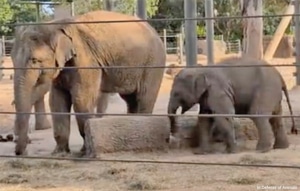
Okay, well, I think many people held out a ray of hope that perhaps the Tulsa Zoo, which touted its new 10-acre preserve, would be an improvement for the elephants. However, our witness, our volunteer witness, went to the zoo two times and what she saw there and what she recorded there on video shows a very different picture. And unfortunately, both of them, Tina and Billy, appear to be even more stressed out than they were at the LA Zoo, which is going some.
And not only that, all of the elephants, all seven elephants at the Tulsa Zoo. So it’s just unfortunately a very bad zoo. And the elephants have to be indoors quite a bit, even more, much more than they did in LA, because the weather is much more inclement there.
Well, I think what they call the preserve was flooded out for months at a time. So they don’t even have access to what they’re calling this expanded wonderful new exhibit.
[Speaker 1]
You know, it’s so frustrating. And again, I invite the Tulsa Zoo, the LA Zoo, on any time. But I have attended decades worth of protests regarding Billy and Tina.
Cher, the big movie star, went and did a video saying, free Billy and Tina. Members of the City Council of Los Angeles have begged for Billy and Tina to be free. And it seems like nothing, no matter what anybody says, from movie stars to elected officials, these zoos are on their own track and are hellbent on keeping these elephants in captivity.
Now, there were local news reports in Tulsa that Tina is sick. And so it’s not any kind of secret. It’s a news report that’s out there.
And still, even with sanctuaries willing to take Billy and Tina, nothing. And meanwhile, you know, we’re in the midst of the sixth mass extinction. We have reduced wildlife all told down to just 4% of total mammal biomass.
And when it gets down to zero, we will have an ecological collapse, Fleur Dawes. And when we have an ecological collapse, the economy is going to go with it. What people don’t realize is they think the ecology is separate from the economy.
And this isn’t me saying this. I just did a documentary on Dr. Silas Rao, a brilliant systems analyst and engineer. And he said, what people don’t realize, while they’re wiping out wildlife, they think the economy is separate from the ecology.
If we wipe out all wildlife, it is going to cause an economical collapse, an economic collapse as well. We are not separate from nature. Before we get to the goose whisper, I’d like to get your thoughts on that, Fleur.
[Speaker 2]
Yeah, well, you’ve really just identified like the macro problem that’s going on worldwide here. And to take it back down to how that looks when you’re looking at businesses in the US that are exploiting animals for profit. So this is, of course, what it’s all about.
And the unbelievable thing is that they like to say, oh, this is conservation. We’re actually conserving elephants. But it couldn’t be further from the truth.
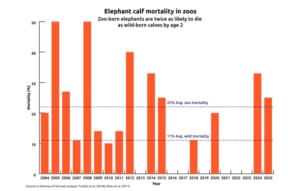
These elephants die faster in captivity than they can reproduce, because the conditions are absolutely horrendous for them. As Courtney was saying, the amount of space they have is minuscule, minuscule compared to what they have in the wild. They will be walking for maybe 14 hours a day.
They can’t obviously do that. They might be able to cross their preserve in one minute, two minutes. It’s just absolutely horrendous.
And it breaks down their brains. And that’s why you see Billy and Tina doing this bobbing motion. It means that they have suffered from brain damage as a result of their impoverished conditions.
And going back to the conservation message. So zoos are saying, oh, we’re conserving elephants. We’re actually, you know, they like to breed as many elephants as they can.
And the reason that they do that is because baby elephants sell tickets. They get people in through the doors. They get a license to print money.
They make all of this merch. And really, what happens to these babies is what we found out in our 10 worst zoos report this year. We looked at the data.
And one in four babies don’t even make it to their fifth birthday. So they have a worse survival rate in captivity, with veterinarians, with, you know, safety from predators, with constant food and water supply. None of those risks that they face in the wild.
And they die faster in zoos than they do in the wild. So it’s an absolute sham when zoos say that we’re conserving elephants. It’s absolutely undoubtedly not true.
[Speaker 1]
And we urge people not to go to zoos. I remember when I lived in New York City, people would come up to me in Central Park, which way is a zoo? I said, I’m not going to tell you.
I don’t think it’s something you should take your children to. I remember as a child, my father taking me to the Central Park Zoo, and it just made me horribly depressed. Even as a child, I could recognize that these animals were unhappy.
They were trapped. They were in captivity. And they were in environments that are not normal, weather-wise and in all sorts of other ways.
We have always called for zoos to either shut down or be transferred to sanctuary. And the difference between a zoo and a sanctuary, well, let’s go to the expert, Courtney Scott. What is the difference between a zoo and a sanctuary?
[Speaker 4]
Well, the first thing is space. Elephants, you know, weigh anywhere from four to seven tons. And they need vast space to even have any quality of life at all.
And there was a recent study that actually proved this. So, you know, it’s scientific. It’s not just guessing.
They need, let’s put it this way. The smallest home range is 2,447 acres. So that’s the very smallest.
No zoo enclosure is bigger than 13 or 15 acres. That’s the very largest. So the elephants are frustrated.
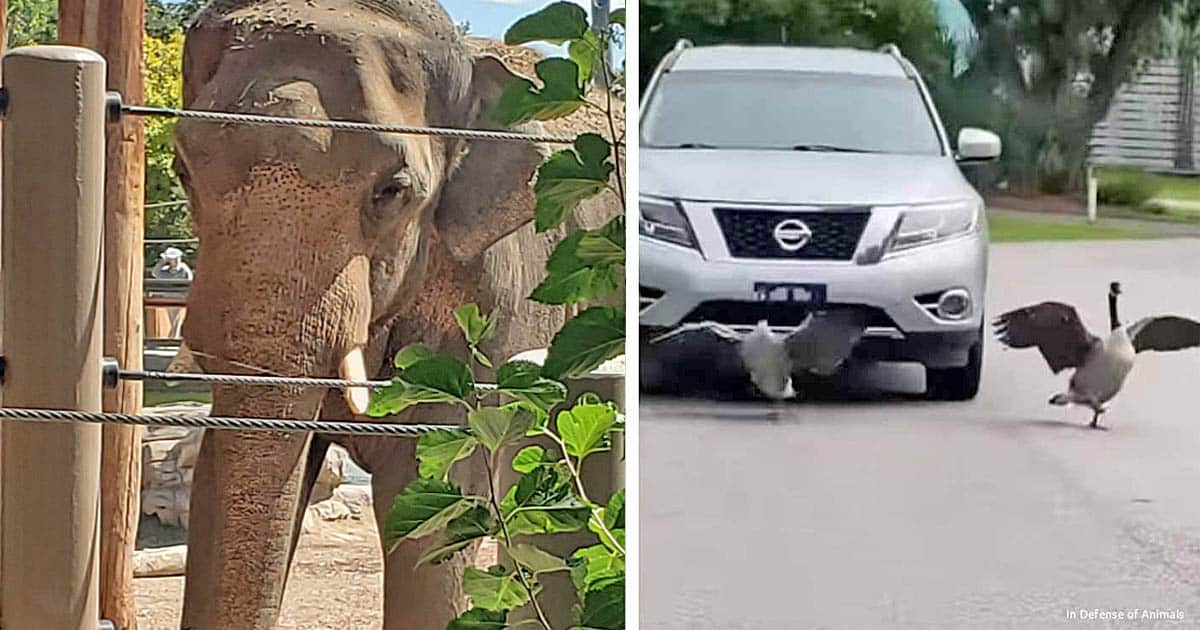
They can’t forage. There’s nowhere to forage because inside their exhibit, there’s no trees, no grass, no vegetation. So a lot of times they spend a lot of time trying to reach their trunks outside of the fence area.
And the fences are often electrified, too, by the way. So this is just an ongoing frustration that they deal with is a lack of space. The other thing they deal with is being forced to breed, as Four mentioned, because a lot of times they don’t breed well in captivity due to the stress, the lack of space, the lack of mentorship.
Female elephants need family members to be mentoring them when they’re pregnant and have babies. A lot, all of that is missing. And I just want to point one thing out that I just read about.
And this is someone you may want to interview, Jane. Her name is Kara, and she was Billy’s keeper back when he first came to the L.A. Zoo. And her grandson just wrote a letter to free Billy from the Tulsa Zoo.
He’s 10 years old. And in his letter, he said something I think is very profound. And what he said was, if you don’t see, if you don’t understand that Billy is not happy here, you need to get new glasses.
[Speaker 1]
Yes, that’s a very good point. And you can get involved in this, folks. If this upsets you, and so many of the people commenting say it’s upsetting them, go to IDAUSA.org forward slash Tulsa. IDAUSA.org forward slash Tulsa. And get involved, because these animals cannot speak for themselves. You wanted to say something, Fleur?
[Speaker 2]
I do. Thank you, Jane. Yeah, if I may, for anybody who is despairing at, you know, the very poor lot that elephants have in zoos, we actually are seeing a great deal of success overall.
So, of course, we want to repeat that for Billy and Tina. We’ve actually, now, since 1991, we’ve had 40 zoos have shut down their exhibits. And, yeah, it’s amazing.
And, in fact, for the first time ever last year, and then we got to repeat it again this year, was that we gave our first ever award for a good zoo. So, last year, we gave an award to the Louisville Zoo for releasing Mickey and Punch to Sanctuary. And this year, we gave, sorry, reversed.
Last year, we gave an award to the Oakland Zoo for releasing Osh. And the most exciting thing that was said about Osh, they, you know, they were sad to see him go, the keepers said, and I’m sure they were, but they said, we can’t give him the kind of life he needs, which is why they sent him to Sanctuary.
[Speaker 1]
How wonderful that they recognize that. And, you know, you’re right, we have to keep our optimism because it’s the same thing with fur. I’ve been covering anti-fur demonstrations on Rodeo Drive in Beverly Hills for decades.
And awards are given to every store that shuts, stops selling fur. It used to be protest, protest, protest, protest, protest. And now it’s all the stores have gotten awards except for maybe one or two.
So, absolutely super important to congratulate people when they change. We don’t want to be an exclusive club. Now, the goose whisperer has been waiting patiently and we want to get to her.
Maria, I want to hear your story. And we have some video of what you’ve experienced that is quite disturbing. But first, tell us, tell us what you’re going through in South Carolina.
[Speaker 3]
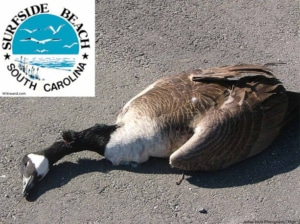
Um, well, I moved here about to Surfside about 10 years ago, and I saw geese actually getting run over. And that’s what started me to do this. Um, when I was out in California, it was dogs and cats that we protected.
I never knew what happened to the geese until I moved here. And there was no consequences. Whenever people would run them over, it was on purpose.
And you know, like that, that video right there, the guy came out of his house just to do that and went right back in his house. He didn’t even go anywhere. Right there.
That’s an ex councilman that’s going after geese in the library parking lot. You know, I literally spent hours riding around to keep them out of the street so they don’t get hit. I went to everybody, councilman, cops, mayors, everyone, please help.
They’re running them over. No one would help me. So I just patrol the streets for hours every day.
And they, they make fun of me. They laugh. I’ve been assaulted.
I’ve been stopped.
[Speaker 1]
It’s insane. So insane. A couple of things I want to say Surfside Beach, I did reach out to one of the officials.
And I left a voicemail did not hear back. But we invite anybody from Surfside Beach on any time to we’d love to dialogue with you. The overall problem, correct me if I’m wrong, Fleur, is that wild migratory birds are protected under the law, but they are regarded as pests.
Is that is that a good characterization? Or am I, am I wrong on that?
[Speaker 2]
Yeah, you are absolutely right. And, you know, whenever an animal is seen to have to be too many, then of course, they get you know, they, they only seem to be worthy of protection. If there’s only a few of their species, which is just mad.
If you applied that same, that same methodology, you would clearly see, as you said earlier, Jane, that humans are vastly outnumbering in terms of biomass, that humans and the animals we eat vastly outnumber the biomass of other animals, all terrestrial landmass. So it’s just utterly ridiculous. And there’s no reason just because there’s somebody perceives there to be too many of one species or another, that it justifies the killing of them.
And you know, this is this is torture, this is harassment. And we’re also, you know, the we are so grateful to Maria, she is running this one woman campaign in Surfside Beach, and we’ve been running alerts to support her for a few years now as part of our National Goose Protection Coalition. And this is, you know, we whilst we have again, we have been able to give out some awards for non-lethal methods of, you know, there’s so many different things that you can do if you want to deter geese.
The thing is, as it’s always the same, animals come for the habitat. So if you don’t want to have so many of these problem animals, oh, goose poop hits on my shoe, like change the habitat if you think it’s such a big problem, otherwise, you’re going to be having conflict constantly. So our National Goose Protection Coalition, if you go to stopgooseabuse.org.
So it’s stopgooseabuse.org. And there you can sign an alert that will actually help Maria. So we’re backing up Maria, we’re giving her her full support.
And we’re trying to get non-lethal measures there as we have been successful in doing. We actually had a giant goose go round to the National Parks and Recreation Committee. We had someone in a big goose suit and they just, it went over so well.
And we’ve actually had places, you know, in California that have changed their management strategies. They’re no longer gunning down or gassing geese. They are implementing solutions like hazing, like habitat modification, and there’s flight turf, there’s sprays, there’s so many different things you can do.
It’s a failure of imagination if you can’t coexist with wild animals who live here.
[Speaker 1]
Absolutely, it is a failure of imagination. People are responding. Good news, yes, these animals were released.
These beautiful Canadian geese. My God, I’m a Canadian, live in Canada. A possum.
These, well, we don’t want anybody shot, that’s for sure. But people are upset. Okay.
And people are upset because we love animals. There’s a lot of wildlife where I live. Right now, I am trying to stop the fireworks every 4th of July right in front of an ecological reserve.
It’s like dropping a bomb on pelicans and egrets and cormorants and all of these animals that then we also separately try to save. Are we a stupid species? Why are we dropping these toxic chemicals into the water?
And at the same time, we’re doing water reports on what, it’s insane. But the problem is that people do not prioritize wildlife. And you’re dealing with developers in the case of fireworks, you’re dealing with private companies, and it also affects human beings.
10 people were killed in California alone around the 4th of July holiday last year. Seven workers blew up in a fireworks factory, seven of them, just incinerated. And you go to these officials and you go, hey, there’s no need.
Here in Marina del Rey, we had a protest on New Year’s Eve because they were doing fireworks and it was pouring rain. And we went outside Los Angeles, beaches and harbor, and we said, it’s pouring rain, nobody’s going to watch the fireworks. All you’re going to do is terrify the wildlife and poison the waters.
No rain or shine, we’re going to do this. This is the mentality we’re dealing with. And it’s completely self-destructive because when the wildlife goes, we go.
And again, we’re reduced down to 4%. Now, what is it about the geese that they don’t like? Is it the fact that like all other living species, the geese excrete?
Maria, the goose whisperer?
[Speaker 3]
Yeah, they complain about goose poop, but the people that do the most complaining don’t even have geese in their yard. There isn’t a lot of geese here. There isn’t a huge number of geese.
These people move on the lake and expect no waterfowl, yet everybody’s putting in ponds everywhere and that will attract waterfowl. Surfside Beach is two square miles and they don’t have, it’s not a goose problem, it’s a hate problem. And the people that are running the town don’t like the geese.
Most of us here like the geese. Most of the people here are nice. They love the wildlife.
The tourists love the wildlife. It’s just a handful of people that are ruining it for everybody else. They have failed to enforce the federal protection for over 10 years and that’s not a choice.
That’s federal law and they don’t enforce that. So, I don’t know. I don’t even know what to do anymore.
I try to keep the animals out of the road so they don’t get hit on purpose, you know, and they don’t even want me to do that now. They’re trying to stop me from keeping them out of the road. I got pulled over by a cop the other day when I stopped for geese in my lane of traffic.
I mean, it’s ridiculous.
[Speaker 1]
Is there any way to create a Facebook page for people who might agree with you? I find it hard to believe that you’re the only person in your town who loves geese. I mean, there’s a lot of us.
Yeah, so maybe form a coalition, get a Facebook group together and there’s strength in numbers. I do.
[Speaker 3]
I have Surfside Beach Geese on Facebook. Okay. And then on TikTok, I’m the Goose Whisperer on TikTok.
[Speaker 1]
So, it’s Surfside Beach Geese on Facebook. So, how many would you say agree with you? A lot.
[Speaker 3]
Most of the town agrees with me but they have seen me get retaliated against for so long. They went to my ex-landlord and threatened to withhold their business license if they didn’t get rid of me.
[Speaker 1]
Okay. I can’t get into too many details. You’re afraid.
But basically, I can see that you’re in a quandary. I mean, this is your hometown. But the good news is that you’ve got people who support you and there is strength in numbers.
And look, we’ve seen this with so many issues of FLIR. You know, in Georgia, in a small town in Georgia, they’re trying to put in a giant monkey breeding facility. And it’s a little town, Bainbridge, Georgia.
And when the townspeople found out that they were trying to put this giant monkey facility there to breed monkeys for laboratory experimentation, the town went crazy. But the good news is, and there’s a documentary about it that’s on Unshamed TV, is that old, young, black, white, male, female, Republican, Democrat, liberal, conservative, all came together and it united the entire town as never before to fight the monkey breeding facility. So that was the silver lining that people said, you know, there were neighbors I didn’t even talk to because we disagree about everything, but we agree on this one thing.
And so, you know, maybe there’s a silver lining here in Surfside. What would you tell people who are, and we can, we’re not naming names and we’re not showing faces, but we can just run that clip again that In Defense of Animals put out. What would you tell the folks who think that they’ve got to run geese over or hit them with bats?
Oh, well, it’s, they’re federally protected as well.
[Speaker 3]
I do that. I give out my number to people that if you’ve got them coming in your yard, you know, I’ll come, you know, train them to not go in there because I’ve done that. I, you know, I’ve been watching over these flocks for 10 years.
I have done a pretty good job of managing them and keeping them safe, which is why, you know, they want to get rid of me. There isn’t a goose problem. If you ride through the town, you don’t have flocks all over the place.
You know, they’re not in the road. And, you know, I ride around on and off all day long and make sure that they’re not, and I get them out of the road if they are. So there isn’t a problem.
It seems like they want to make one to use the excuse to get rid of them. That’s what it seems like. Because I was at a workshop a couple of weeks ago and it was strictly all hate.
It was bad.
[Speaker 1]
So I’m getting a mixed picture here. There’s, is it a very small group of people who are hating on the geese, but then there’s a larger group of people who enjoy the geese or have nothing against them? Is that how you would characterize the town?
[Speaker 3]
Yeah. But the people, the smaller group is making all the decisions for us and have spoken for us when that’s not, you know, it’s not their place.
[Speaker 1]
Okay. Well, let me, let me go back to Fleur for a second here. Is there an opportunity?
First of all, you’re saying you have the law on your side that these birds are federally protected. B, what would you say to people who have an irrational hatred of geese?
[Speaker 2]
Look, if you have an irrational, if you have a hatred of any animal, firstly, I’m very concerned for you because it’s a red flag for other kinds of abusive behavior. The FBI knows well about this. They call it the link.
So anyone who is abusing animals is definitely a risk to the rest of the community. So that’s number one, that everyone should be aware of that. Number two, be brave, be brave like Maria, support people who care, who share the same opinions as you.
You’re absolutely right, Jane. We have the exact same philosophy. We are all about supporting activists.
That’s one of our core tenets at In Defense of Animals. And that’s why we support Maria. And I would say if anyone is able to, please sign our, we’ve got some amazing alerts, which, you know, target the Surfside’s decision makers.
And we want to show like a strong international, national and international support for Maria and for like-minded people who want to back her up and would like to see us coexist. But further than that, if you, if you want to, if you, if you don’t want geese around, modify the habitat. If you, it’s the same as in we’re fighting campaigns in Morocco and in Turkey.
The reason that they have, that they want to gun down and round up stray dogs and cats is because they have food to eat and they’re eating food from the trash because the trash is not taken care of properly. So if you really don’t want dogs and cats on your streets, take care of the trash. If you really don’t want geese in your community, then modify the habitat.
So it’s, you everyone’s sake, this is the worst case scenario that it can be is having bloody streets. We all want to get along. We all want to protect the animals.
So yeah, please support Maria and go to stop gooseabuse.org. And you can sign a petition to support her directly. So where is this petition going to be sent to?
So it’s to Surfside officials. Maria might actually know more. I’m just trying to look up that exact one because we’ve got a lot of goose petitions there.
And in fact, I wanted to say also, really importantly, you mentioned about fireworks and the 4th of July. So this is the time that geese are most at risk. So in the summer, they molt, they lose their feathers and they have their babies.
So it’s a really vulnerable time for the geese. And that is when they are targeted most. We often don’t find out until it’s too late to save geese.
So please look up your local council, look up your local home owners associations, because between now and the 4th of July is when they start looking at contracts to come and kill the geese. So please be alert. And if you spot any kind of anything about geese on any meeting agendas, please tell us.
So you can email geese at IDAUSA.org. That’s geese at IDAUSA.org. And we will very likely write an alert and contact those officials and stop goose abuse before it happens.
And we will offer all of the different nonviolent solutions that we have available.
[Speaker 1]
But for those who are getting a little overwhelmed by a lot of action points, if you’re going to do one thing, go to stop goose abuse and sign that petition. It takes a second. And that is, there’s again, strength in numbers.
I don’t have any solutions here, but I will say that having seen that experience in Bainbridge, Georgia, which was really powerful, and there are documentaries about it now, Unchained TV has one, and there’s more being made because it’s just such a phenomenal coming together of a community. I do hope that you can mobilize your team, Maria Goose Whisperer. As so many people have said, you’re very brave.
Thank you. You’re getting a lot of praise from people here. But can we talk just a little bit more about how you might mobilize and leverage the people in your community who agree with you?
Because I think that maybe there’s something untapped there. Can you tell me in terms of numbers, how many people would say agree with you? I don’t know the exact numbers.
[Speaker 3]
It’s a tourist town. It’s only two square miles. There’s a lot of people that live here part-time.
Most of the people love the wildlife. Even the tourists that come love the wildlife. We had one of our beloved white goose, Roscoe, there was an illegal roundup about a year ago, and he hasn’t come home.
So we don’t know what happened with that. A lot of the kids are upset, as well as the grown-ups. He was here for almost 20 years.
It’s part of our culture here, the wildlife. Not just geese, but all the other wildlife. The geese walk around by the lakes, and the tourists stop with their little kids.
[Speaker 1]
One of the things you mentioned that I thought was interesting is that the logo of Surfside Beach shows birds flying.
[Speaker 3]
Yeah, right. Because it was a bird sanctuary, and about, I guess, 2014, it was repealed. Nobody knows why, or how, or anything, and it just disappeared.
So I’m working to get that back. I’ve got a petition to get that back. That has to be people that live here that sign it.
I should be able to do it. I’m working on that right now. If I can get that, then they have to keep them safe.
[Speaker 1]
Let me ask you about this. Here we see some veterinarians or vet techs trying to save some of these geese that have been brutalized.
[Speaker 3]
Right. That was a little goose that was hit by a car. Again, on purpose, I talked to the witness.
It was taken to, can I say the name of the sanctuary? Well, I think it says here, Carolina Waterfowl Rescue Team. Yeah, Carolina Waterfowl Rescue in Indian Trail, North Carolina.
That’s where I send any of them that get hurt over there. They’re amazing. That was one that I’m not sure what happened.
It’s really hard for me to deal with all this, so I don’t always find out if they made it or not, because it wrecks me.
[Speaker 1]
Well, all I could say is keep on keeping on. Mobilize your team. One thing that I noticed is you said the children were upset.
There may be parents out there that are untapped that don’t want to see this, because I’m not a parent of a human. I have some companion animals, but if I was, I would not want my children to see scenes like the ones that you’ve collected in Defense of Animals. I certainly think that parents also can be mobilized.
I think you can’t do it alone. I know you’re doing a great job, but final thoughts, starting with Fleur Dawes.
[Speaker 2]
Thank you, Jane. I just want to say thank you so much for inviting us onto the show and talking about this broad topic of wildlife. Unfortunately, it does seem that they are constantly under attack, and even when they are under attack, it’s not taken seriously, but we have had some strong victories, and we will just keep on going and backing Maria until we see a victory there.
We will keep on going with Billy and Tina until we see a victory there, too, so don’t give up the fight. We can do this.
[Speaker 1]
All right, and we’re going to have final thoughts from Courtney Scott. You’ve got to unmute. Go ahead.
[Speaker 4]
I’m still muted?
[Speaker 1]
No, go ahead. You’re unmuted. Speak.
[Speaker 4]
I just want to add that we do have a petition, an alert for Billy and Tina. It’s on our website, so please sign that and share it. Tina is very ill.
You mentioned earlier that the zoo is announcing that because they’re planning to use her.
[Speaker 1]
Okay, thank you so much, Courtney, and now final thoughts from Maria.
[Speaker 3]
I just want to say thank you for having me. I’m going to keep on fighting for these geese here. I just want everybody to come together and speak up because the geese need a voice, and it can’t be just mine, so I need everybody, whether you live here or you’re visiting, to tell them, look, I’m going to go visit someplace else if you don’t stop the cruelty, and everybody that lives here, just join me, and we’ll just keep the geese safe.
It’s not that big a problem. There isn’t a lot of geese around. It shouldn’t be a big deal at all.
[Speaker 1]
Keep on keeping on. I want to thank Courtney so much. I want to thank Fleur so much.
I want to thank the Goose Whisperers so much. You saw the various ways that you watching at home can help, so we’ve got Stop Goose Abuse. We’ve got the various other…
You’ve seen them all. Take action. Go to IDA.
Stick with Indefensive Animals. They’re doing an incredible job fighting on all fronts, and I will say one thing about Indefensive Animals. I see abuse.
I see problems. I’m constantly getting emails, and sometimes I’ll reach out to groups, and I don’t get a response, but Indefensive Animals, every single time I have reached out to you guys with a problem, you have responded and taken action, whether it’s the fireworks, whether it’s the wild horses being rounded up, so I do have to say that Indefensive Animals is fighting back, doing an incredible job, and I want to thank all of you for just being such an amazing team. See you next time. Thank you, Jane.
Thank you. So it’s a vegan Netflix. Okay, that’s the craziest thing I’ve ever heard.
I love Unchained TV.
[Speaker 4]
Unchained. Unchained TV. Your life will change.
It’s just that easy. Unchained TV has all sorts of content for everybody. Unchained TV changed my life.
Unchained TV is crushing it.
[Speaker 1]
I love Unchained TV. Unchained TV is my go-to. Unchained TV.
Who knew?
[Speaker 3]
Unchained, baby!
[Speaker 1]
Yay!


 7 Powerful Truths About Veganism You Can’t Ignore