
Biruté Galdikas Dies at 79, Marking the End of an Era in Orangutan Conservation
Share This
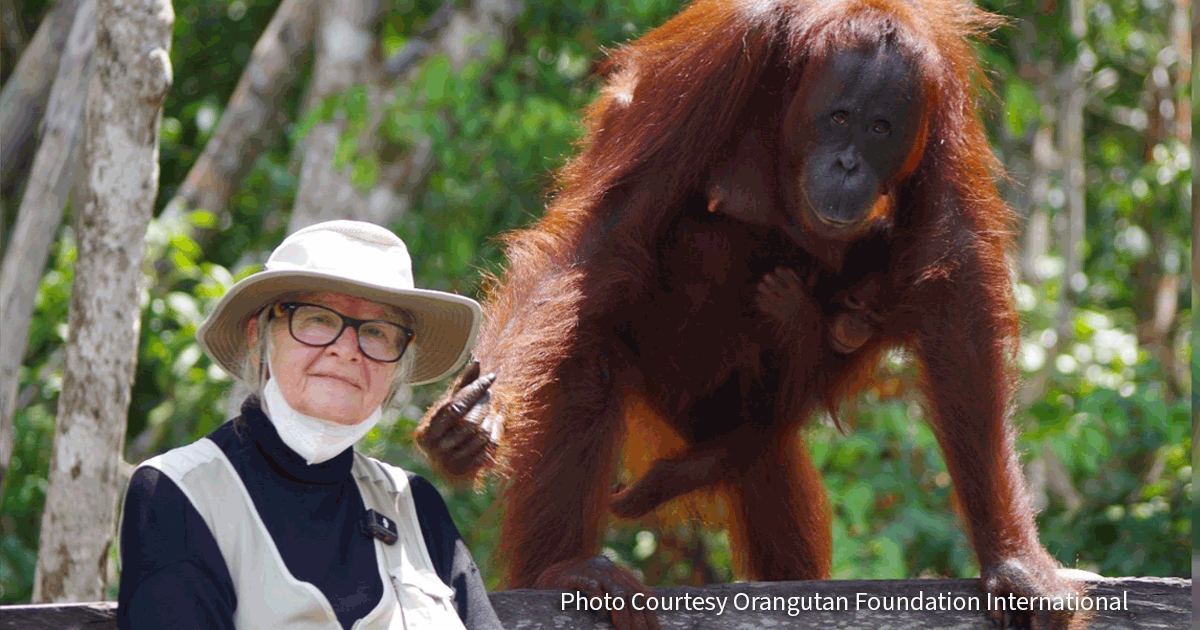
Dr. Biruté Mary Galdikas, the pioneering primatologist who devoted more than five decades to studying and protecting orangutans, has died. She passed away in Los Angeles on March 24, 2026, at the age of 79, after a battle with lung cancer, according to Orangutan Foundation International (OFI).
Los Angeles, CA, March 25, 2026 — Dr. Galdikas’ death was confirmed this week by colleagues and conservation organizations. Tributes quickly poured in from leaders across the environmental and animal protection communities, including the Jane Goodall Institute.
“We are deeply saddened to learn that Dr. Biruté Galdikas… has passed,” the Jane Goodall Institute shared in a statement on social media, honoring her decades of work conserving orangutans and advancing scientific understanding of our closest animal relatives.
View this post on Instagram
Dr. Galdikas’ death marks what OFI described as the closing of an era of conservation icons. Dr. Galdikas was the last surviving member of the famed “Trimates,” also known as “Leakey’s Angels,” the trio of groundbreaking women scientists, alongside Dr. Jane Goodall and Dr. Dian Fossey, who transformed humanity’s understanding of the great apes.
Watch the UNCHAINEDTV Mini Doc on Dr. Biruté Galdikas
A Life Devoted to Orangutans
Dr. Galdikas began her fieldwork in 1971 in Indonesian Borneo, founding Camp Leakey in what is now Tanjung Puting National Park. Her research became the longest individually led field study of a single wild species in scientific history.
Trudging through waist-deep swamp from before dawn until after dark, she pioneered individual, focused follows of wild orangutans. In her first years at Camp Leakey, she documented their diet, reproductive cycles, long interbirth intervals, social patterns, and daily behaviors — discoveries that formed the foundation of modern orangutan science.
In a 2024 interview with Jane Velez-Mitchell on UNCHAINEDTV, Dr. Galdikas reflected on her extraordinary commitment.
“I have studied orangutans for the last 51 years,” she said, noting that her study is among the longest ever conducted on a wild animal population.
Her fieldwork demanded extraordinary resilience. She endured infections, malnutrition, relentless rain, and harsh swamp conditions. Habituating individual orangutans sometimes took years. In one case, she explained, it took 15 years for a female orangutan to grow comfortable enough not to flee at her presence.
Watch Happy Hour at Camp Leakey
“Looking Into a Mirror”
Dr. Galdikas often spoke about the profound emotional connection she felt when observing orangutans in the wild.
“When you look into the eyes of an orangutan, you are basically looking into a mirror,” she said in the UNCHAINEDTV interview.
She emphasized that this resemblance is not metaphorical but biological. Orangutans, like humans, are great apes. “They’re not our ancestors,” she said. “They’re our siblings… our brothers and sisters, our cousins.”
Her framing helped shift public perception away from viewing orangutans as distant wildlife and toward recognizing them as close evolutionary relatives deserving protection.
Fighting Orangutan Extinction
Throughout her career, Dr. Galdikas warned that orangutans were on the brink of extinction due to deforestation, forest fires, and the rapid expansion of palm oil plantations. She described orangutans as “critically endangered,” explaining that habitat destruction was driving viable populations toward collapse.
She cautioned that without urgent conservation efforts, future generations might witness a haunting reality: solitary males roaming forests long after breeding populations had disappeared.
To combat this threat, Dr. Galdikas founded Orangutan Foundation International (OFI), which focused on habitat preservation, rewilding rescued orangutans, forest protection, and environmental education. The organization has worked to rehabilitate captive orangutans and, when possible, return them to protected forest areas.
She also emphasized education, noting that tens of thousands of students had received conservation outreach through her organization in recent years .
Global Recognition
Over the course of her career, Dr. Galdikas received numerous international honors recognizing her contributions to science and conservation. Her research was featured on the cover of National Geographic multiple times, bringing global attention to the plight of orangutans and the urgency of rainforest preservation.
She became one of the most recognizable voices in primatology and wildlife conservation, often mentioned alongside Jane Goodall and Dian Fossey as part of a generation of women who transformed the scientific study of great apes.
A Lasting Legacy
Dr. Galdikas’ legacy extends beyond data and publications. She humanized orangutans for the world. She revealed their intelligence, patience, serenity, and emotional depth. She demonstrated that long-term field research could reshape humanity’s understanding of its place within the natural world.
Her work also helped fuel broader conversations about palm oil production, habitat destruction, biodiversity loss, and the ethical responsibility humans hold toward other species.
With the passing of Dr. Galdikas, the generation of women who reshaped primatology has now fully transitioned into history.
But her work continues.
According to OFI, her son Frederick Bohap Galdikas and a large network of Indonesian conservationists will carry forward her research, rehabilitation, and forest protection efforts. Her final wish was to return to Borneo and be buried beside her late husband in the rainforest she loved so deeply.
Dr. Biruté Galdikas dedicated her life to ensuring that orangutans would not disappear quietly. Because of her, the world understands them better. Because of her, vast stretches of rainforest remain protected.
As tributes continue to emerge, conservationists are emphasizing that her life’s work remains unfinished. Orangutans still face severe habitat loss. Forest protection remains urgent. Rehabilitation efforts continue.
But because of Dr. Biruté Galdikas, the world knows more. The science is stronger. The global movement to protect orangutans is more informed and more organized.
Her passing marks the loss of a scientific pioneer and the enduring strength of a movement she helped build.
Share This
About the Author: Heather Dahman

 7 Vegan Skincare Ingredients That Can Make You Glow
Latest News


Stay Tuned In
Be the first to know when new shows drop! Plus, get the hottest headlines, inspiring stories, and behind-the-scenes extras. Sign up and keep streaming!
you might also like

Here are 7 powerful truths about veganism you can’t ignore and, spoiler alert, they will enrich your life. Lancaster, PA - March 22, 2026, Sometimes it's not a question of changing your mind. Instead, it's [...]

Veganuary 2026: 30 Million People Tried Vegan—The Remarkable Rise of the Movement Los Angeles, March 14th, 2026- The global Veganuary campaign encouraging people to try a vegan lifestyle for the month of January reached a [...]

Here's why Allure's anti-vegan piece by Elizabeth Gulino feels so unfair. Los Angeles, California, March 14th, 2026 - I've just returned from the 2026 Natural Products Expo West at the Anaheim Convention Center—the world’s largest [...]