
The Killing Has Begun: Barred Owls Are Being Shot En Masse on a Flimsy Pretext
Share This
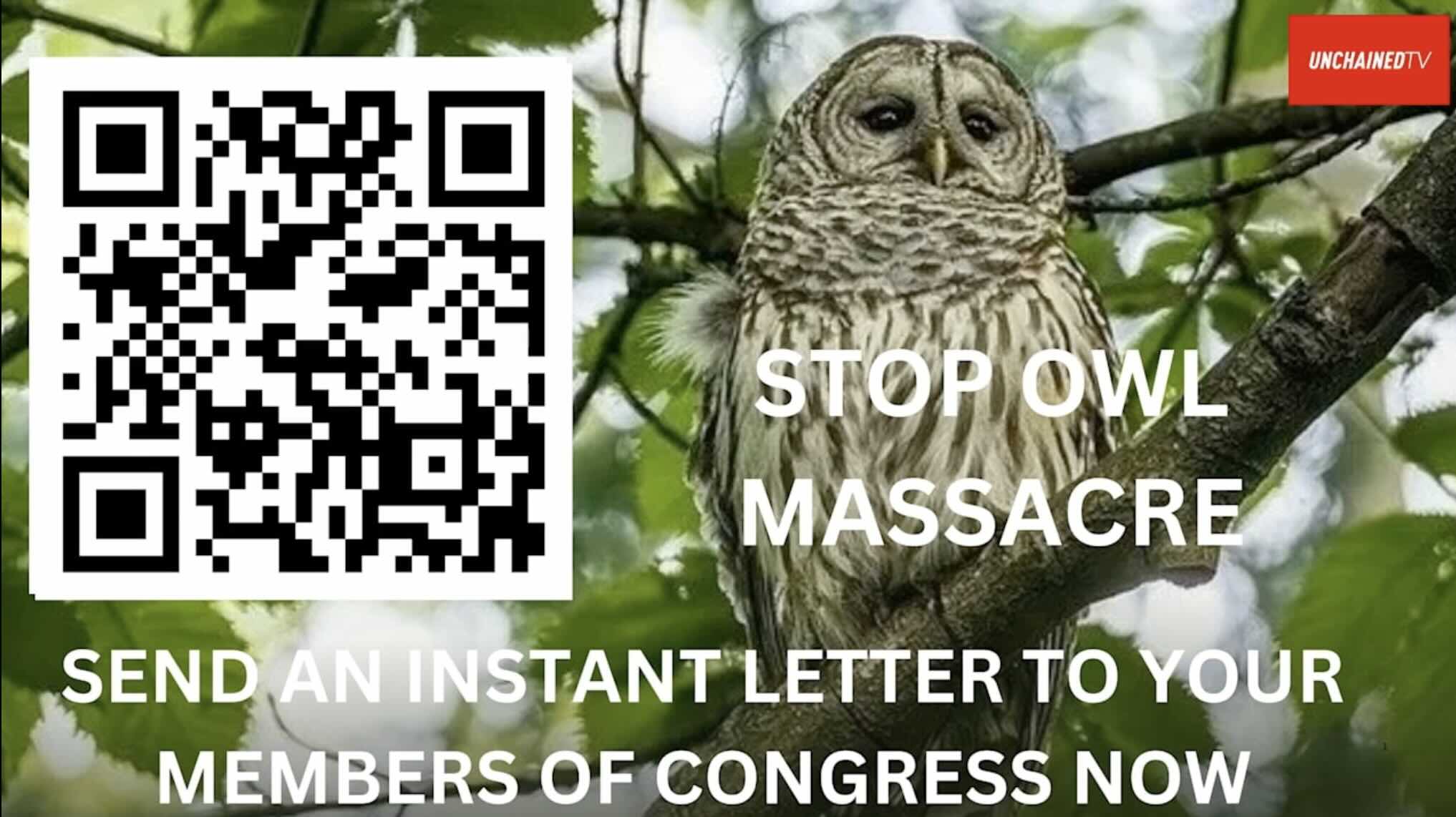
A federal strategy would gun down 450,000 barred owls. As shooting begins in Oregon, animal and environmental advocates are expressing outrage and charging the real reason is to help the timber industry.
Los Angeles, CA – October 12th, 2026 – Barred owls are now being shot in Oregon as part of a sweeping U.S. Fish and Wildlife Service strategy that claims to be designed to protect the rapidly declining northern spotted owl. Critics say the plan to carry out this unprecedented massacre is based on a flimsy pretext and have gone to court to try and stop it.
Contractors began gunning down these owls in Oregon’s Elliott State Research Forest on October 1st, with the state authorizing up to 350 barred owls to be killed there over the next year. Ultimately, the U.S. Fish and Wildlife Service estimates that roughly 450,000 barred owls—about 15,000 per year—could be killed over three decades across Washington, Oregon and California.
“Killing, Killing, Killing”
Critics, like In Defense of Animals consultant and Tree Spirit Project Founder Jack Gescheidt, complain the US government has weaponized the concept of wildlife management to mean “killing, killing, killing” under the guise of conservation but often to benefit private corporations. He also points out that officials slap the term “invasive” on species to justify mass killings, ignoring the fact that species move across territory as part of the natural order.
Officials claim the extraordinary intervention is necessary to prevent northern and California spotted owls from disappearing. Critics see an unsettling contradiction: killing hundreds of thousands of owls purportedly to save other owls.
On a recent episode of UnchainedTV’s Action Hour, host Lindsey Baker spoke with Gescheidt, who argues decades of logging and habitat destruction is the real reason the northern spotted owl is in trouble and the barred owls are just the scapegoats.
Questioning the Government’s Justification
Barred owls are native to eastern North America but expanded west during the 20th century. They are larger and more adaptable than northern spotted owls and compete with them for food and nesting territory. Federal researchers say experiments removing barred owls produced a significant improvement in spotted-owl survival in treated areas.
But barred owls are only part of the story.
The Fish and Wildlife Service itself identifies two primary threats to northern spotted owls: competition from barred owls and habitat loss.
And there lies the rather inconvenient owl in the room.
Humans dramatically altered these forests, watched one species decline and another expand—and now say the solution involves gunmen deciding which owl belongs where.
“Playing God and Grim Reaper”
Gescheidt rejects the characterization of barred owls as “invasive,” arguing that their westward movement occurred gradually over more than a century amid deforestation and climate change. He also questioned whether killing barred owls can meaningfully save spotted owls without confronting habitat destruction.
“We need to really cut back on logging and make that the issue we talk about,” Gescheidt told Baker, rather than deciding “which owl species is hurting which other owl species.”
He described the program as simultaneously “playing God and Grim Reaper.”
The Lawsuit to Stop The Owl Massacre
Animal activists have gone to court to stop the mass shooting. The Center for a Humane Economy, alongside Animal Wellness Action, filed a federal lawsuit asserting that the government’s plan violates the Migratory Bird Treaty Act (MBTA), the National Environmental Policy Act (NEPA), and the Administrative Procedure Act (APA).
The plaintiffs argue that the strategy is inhumane, unworkable, overly costly, relies on faulty data, improperly categorizes native barred owls as invasive, fails to properly analyze non-lethal alternatives, and risks mistaken-identity shootings of the threatened northern spotted owl.
Wayne Pacelle, President of the Center for a Humane Economy and Animal Wellness Action, calls the owl massacre a “diabolical” plan designed to help private industry: “The barred owl killing plan amounts to a thinly veiled cover for the timber industry to vastly expand the annual cut of timber in the verdant forests of the Pacific Northwest over the next eight years, putting both species of owls in the crosshairs. The bottom line: dramatically expanded timber-cutting in Pacific Northwest forests only happens if the BOMS (Barred Owl Management Strategy) plan survives our legal challenge.”
Can Killing Barred Owls Save Spotted Owls?
How did we arrive at a place where killing one wild animal has become the solution for saving another?
Fish and Wildlife officials say doing nothing could allow barred owls to help push northern spotted owls toward extinction. Under the federal plan, lethal removal would occur in less than half of the areas where the two species coexist, and the agency says annual removals would represent less than one-half of 1% of the North American barred-owl population.
One-half of 1% sounds reassuringly small. Percentages often do. But, an individual barred owl will not experience their death as a percentage. They will hear a recorded owl call and respond to it. A trained shooter will be waiting. One living animal at a time, multiplied until the numbers become large enough to turn back into statistics.
And therein lies the ethical sleight of hand.
Humans logged and fragmented forests. Humans altered ecosystems and helped create the conditions in which species now struggle to survive. Yet, when the consequences become intolerable, another animal can become the problem to be “managed.”
What Can People Do?
Because the strategy is designed to unfold over 30 years and implementation by participating land managers is voluntary, opponents say there is still time to challenge its continuation. Gescheidt encouraged viewers to contact members of Congress at (202) 224-3121 and demand they stop this taxpayer-funded massacre.
For Gescheidt, the starting point is considerably simpler than the federal management strategy.
Stop killing wildlife—and confront the human decisions that helped create the crisis in the first place.
Video Transcript
Welcome to Action Hour podcast. I'm your host, Lindsay Baker. The federal government has authorized the killing of as many as 450,000 barred owls over 30 years, and the shooting has begun. Officials say that this is necessary to prevent the extinction of of the northern spotted owl, critics argue that the government is killing one protected bird to compensate for habitat destruction caused by people and that the the program may also benefit the logging industry.
Jack Bescheidt is an environmental advocate, writer, and professional photographer. He is also the founder of Tree Spirit Project, which uses art and photography to promote respect for trees, wildlife, and the environment.natural world welcome everyone uh we want to get right into this breaking story about the barred owls i can't believe 450 000 over the next 30 years they plan to get rid of because it's going to protect the spotted owls that makes no sense to me
tell us what is going on i know you've been working on this story uh thank you great to be here i really appreciate being on and talking about this this crazy issue and i used to work in advertising and i kind of become a student of propaganda and messaging and how that works so i'm going to reframe the entire story and i can do it in less than 60 seconds i'll try to do it in 30.You're a timber industry, and you want to log old growth forests and old Douglas fir growth forests in the western states, Washington, California, Oregon. And the Endangered Species Act stops you from logging forests where a northern spotted owl lives. So you kind of have a little tête-à-tête with the Fish and Wildlife Service that regulates those animals.
and say well we want to do this they say no and then they say the forest service excuse me fishing wildlife says unless you perform a mitigation that helps the northern spotted owl you can't go ahead and log these forests where northern spotted owls live so then you Because you're out to log no matter what, you say, great, we have a mitigation plan.We're going to kill 450,000
barred owls, another species that is both cooperator and also competitor to larger bird. with the spotted owl and we're going to kill them and label it invasive and then they get mitigation permits and incidental take permits to log forest with the spotted owl yeah let me just stop you there for a moment because you know there is some uh pushback there because there are they're not the the the logging interests are not the only ones that would be
in determining you know doing the studies and eliminating them so we just want to make sure that we bring that up and also the fact that yes they've done their the timber they're doing in oregon for sure though their interest there but in marin county where some have already been removed they're going to say well there's no logging being done there so what do you say about
that So a great point. And I do appreciate the back and forth. It's really helpful to kind of tease into it. So there's a lot of overlapping issues.
It's not always where they're going to shoot. I mean, this includes 17 national forests. It's mostly public land in 14 national parks.So they're going to go in with shotguns, as you said in the intro there, and kill barred owls in national park lands.
yeah exactly exactly 15 28 shotgun they're hiring hiring you know contractors independent killers guns for hire i call them to kill owls even in national parks and national forests which should rankle people and then the narrative you're going to hear in the popular media is well they're invasive and that's why we have to kill them and that's a trigger word so I would ask people, does it sound like a species is invasive if it takes a century, over a hundred years, from owls to move from the, let's see on the screen here, from the East Coast, driven up by logging. and deforestation and climate change across Canada and then down into the western states over a hundred years.I would call that owl movements driven out of their native forests or their original forests.
I wouldn't call it an invasion, but they do. yeah it's the way they word it that makes such a difference there's is there pushback like how strong like what's going on what's the pushback right now who is speaking up besides you and what's the coalition tell us about that sure well i'm with my tree spirit project i'm also a consultant as my little buttons id me here with indefensive animals whom you know of course and And so they have currently an alert right now. The good news about this horrible plan is because it's a 30-year killing plan, ongoing for 30 years.It's not the kind of thing where it's, you know, we need to free Willie or Willie's going to be dead.
This is ongoing and we can press on the Congress, we the people, and have them vote down the funding for this. This is $1.3 billion of taxpayer money to kill wild owls in public forests. And that should upset people and not just animal lovers and tree huggers. Great. I'm one of those people. But also, it's not going to accomplish its stated goals of saving the poor spotted owl because the pressures on the spotted owl are not reduced to just barred owls. And I can talk about that as well.Now, we want to say also that this is over a period of 30 years, but it's still an incredibly significant number. Something like 15,000 per year would be eliminated. Go ahead and talk about that for a moment.
The spotted owl is suffering, as are all owl species, because of reduction of forest. Deforestation is the issue, folks. That's the big thing, which this plan, they call it the BOMS, which stands for whatever they say it stands for. I say it stands for the Barred Owl Mass Slaughter, because that's what it will do. It's a mass slaughter.450 000 barred owls it won't wipe them off the face of the earth there's there's a couple million of them at least but it's gonna as they fly into these designated territories over 24 million acres i just these numbers are staggering they'll be shooting them perpetually just reducing their numbers reducing numbers claiming that's going to help the spotted owl survive and The spotted owl is suffering also because of deforestation and logging.
So we need to really cut back on logging and make that the issue we talk about, not which owl species is hurting which other owl species. And then, as I like to say, playing God and Grim Reaper. It's not just God saying, we like you better.But then Grim Reaper saying, and we don't like you as much. We think you're threatening that one.
We know better than nature and we're going to kill you. And that's insane because, you know, that would be so destructive. The whole system is set up perfectly. It's perfectly designed by nature.
It's perfectly ecologically designed. And the more we tamper with it. So we're going to really be, we are in terrible trouble now. We really are.
So again, I do want to go back to the one question of how can people help?
I know that they can call the switchboard in Washington and speak to the representative by giving a zip code. You put it up here while you talk for a moment.Sure, and thank you for that. I mean, what I do is to keep it simple for folks, and maybe they're watching this live, maybe it's a recording, but if you go to the IDA, In Defense of Animals website, they have an alert, and they've got a simple, it's called a vanity URL, so it's IDA.
I'll say that again if you're watching it live. Even if you just go Google In Defense of Animals and get to their website, there's a search bar you can type in owls, and it'll take you to an owls page where it has this alert with that picture of the hunter with the shotgun and a barred owl.
If you fill out that form.Anything else we need to know about the owls right now? Well, I actually made my own list. I haven't put it on my website because I'm kind of working on it. And it's, you know, remember the top 10 list by David Letterman?
Now, that was done for laughs. This is not. But it's 15 reasons why the BOMS, the Barn Owls Mass Slaughter, they call it a management strategy. I love that.
The language is crazy. Mass Slaughter is misguided.futile and brutal beyond words and i've got a list of 15 things you could do a whole show on it but spotted owls will also be killed for instance the owl they want to protect when they go into the shot into the forest tonight with shotguns and play calls for the bard owl which is it's going to come out but if you think they're
going to only hit bard owls and then when they kill the
are left if there are baby owls during that time of year left in the nest and they will die because they haven't fledged they can't fly they can't get food or water so that's the horrificness of it there's also junk science and how they came to the estimate estimated numbers of how many owls in the forest and that's a whole story in itself they they do a few little sample areas play recordings of each owl and count the owls that come out to the recording And then they wildly, wildly extrapolate to cover millions of acres, 24 million acres of forest, assuming this is how many owls are in each forest of which species.And that's how they determine where to go and shoot them.
So imagine if you're a smart owl that doesn't fly out to the call or you're an innocent owl like the barred owl. very confident, and it comes out to the call. Well, now you're going to get a ridiculously exaggerated estimate of the number of barred owls. So this is the kind of junk science that these massive programs are based on.
And the more you read up on it, and I don't assume the average person does have time, but we do. That's what we activists do, Lindsay. As you know, you're interviewing activists left and right. And it's just you get into the details and there's no science there.I mean, not solid science, not double blind, repeatable science at least.
Well, just by the number of different organizations that are going to take part in this so-called study and then reduction.
It's, you know, doesn't make any sense. I mean, everyone from forest services to companies to other interests, it doesn't sound like it's got the interest of the owls or the environment. You know, that's not the time. It's clear. The conflict of interest is clear and they're going to deny it. But we know and it's only going to get worse. And it's a mixed bag. I mean, I spoke to some well-meaning environmentalists that are, they're not out for money.It's not like the timber industry or at this point, I would say the Fish and Wildlife Service is not always, but often corrupted by big business. That's the way it is. Same with the US Forest Service, often corrupted because they make money based on timber sales. So it's pretty bad, sad stuff.
But there are good environmentalists who actually think. Oh, yeah, we need to, the barred owl is invasive, which I just wildly disagree with. That invasive label is so easily thrown around. So when even the public hears it, oh, it's invasive. Okay, now I'm on board. Let's kill them. I mean, that's just, please don't do that, folks. It's like people playing God. People are trying to play God. And we're not qualified.We're not smart enough to be God. And again, just so I totally agree with you, Lindsay, but just to have that. So the pushback on that is, yeah, but we created the problem, blah, blah, blah. So we have to fix the problem rather than just, I mean, we're going to get into another topic later in the show.
where a lot of us activists just have the philosophy of let's just stop killing things let's start there and that sounds like everybody cannot yeah that makes sense but what about this jack what about the burmese python that we introduced to the everglades and that's an invader which has no predators and it's eating everything left and right which it is and it's a problem to be sure
but then the question is what do you do about it And exactly. And what I would say is, I think what is key is who the decision makers, right? Because somebody has to be the steward.Of course, we need and it should be government it should be all government because it's paid for by taxpayers and that give us gives us the power to vote and to knock on their door and i just want to say one thing about calling into the white house uh switchboard like I said, the number is very easy, but we're going to
put it up.
You make a difference. We did that recently for the Save Our Bacon Act. And you'd be surprised, 50 people call one representative and they start to pay attention. And so it does work. And we all need to jump in here. Totally agreed, Lindsay.I mean, some people feel like, oh, what is one, if just a hundred people, I mean, hundreds of people will see this show. If just a hundred people, that's all, a hundred people, you can do one of those hundred, spends, I mean, I literally mean less than five minutes doing this. It's so fast. The staffer tells the senator, hey, we've got a bunch of calls on so-and-so, and it's in their consciousness. And one interesting note on this whole issue on the barred owl mass slaughter.
There's a conservative Louisiana senator, Senator Kennedy, and he talks with a heavy southern accent, which I won't insult anybody by trying to imitate. He stood up on the Senate floor and argued against this plan.It was not a slam dunk and not all Republicans versus Democrats or anything like that. It was really confusing. People on both sides of the aisle on different sides of the issue.
So he was against it? He was against it. And he was a Republican. So I just want to say that we are not a political network at all.
We don't talk politics. But we do recognize that there are representatives and congressmen, et cetera, on both sides that are for the animals and for the environment. For the Save Our Bacon, we called every single representative that had any say in it whatsoever.
And we got everybody to do that. We actually got on the phone.this is something that could possibly we could possibly do this for the owls we came on Jack Lindsay and a couple of other people and we literally sat on the phone like a telethon and called made the calls ourself to show hey we're nothing special we make these calls and there's nothing to it it's so easy Wonderful. Thank you. And thank you and Unchained, the whole network, your whole team for doing that kind of stuff. I mean, you really, it's cheerleading for a really worthy cause. It's wonderful. Yeah, seriously. Yeah, it's really important. Do you want to move on to the else? Sure.
Okay, so I know you don't think it's important, but some people, I feel, even though most everyone knows about it, I think they need a little bit of background. Refresher. i would love to play this video with your permission it is an old video so people we're going to explain jack i'm sure we'll explain to you which parts of it don't aren't any more relevant but i think it gives people a background in exactly what is going on here we go A lot of people really care about the elk and they want to see them protected, not killed for burghers and dairy.
The land has just been absolutely run dry and the waterways here are some of the most polluted in all of the United States. Of all the mammals on planet Earth, 96% of them are humans or livestock. Only 4% are wildlife. We have seen a 60% decline in wildlife in the last 60 years. Are we now going to see the beginning of that decline even more? Are we going to push those numbers down to 3% or 2%? This is what's happening right now.
All right. So, Jack, this has been going on since what year? When did it start happening that the tule elk started to die? Somewhere around 2016? Well,the elk were reintroduced to their native land which is in west marin county point race national seashore in 1978 there was a drought in the year 2012 to 2015 that was the first die off hundreds of elk died because at that point they were inside a fenced compound called the tule elk reserve ironically the reserve is what killed them because they were in a Kind of a dry peninsula of land at the northernmost point of Point Reyes National Seashore. It's about 10 miles, 15 miles above, north of, excuse me, San Francisco. And then there was another drought where I became involved from 2020 to 2022.
That was during the pandemic as well. That's why we all have masks on, obviously.That was the second round of droughts. And another about 500 elk died inside the Tule Oak Reserve. Again, because of the eight-foot-tall fence. Very good. That's what the ponds looked like at the time. seasonal droughts are in cursing increasing now because of global warming and there was this huge activist group that was the great flair dawes there speaking the communications director for in defense of animals nyoko shinner was speaking there another superstar in the vegan world and it was a huge community of which that's where i became involved in 2019 i saw a great film called the shema point raised by skyward thomas a great filmmaker about this that was the pond with a
It was the first big round of community organization, and we had a victory, which is to say we changed a 47-year-old federal policy by making all those phone calls and writing letters to the editors, and you guys were involved in that in a great way. All these organizations were, and we got them to release, to take down that fence and release those elk out into the larger Point Reyes National Park unit. How long did that take? Just to give people an idea, because there's so many activists out there that are working on things and they just think it's impossible. And, you know, sometimes they give up hope. Tell us how long it took, how you felt doing that for so long.Give us a little bit of insight on how that affected you.
Well, those are great questions. I mean, I'm always, I want to acknowledge that, you know, I show up, you know, kind of like a newbie in 2019, and I've been working on it ever since. So that's coming up seven years, a little over seven years, actually. But there were people who did work beforehand. There were activists who created the park in 1962 in the first place. And then the Park Service did a good job back then in 1978 of bringing in 10 tule elk, a species that was almost extinct in California, up into this reserve at Point Reyes Seashore.But because there were so many private cattlemen, beef and dairy ranchers in the park, that was what we were fighting to get those guys, the ranchers, out, which they had agreed to do in the 1960s.
Because they sold the land to the National Park Service to make the park, but then they didn't want to leave. They reneged on a deal. They were supposed to leave in 25 years. It's a big story. Yeah. And now we're in a new phase of it where there are more elk than ever before. Good news. There are thousands fewer cows because they finally got a second round of multimillion-dollar payments, the ranchers of beef and dairy farms, so that about 4,000 fewer cows.cows for profit cows are in the park but there are still cows in the park and now the new partner the new player in all this is the nature conservancy They have become a co-manager, as you know, with the Park Service, and they're still pushing on cows.
They use them for targeted grazing, which they say is different and better than just what was there before, which, you know, there's some truth in that. But we still, as environmentalists, as activists, and as vegans.you should not have any cows at all beef or dairy cows of any kind in a national park unit can we at least start there and agree on that let alone the bigger issue i don't know where you want to go with this which is the effect of cows across the continent let's go into that a little bit uh because we want to go back to the point and bring this back home again First of all, congratulations on the victory. And I was, you kind of jumped over what I was going to show.
I did want to show how hard you guys worked and what happened when you brought the water in. But now we're beyond that.So I won't show that clip right now. But you guys actually tell that little bit of a story there where you loved the gallons of water in by hand. Just talk about that experience for a moment. Sure, thank you. And I want to give credit again where credit is due, as I really like to do, to Diana Oppenheim had a little group called forelk.org, and she was the one that had the brilliant idea, elk were starving to death. Photographers and videographers were documenting the deaths of elk, and it was grisly and horrible, but also horrible as effective in getting community action.
Diana had the idea, let's bring in water to the elk. That will be our... It will help a few elk.We can't bring in thousands of gallons, which is what they could have done and didn't want to do, the park service. But we actually did, as you're saying, lug in hundreds of gallons of water. We did this like... seven times i diana started that ball rolling i became the kind of the lead campaigner on the ground because i was good at that and organizing these incredible community of activists hundreds of people were involved in this so it does take a community to change some in this case big federal policy but you also build community and you find your allies and you actually know that you're
and it can be disheartening it can be challenging but also tremendously rewarding like any big social change or environmental you know movement right absolutely and i think i have that number for us so this would be the switchboard for congress 202-224-3121 Of course, we think for these issues that we're talking about right now, you can call this number and speak to your representatives, but you can also go to IDA. And that would be the more direct route. Move that up. So that's great. So also that's the same URL for the elk issue. Just change the word owls for elk. Right. And just to show people how incredibly cruel it can be.I want to show the video with the elk in the wire. This is my footage I took two weeks ago.
I went into the park to look for a bull, male, two-leaf elk that had barbed wire wrapped around his antlers, and it was into his face, and we were worried. I went in to try to find him again. Instead, I found a second bull elk, a different one. You can tell by the antlers being different. that there's something going on there. I cut to a close-up here toward the end, and then I still photograph, I think, in this video, where you can see there's some wire wrapped around his head, and it's even near his right eye. You're going to see.This is during the rut right now, so these guys are worked up and running around and dueling with each other.
and that's their the female herd the harem it's called and you can see something dangling from his antler there across his face and it might be but look at that it that should not be and that's because of cattle fences or hundreds of miles of abandoned i'm sorry Those fences are still up. Aren't they supposed to be down? So there's partial is still up, right? Yeah. So no, great question. And it gets confusing. There was the fence that we were trying to get down for the longest time. I've got a actually free the elk t-shirt on underneath here.That was an eight foot tall fence. That was one specific eight foot tall fence that elk couldn't get over. And that kept them off of ranch lands.
Now that the ranchers are gone, that fence has already been partially dismantled. dismantled the park service is supposed to take it all down eventually fine they can go in and out and that's the good news the herds the three kind of sub herds in the park are reunited but now the next hurdle we have to face as it were is hundreds of miles of abandoned barbed wire fences that were for the cattle ranches now that a lot of the cattle are out of thereA lot of the cows are out of their cattles, the business term for it as property, but I use them interchangeably sometimes with a lay audience. But now that thousands of cows are out, we need to, job one, remove the wildlife hazard.
I don't know if the average person knows, because I didn't years ago, and only until recently actually, how dangerous barbed wire fences are to all wildlife.especially elk and deer they're also black-tailed deer at Point Reyes National Seashore in West Marin County and they can jump over or go under and get snagged or get it in their antlers if they're rutting bulls and there are also don't google
this folks if you love animals do not google this elktrapped barbed wire or deer trapped barbed wire as an activist i have to do this and show how terrible it is so that we can press on the public and the media to get the park service to take immediate action which they're unfortunately not doing to remove the abandoned barbed wire fences please take action here On these
two issues, the elk issue, they're going to be, you know, they're going to slip back to what it was before if they can.
It's very easy to build up these, you know, businesses, these cattle businesses, I'm sure, in those areas are bringing them back in. If the infrastructure is still there, probably some of the.infrastructure for keeping them is there so wouldn't be so hard if they could slowly turn the tide and i guess that's what they're hoping but if we as the voters you know contact our representatives this is a political season we have even more clout yeah yeah so anything else Yeah, In Defense of Animals is also going to be doing an alert on this issue. So what I would recommend is people go to ideausa.org and treespiritproject.com and just sign up for the emails. Sign up, get on their lists, and then you'll be notified about these issues where you can then participate.
I do get this newsletter, and it's very informative, I have to say. It's well-written, and you can also watch.your podcast that you do with with um oh gosh skylar thomas uh who i've also interviewed and he is a very interesting person but yeah he's he would we would joke he would be a bad cop and i ironically or interestingly would be good cop so we'd play off each other like oh it's pretty good he's like i would say hey yeah well it depends on who you're with right Meaning I would say, hey, it's great, we got all these thousands of cows out, and he would correctly say, yeah, but there's still cows in the park, so we didn't win.
There's still cows in the darn park, and the Nature Conservancy is now pushing to bring in cows again, which is the whole regenerative ranching thing. It's another topic, if you want to get into that, where they're just saying, we're going to heal the land damaged by cows. beef and dairy operations by bringing in more cows, and then we'll move them around more with targeted grazing to remove the invasive plants that exist because of the cow business. For me, I mean, these terms are thrown around loosely. The umbrella term is regenerative ranching, ranching that regenerates the soil. The idea is in, I mean, Alan Savory of the Savory Institute is the one who's sort of one of the grandfathers of this.
It's the idea is you have either fewer cows or fewer cows around more land and you move them around with rotational grazing, also called holistic management. The Park Service is calling their flavor of it targeted grazing. And I would actually love to have debate about this, to go back and forth. If you ever want to do a show on this, bring on someone who's for it, and I'll debate the other side. And it's fascinating. I would love to. Because what they'll never address, they'll talk about increases in soil carbon sequestration, because the grass indeed is given more time to rest. But then they don't mention these three factors. You need a lot more ranch land, meaning more land for cows.
It doesn't address anything about manure and the amount of manure that each cow generates, the amount of water that they drink, which is particularly relevant in the West, where you've got to get 30 or 40 gallons of water per day into each cow. And then the big one they won't mention, methane gas. When you put the cows out on grass rather than in a crowded, horrible feedlot, they actually produce more enteric.
methane from their digestion so more global warming gases that's not discussed and they will try to reduce in other ways with different feed or methane digesters on their poop lagoons but it's they are not the same the argument you'll hear is Well, they're cows. They're just doing what the elk do.But they're two very, very different animals, despite both being undulates, hooved and herbivores.
But they move around the land differently. Cows are heavier. Cows are specifically bred to stand still and eat a ton of food right there down to the ground. And then they're taken off the land to be slaughtered for a profit, whether it's eat for dairy.
Eventually, they move. Where's elk? And deer die in the land and go back into the soil. It's a closed loop, not an extractive industry.
Right. Well, I think the cattle industry was imported from India, right? It's not native. They're not even native.
Where, you know, horses and other animals like elk.are and we need them an intricate very complex system and when you take one out you can't replace it with another animal just because they both eat plants that's ridiculous or they both have hooves but you know this is the i keep using the word sophistry it's not to the average person who doesn't know and i didn't know i
mean i didn't turn vegan until i was 50
Or when I saw Cowspiracy and learned about the environmental issues, and then I was willing to look at the brutality of the industry. You can't get these products from any of the animals without being horrifically cruel to them. And then there's an entire industry. Brutality is what got me.
What's that? Brutality.I mean, once I learned what was going on, and then when I learned that what it was doing to the environment, of course, that was just as important. But when I learned it was a double whammy. The first few years, I was very hard to be around if you weren't vegan.
And I realize that is wrong, and I've changed since. My father used that term double whammy, and I would say this is a triple whammy because you also don't need it to be healthy.
But that's actually tougher conditioning because I was raised, when I decided to go vegan for environmental reasons, not even for ethical reasons.I was terrified, like, wait a sec, and I listed, as one does, all the foods, I could no longer eat any of this ever again, and it was like, is this healthy? I was worried, I was a very healthy meat eater, I'm a very healthy vegan, you know, you just eat a variety of whole foods, it's very easy to do, but it freaks you out, because it's not what you're used to. And what's happening now is so many of the foods are, I mean, some of the people are making these recipes. If you will go on social media, you can replicate almost any dish that you've had.
How did your photography get you into what you're doing now?I like to talk to creative people who I like to think of myself as one. And have been able to use their creativity to promote, you know, as their activism. So talk about that a little bit. Well, I started out as, I mean, I've always been a nature lover and an animal lover and a tree lover.
And I give talks on that issue and the whole journey of how we're kind of conditioned by society. That's the nice word. The naughty word is brainwashed, right? To think certain things.
Like I love my cat and dog, but then I eat these other.other animals because they're whatever they're just it's just chicken you know or beef um but anyway behind me are actually two tree spirit project photographs uh if you google naked people in trees you get to a giant collection of these photographs on my tree spirit website and
later in life in my 40s i was going through a tough time and i kind of fell in love again with um giant trees around my home that was at the time in san francisco and marin county i'm in marin county now for 30 years i've been in california originally from new york and i I made a collection of photographs of people naked communing in the forest or with specific trees.And then I was invited to do a photograph at UC Berkeley campus where tree sitters were sitting in oak trees in an oak grove on the campus. And I made a photograph there to help the cause, which is don't cut down these trees. They're valuable. They're beautiful. They've been here. They were actually planted as a war memorial in 1920.
They were over 100 years old.and they were going to cut them down to expand the stadium which could have you know could have been done elsewhere as well anyway i made a photograph there and it was very successful it got a lot of media attention and that's when the tree spirit project kind of began which is you can make a an art photograph to draw attention to
an environmental issue in my case specifically to save a tree or a forest from developers that was so interesting yeah um you must go to his site and check it out uh i've seen it and it's beautiful the photographs are beautiful photographs of people with trees um and artfully done i mean you can see behind me this this photograph herewas shot in the caribbean that's 146 people
i think really coming out of the ocean going toward the trees taken in the caribbean off a God helped me off a cruise ship, which I was invited to speak on.
So I said, look, I'll come, I'll give a talk, but I want to be able to do photographs at our destination. So I got a cruise experience, which was not on my bucket list. Let's put it that way as an environmentalist. Yeah, right. Cruises. You know, because one of the things I was going to show, one last point, and I love this as an example. to other people that want to get involved, like some of your activism that you guys did.I don't know what this picture is, but I think it's really compelling. Can you talk about that for a second? Sure, thanks. That was the eight-foot-tall elk fence at the Tomales Elk Reserve where the activists are on the inside of the fence.
by pushing their hands through as if they're a deer or an elk trying to get out and this was for free the elk because they were then trapped this fence which was impregnable even for elk who can jump over a six-foot fence was that has been opened up that was a big bit of activism it reunited all of three different herds there were two smaller herds also
in the park they're all together now and now we're on the next phase of the project which is get the other thousand cows the remaining thousand cows out of the park and get all the fences down you should drive into a national park and drive slowly and carefully especially at night and befree to walk anywhere as should the animals be free to walk and go anywhere it's
a 71 approximately 71 000 acre park just like 15 miles north of san francisco it's incredible place to visit i have a songs page don't you know so tree spirit project.
com slash songs and give us one more song well I mean, just give us the words or lyrics of a little bit of something. Give me a second here. I did one on the dairy industry, which is... Yeah, let's hear that. Actually, you know what? I'll do a sweet... Let's have a little fun. I'm going to do a sweet one called This Land is My Land. It's for ranchers. And this is your own copyrighted material, right?Absolutely. Okay, good.
This land is my land, this land ain't your land, from Petaluma to the Point Reyes Parkland, from the Redwood Forest, I'm polluting your land. This land was made for me, just me As I go walking that robbery highway I feel before me my endless lies Hey, I see below me golden embalm This land keeps paying, yes sirree I blether and ramble because I follow Trump's missteps. My cows are trampling land in the deserts.
Cows around me got brucellosis. This land I'll file to make money. Definitely, everyone, go check out his page and you can listen to him. Yeah, check that one out as well.
Any last words, Jack? regenerative ranching is an oxymoron. All right.And with that, we will leave you. Thank you for watching and we'll be back next or I'll be back next time.
And Jack will be back soon and you can watch him on Instagram, right? podcast? Instagram and my website is the best place. Sign up for email and then you get my once a week, never more newsletter and bring you up to speed on all the stuff I'm working on and go to my website.
Thank you so much for having me, Lindsay. Really appreciate it. You're welcome. Thank you for being on.
This land is my land, this land ain't your land From Petaluma to the Point Reyes Parkland From the Redwood Forest, I'm polluting your land This land was made for me, just me As I go walking that robbery highway I feel before me my endless lies Hey, I see below me Golden M Valley This land keeps paying, yes sirree
Share This
About the Author: Brandy Walt-Rose

 The Physicians Committee for Responsible Medicine (PCRM) Celebrates its Victories
Latest News
Stay Tuned In
Be the first to know when new shows drop! Plus, get the hottest headlines, inspiring stories, and behind-the-scenes extras. Sign up and keep streaming!
you might also like

PCRM celebrates $88 million in NIH grants for human-based research as FDA and EPA policy shifts mark a turning point against animal testing in 2026.
-
Groundbreaking, culture-shifting progress is underway in the fight to end animal testing, and UnchainedTV's Truth Files dives deep into this monumental shift with host Jane Velez-Mitchell and guest Wayne Pacelle, President of the Center for a Humane Economy and Animal Wellness Action.
-
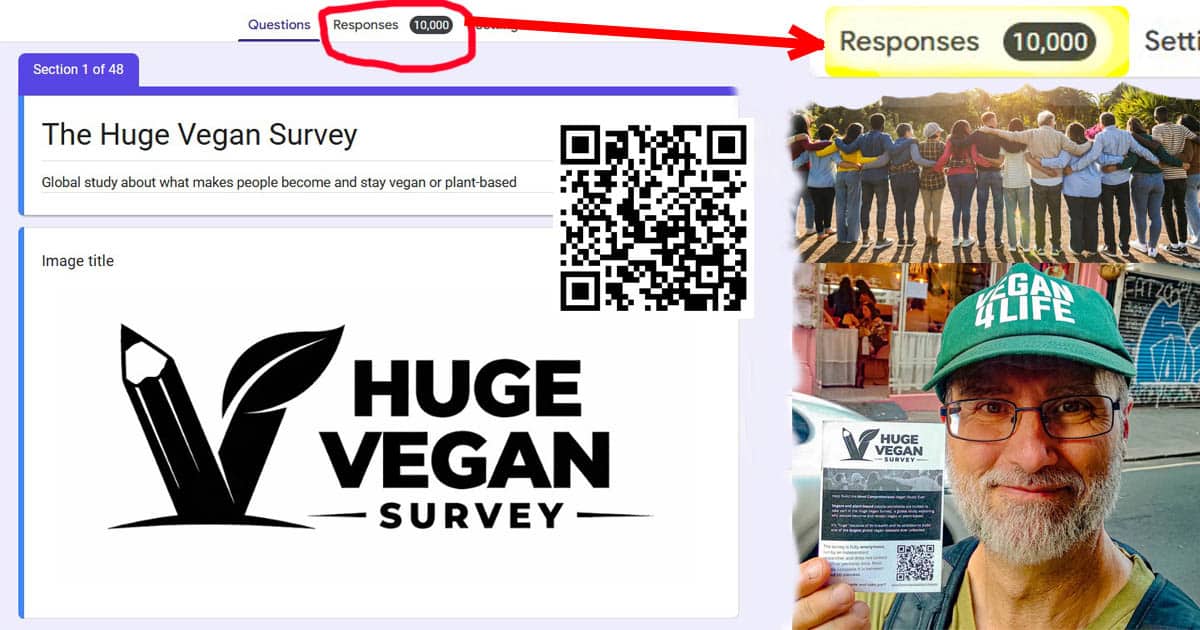
The global study of vegans, the “Huge Vegan Survey”, has reached 10,000 participants but is still open to more Huge Vegan Survey logo London, England, October 1st, 2026 - The independently run Huge [...]