[Speaker 1]
Welcome to the 1890s Vegan Thanksgiving Gala. So excited to have you join us. You can step back in time, ladies and gents, to the sound of the Tofurky Rag and learn the history of vegetarianism and veganism in the United States from two people who know it like the back of their hand.
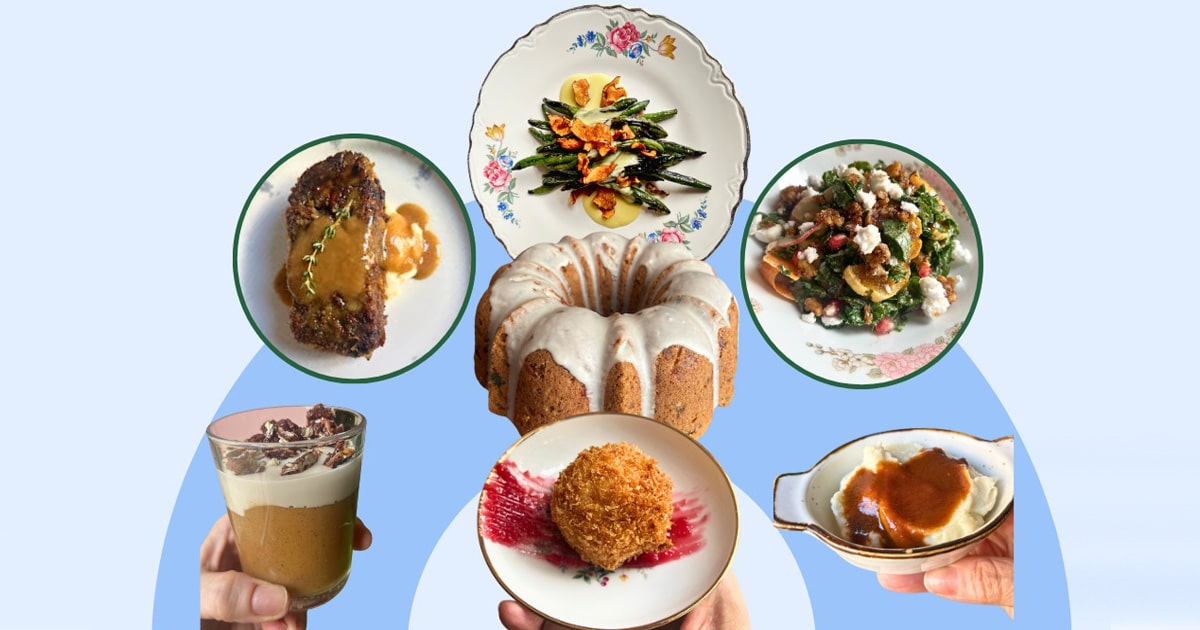
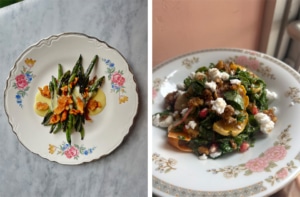
History came alive at a Philly Vegan Thanksgiving Revival Gala on November 22nd this past year. About 100 guests gathered in Philadelphia for a truly unique celebration, the 1890s Vegan Thanksgiving Gala. This living history bank transported attendees back in time to the golden age of vegetarianism with ragtime music, mocktails, vintage gowns, and delicious plant-based dishes adapted from the original 19th century vegetarian recipes.
Yes, there was a huge vegetarian movement back in the 19th century and that’s what you’re going to learn about today from two of the premier experts in this. And one of them is right there, you just saw him at the party, Seth Tibbitt. There he is, the founder of Tofurky, the unparalleled product that is synonymous with vegan celebrations where no animals have to die.
So without any further introduction, I would like to introduce our incredible panel. There he is right in the center, Seth Tibbitt, the founder of Tofurky and Anne Denshaw, the CEO of the American Vegan Society that put this incredible celebration on. Seth, tell us why did you do this and what did it have to do with a certain milestone involving Tofurky?
[Speaker 2]
Yeah, thanks, Jane. So Tofurky started in 1995 in the Pacific Northwest where I had been struggling at Thanksgiving to find something to eat that was like celebratory and high protein, center of the table. You know, I saw all these people that were eating Tofurky, including some vegetarians who would backslide into eating turkey on Thanksgiving back then.
And I wanted to have something that we as vegetarians and vegans that we could eat. So we invented Tofurky just for that purpose. And right away, it was apparent that this was a big moment.
You know, we found a niche that was not really fiddled at that point, you know, which was having this food that vegetarians and vegans could eat at Thanksgiving. And so I thought, oh, man, I’ve invented sliced bread. This is incredible.
And then after that first season, I got an email from Bill Shurtleff, who is the author of the Book of Tempeh, the Book of Tofu, and kind of the historian of the soy movement and meat alternative movement. And he goes, hey, Seth, did you know that in 1895 there were vegetable turkeys? And I was like, oh, my God, I had no idea.
And that idea really struck me. And he sent me an article about it, and I read it. And so I was researching that really for the next 20 years or so with Tofurky.
And then it was last year in 2024, actually, that I found these recipes for a vegan. Well, actually, it was vegetarianism then, because veganism didn’t really start until Donald Watson in 1944 coined the word. But it was like news to me that here was these recipes that I found in, of all places, the 1900 November issue of Good Housekeeping magazine.
And so I thought then, wow, wouldn’t it be great to taste these? Because I wanted to know what these recipes tasted like, and I thought it would be a good living history thing, because people think that vegetarianism, veganism only was a family that was born in the 1960s. But actually, vegetarians were busy veganizing, vegetarianizing Thanksgiving all the way back in the 1890s.
[Speaker 1]
Before we get to Anne, you did an incredible presentation at the event, at the gala. By the way, we were all in costume. It was super fun.
I hope you do it again, Anne, because it was a blast. But you gave an incredible speech that was so fun with a PowerPoint, but it also taught everybody, including myself, so much about the history of the plant-based movement in America. Let’s hear a little bit about that, a clip from that incredible speech, and then we’ll talk to you on the other side.
[Speaker 2]
The first mention of vegetable turkeys was in 1869. It was like in Indiana, and it’s almost like an early National Enquirer article. Man finds giant beet and thinks it’s turkey, and they published an article about it.
But in the process, they mentioned vegetable turkey in 1869. So that’s where the term came from, from this beet. In 1886, right here in Philadelphia, was the Vegetarian Society of America, who had this magazine, Food, Home, and Garden, and they published all the stories that, again, read like a social media post, like here’s one of the posts, Mr. O. Cherrington Arthur of Oregon writes that after experimenting, he has come to the conclusion he is better without butter or any animal products. Here’s the first vegetable turkey recipe, which is in 1891. This is what we had to go on a lot of times when we were researching these recipes.
You’ll notice that they’re in paragraph form. It’s not like we have recipes today, where you have the ingredients and then the preparation. And this was a recipe that was based on bread.
[Speaker 1]
Wow. It was just so fascinating. I learned a lot.
I want to go to Ann Denshaw, the CEO of the American Vegan Society, and we’ll talk more about the incredible history of that organization in a second. But you were sort of the concert master, the maestro of this entire, very complicated event. I’m going to show some of the incredible food that was served there.
Tell us how you brought this together and all the different chefs that you recruited, top vegan chefs from around Philadelphia and the country. Well, I had the pleasure of being the event coordinator, and it was a lot of fun to get to work with amazing chefs. Really, Rachel Klein and Christina Pirillo put together the food with the help of many other prominent Philadelphia chefs who veganized the recipes.
I got to give Seth credit for having the dream of doing this celebration. And American Vegan Society, that’s a big part of what we do is we like to throw celebrations because we spend a lot of time teaching people what vegan is, how to be vegan, how to be successful at being vegan, how to encourage others to be vegan. But, you know, sometimes you got to just stop and celebrate.
And so that was a big part of what this was about. Yeah. And you’re looking at the main course.
We’re going to dive into that in a second. Absolutely delicious. The reviews were raves.
That was a vegetable turkey on top. And here are the incredible desserts. Now, remember, everybody, this is all taken from essentially inspired by Good Housekeeping and other recipes that were published at the start of the 20th century and the end of the 19th century.
So I really want to ask you, Seth, for those people who have no clue that, first of all, veganism or the idea of a nonviolent meatless diet goes back to Pythagoras, you know, to the ancient Greeks and to Buddhism. Why is it important to show that the plant based movement has a rich and long history?
[Speaker 2]
Yeah, well, you know, we as vegans and veganism right now has had some incredible growth. Really, it’s a golden age of veganism that we’ve been living in since, I would say, 1995 when the first Tofurky came out. But, you know, Beyond and Impossible came so close to the sun, really.
They were showing up all over in, you know, fast food restaurants and stores and, you know, Tofurky and other products were doing the same thing, too. So big meat and big dairy had to respond. And this is what they have done.
You know, they’ve really tried to villainize plant based foods with all of this misinformation and saying that their products are the ones that you should be eating and that this is just a fad. Plant based food eating was a fad. And to counter that misinformation, I think it’s important to look at, like you say, that this is a quote unquote fad, but it’s not a fad.
It’s a movement that’s been around centuries, really, in the world. And I would say the movement in the USA has been around since 1819 when the Bible Christians came over from England with the idea of spreading their good news of the plant based diet into America. So I think it’s really important to look at the long history and then you can extrapolate that this isn’t a fad, but it’s something a diet that will last on into the future and is strong and a great way to live and eat.
So that’s why I think it’s important to have these kind of living history events that underscore that.
[Speaker 1]
Yeah, and it was just so much fun. Again, you’re seeing people in period outfits and the food was based on these 19th century recipes. It was a unique event that also had a purpose of showing the history of the vegan movement and the vegetarian movement at a time where, as Seth mentions, basically there’s a lot of very powerful forces that would like to just make veganism disappear.
So I want to go back to you, Anne, and talk about the history of the vegan movement in America and the crucial role that your parents played in founding your dad, J. Dinshaw, and your mom, Freya, in founding the American Vegan Society, helping it take off, helping it go pretty much from a concept that very few people had heard of in 1960 to something that is obviously recognized around the world. So why don’t you tell us a little bit about the history of your family and how that relates to the vegan movement?
My father, J. Dinshaw, visited a slaughterhouse because back then you could just knock on the door and say, hey, I want to get a tour and see how my food is made. And he saw dairy cows get slaughtered in Philadelphia.
He went vegan on the spot. And so he decided to devote his life to lecturing, teaching people how to pronounce the word vegan and what it really means. So in 1960, he founded American Vegan Society, and he was the president.
And my mom was actually his pen pal, and she joined him in 1960, just a few months after he started the organization. And they really traveled together frequently. He would give the talks.
She would help people learn how to cook vegan. In 1965, she published, that’s Freya Dinshaw, another. She published the very first vegan cookbook in America that used the word vegan in the title.
And that’s what they devoted their lives to. So when my dad passed away in 2000 because he internalized the suffering of billions of animals, my mom took over as being president, and she just retired last year. And so now I’ve decided to not be the president.
We have someone else being our board president, and we created a new role of CEO. And so I like to call that coaching effective organization. And there’s your incredible family.
We learned so much about it by visiting the headquarters. There’s two headquarters. There’s the original headquarters in New Jersey, and then you have a brownstone storefront in Old City, Philadelphia.
That’s incredible. But what history that you brought us. And by the way, we’re in the process of doing a documentary series on that.
And so we’re going to step back in time and really show all the, almost like secrets, secrets revealed of the start of the vegan movement in the United States. Just for one example, you, Ann, were born as a vegan baby. And that was like, ah, everybody was up in arms.
And your mother, Freya, wrote an article in the American Vegan Society publication to explain like, wow, you can be totally healthy on a vegan diet as a baby, as a mother who’s pregnant, getting ready to give birth, dispelling a lot of these myths that frankly are perpetrated and perpetuated by people who make money off of selling formula and trying to convince customers and consumers that they have to consume dairy. Yes, well, I’ve been vegan my entire life.
So 56 years of veganism as of now, I like to keep celebrating my 39th birthday. So that’s all good. But I’ve got plenty of energy.
I’ve always been an athlete. And yeah, back in the day, like in the 70s and 80s, I just didn’t really tell people I was vegan because the world wasn’t really ready to hear it. And I just let people like me as a friend because I was growing up.
Yeah, and everybody is just loving this concept of a vegan gala based on vegetarian recipes from the golden age. And I just only learned in the past year that the word vegan was created in 1944. I mean, we have to put this in context.
We’re babies. We’re babies here in terms of veganism. Go ahead.
Oh, yeah, the word vegan was created in England. And ironically, that’s also where my mother was from. So she was about three years old when this word was coined and took her correspondence with an American to convince her to go fully vegan.
But both my parents grew up in vegetarian households. And we did our own bit of research in preparation for the gala. We found out that one of my grandparents was actually in America as a vegetarian in the 1890s.
And so he would have experienced a vegan or vegetarian, at least 1890s experience. Well, let’s get back to. Yeah, it’s truly amazing the history and we all should learn it because it gives you strength and nothing goes straight up.
Right now, we’re in a little bit of a, well, we’re on our heels because very powerful institutions want to wipe us off the map. But I feel that there could be also a boomerang effect. So it could end up being a positive.
So let’s talk about the main course, the vegetable turkey. Again, to recap, you, the founder of Tofurky, Seth, thought you had created this incredible product, which you did. I’ve enjoyed it for many, many Thanksgivings and continue to have the Tofurky deli slices and the Tofurky plant-based chicken just this week.
It’s so good. But you were shocked to find out, oh my God, they were doing similar things back in the 1890s. So tell us about how you tried to recreate but also modernize the original menu so that they were free of eggs, free of dairy.
And let’s dive into that vegetable turkey with chestnuts that was served at the gala.
[Speaker 2]
Yeah. So this recipe was based on chestnuts and eggplant. And the modern Tofurky and Gardein and Field Roast, they’re all kind of modern textural creations that use vital wheat gluten.
And this was a whole food recipe that didn’t have any of the isolates or concentrates that, well, Tofurky doesn’t have those, but some of them do, but it didn’t have tofu either because tofu was just getting a foothold in America at that time. And so I was attracted to this recipe. I found five vegetable turkey recipes, and I took them down to a culinary institute on the Oregon coast where I teach a class in veganism every year to these young student chefs.
And we made up these five different recipes. Some were more like a nut loaf, and then this one really stood out because of the eggplant chestnut texture. Chestnut trees in 1900 were about a fourth of the deciduous trees in America.
And then in 1906, a blight came over from Japan, and it destroyed all of these chestnut trees. So chestnuts, which were a big part of holiday eating in the 1900s and 1890s, really disappeared. But this recipe tested good for us, and then I took it to my old friend Hans Robel, who created the first tofu turkey for us in 1995, and he took the recipe and brought it to another level.
But he kept the main ingredients the same, and he just tweaked them. Like, for instance, onions, he caramelized the onions instead of just putting them in the roast like the recipe called for. And to make it more of a flavorful vegetable turkey, he added a little bit of nutritional yeast.
But those were really about the only things that he changed. So it was a very historical recipe, and it was, I felt like, very close to what a vegetarian would have eaten if they had made that recipe when it came out in 1900.
[Speaker 1]
And again, many, many chefs were involved. You have something like nine chefs total, then you have all these student chefs and other supervisors. But there were two women, two female chefs who were at the very heart of it.
Let’s hear a little bit from them, and then we’ll talk about how they also made this all happen. I’m Christina Prello. I’ve been vegan for 42 years.
[Speaker 3]
And I’m an instructor here at Walnut Hill and a television host on the longest running vegan cooking show on television. Hi, my name is Rachel Klein. I’m the chef owner of Miss Rachel’s Pantry.
I have been vegan since 2008. I went from vegetarian, which I did in kindergarten, to vegan because I watched a little documentary that someone made. They were a dairy farm owner, and just about how the baby cows cry for their mom after they’re separated.
And that was enough to make me cut out dairy, and then eggs followed.
[Speaker 1]
Wow. So amazing chefs, as you see. They’re world famous in their own, each in their own way.
One from television, one from an extremely popular restaurant. Tell us how this came together, Anne. The menu is really extraordinary.
Well, the menu, I really give credit to Seth. He wanted to keep it honoring what he found in a magazine. And then he recruited Rachel, and it just blossomed from there that we got a lot of the other Philadelphia chefs involved.
And sometimes I think it really takes having someone with a dream. This is really Seth’s dream, but he’s on the West Coast, and he needed someone in Philadelphia to put it together. So anything that wasn’t the food was my job to put together.
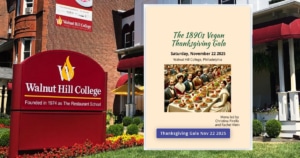
But the food, it was really Rachel and Christina. And we were so fortunate that Christina already works at Walnut Hill College, and she’s a chef educator there. So we were able to use their facility, which was just beautiful for having a banquet.
[Speaker 2]
Yeah, I want to add something to that. Christina works at Walnut Hill College, which is a non-vegan culinary college, but it’s the only culinary college in America where student chefs have to take a course that she teaches in veganism to graduate. So it was a perfect fit for us.
And the president said that he jumped on the chance to host this because he thought this will be an amazing opportunity for our student chefs to work with these famous vegan chefs and learn vegan cooking. So it was a win-win for everybody. And these student chefs really learned a lot from working with Christina and Rachel.
And Rachel, I mean, all of Philadelphia, I want to give a shout out to the vegan restaurants that are there. It is an amazing vegan city. Do you know that there’s 30 vegan cheesesteaks in the city of Philadelphia and all these restaurants?
That’s an amazing number of vegan cheesesteaks. And you have some high-end restaurants like everybody I think might know Veg, which is a pioneering restaurant that has been around and has done great work for years. But Rachel runs this pantry, and it is amazing.
She is a high-end meal. She changes the recipe every month, and it’s like a big dinner party when you go there. And you pay up front, and then you go to the event and the dinner, and you just enjoy it because you’ve already paid.
You don’t have to tip because you’ve already tipped. A tip is included. She pays her people a working salary and living salary.
But people are flying in from places and driving three hours to come every month to Rachel’s place. And there’s some diners that literally have tears after eating her food. I think Rachel is an undiscovered gem and is one of the most amazing vegan chefs in America and really the world right now.
And what a place that is. If you’re ever in Philadelphia, you got to go there. I mean, it’s just amazing.
[Speaker 1]
I don’t want to date myself, but I worked in Philadelphia many decades ago, and there was barely a single restaurant. There was only one famous one in the Rittenhouse Square area that I remember. But wow, what an incredible renaissance.
I have to go way, way back because obviously Philadelphia is where our nation, the United States, was formed. And Benjamin Franklin is one of the famous founding fathers. I believe he’s one of the very few who signed both the Declaration of Independence and the Constitution.
And what is ignored in history is that he was a vegetarian for most of his life. I shouldn’t say most. He lived a long time, but for a lot of his life.
And that’s ignored in history. Can you tell us a little bit more about Benjamin Franklin and why that’s so significant?
[Speaker 2]
Yeah, I mean, that’s a great example that you give of Benjamin Franklin. He wasn’t even mentioned. Ken Burns did a great series on him.
It was four hours. And I watched the whole thing and I was like, OK, they’re going to talk about his vegetarianism, right? Because he became a vegetarian in his late teens and early 20s.
And he talks about how meat is murder. He said that. And he said that vegetarianism gave him a clarity of thought that he couldn’t get anywhere else.
And he just lived it for many years. He talked about how hard it was, like his friends would all be going out to eat and they would say, why don’t you come with us? He said, no, I’m just going to stay here and study because there’s nothing for me to eat at these restaurants.
And so it was a big part of him at a formative age of his life. And then when he was over in France trying to convince them to help in the Revolutionary War effort, he discovered what he called Chinese cheese, which was and he wrote a letter home about it, which was the first mention of tofu that we can find in literature. And so he was on to that.
Even when he became more of a pescatarian, when he was going back and forth to Europe on boats, he started eating some fish. But even back then, he was into tofu and other products. So he kept a lot of his plant eating diet, even back when he became a pescatarian.
So he was quite an interesting soul in many respects.
[Speaker 1]
Well, I think this is another reason why this is so important, is that veganism is written out of the history books. And, you know, they say people who write history make history. Jane Goodall was a vegan.
I read several articles after she tragically passed away after a very long and healthy and vibrant, active life, active right till the end. Very not the big media did not mention she’s vegan. And this happens over and over and over again.
Think of the implications that the founding, one of the seminal founding fathers of our nation said meat is murder. It puts it in an entirely different context. People like to say, well, that’s the crazy paint throwers, the red paint throwers.
No, that was our founding father. And so, you know, we have to stand up for ourselves. And especially now and not to get not to get political, but I will say this is fact.
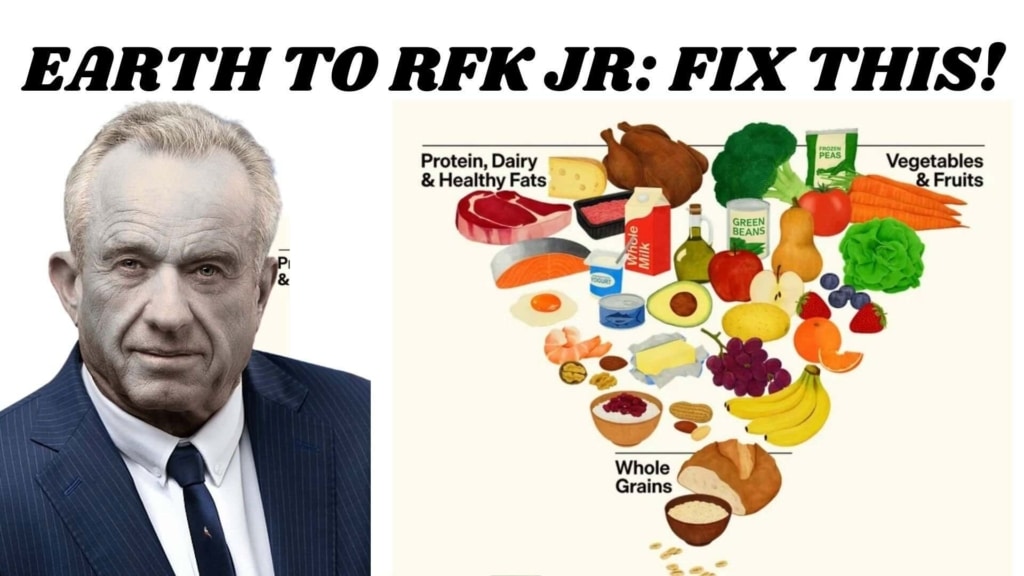
There’s a new food pyramid put out just the other day that puts meat and dairy at the top, even though, you know, heart disease is the leading killer in America and Americans eat more meat than vast parts of the world. Most of the world. We’re one of the biggest consumers of meat.
And yet the heart attacks are killing us and we’re suffering a lot from cancer. So, you know, that’s another reason. Seth, I have to go to you on this.
Back in the 1890s or the early 20th century, the U.S. government was actually, as I understand it from you, encouraging Americans to reduce their meat consumption versus what you see right now. Tell us about that.
[Speaker 2]
One hundred percent. So there was the secretary of agriculture, assistant secretary of agriculture, was really worried at that time about what does the future look like? How could we feed a growing population when meat at that time, animal meat was very expensive?
Refrigeration was marginal, especially in transporting processed meat. Throughout the country. And he went to, of all people, John Harvey Kellogg, the brother of Will Kellogg, who founded the cereal company that we all know of.
And he said, can’t you create something that’s high protein that would not be based on animals, but would be based on plant? And so Kellogg went to work and he created granola was one of the inventions of his. And he also created two canned meat products.
One was called Protos and one was called Nuttos. And they were nut based and Protos had a little soy in it and they were high in protein. And he was all for it.
And there were actually in the 1900s, there were these pamphlets that were put out by the US government that said, hey, we know that you don’t need to eat meat in order to live and it cutting down on your meat would be good for your health and for our economy and for the environment of the country. So it was amazing to see that kind of support coming to vegetarian foods at the time. And the government was, like you say, an ally of the plant based movements in the 1900s.
[Speaker 1]
So as a result, meat consumption went down temporarily, correct?
[Speaker 2]
That was incredible. Due to the price of meat and also a lot of the activism of the vegetarians of that time, including Upton Sinclair, who wrote The Jungle, which was a novel that talked graphically about how meat was, you know, animals were slaughtered. Now meat was processed in Chicago at the times and it just turned people off.
And so, you know, it was really from 1901 to 1922, per capita meat consumption in America fell an astounding 24 percent, which showed that it wasn’t just the vegetarians that were eating less meat or no meat, but it was migrating out to society at large and into the culture. So it was, you know, in some of the leading magazines, Ladies Home Journal, Good Housekeeping Magazine, it was everywhere. There was a vegetarian football team that had vegetarian cheers and they won the Big Ten division of football with this vegetarian football team.
There were people, athletes that were, you know, showing their vegetarianism and how much more active and better they could perform on the field by being vegetarian than animal based ones. So it was a golden age of vegetarianism. And it was amazing how the government supported it.
[Speaker 1]
So now we have a government that is pushing just, this is pretty much breaking news, this just happened this week, pushing meat and dairy over the advice of the scientific community. And in fact, there are efforts by Physicians Committee for Responsible Medicine, filing a petition with the USDA and Health and Human Services to have it withdrawn based on undue corporate influence. But if you look at the chart, tragically, meat consumption is skyrocketing.
And Anne Denshaw, you brought this up when you were giving us the tour of the American Vegan Society and what has happened since your father founded the American Vegan Society in 1960. Well, also our population has exploded, so that makes it even more of a challenge. But what are your thoughts about where we are right now and why this keeps going up?
Well, I think it’s tragic that it keeps going up, of course. But I think a big part of it is that other countries, so that chart has to do with the worldwide consumption of meat. So yes, it’s gone up in America as well.
But other countries that used to be more plant based have followed our lead. And that’s why it’s that much more important that right now, American Vegan Society takes a stronger role in helping people see that they can have fun, they can eat well, it’s delicious to eat plants and not eat animals. And let other countries see that we can change America.
We are not all believers in what the government says. And that ridiculous food chart that you just showed, most of us are much more intelligent. And it’s time to really stand as a country and show what we can do and what the right things are to show the rest of the world that America can be much more vegan, much kinder, much gentler, much more friendly, and all those good positive attributes that we know we have.
Yeah. Yes, of course.
[Speaker 2]
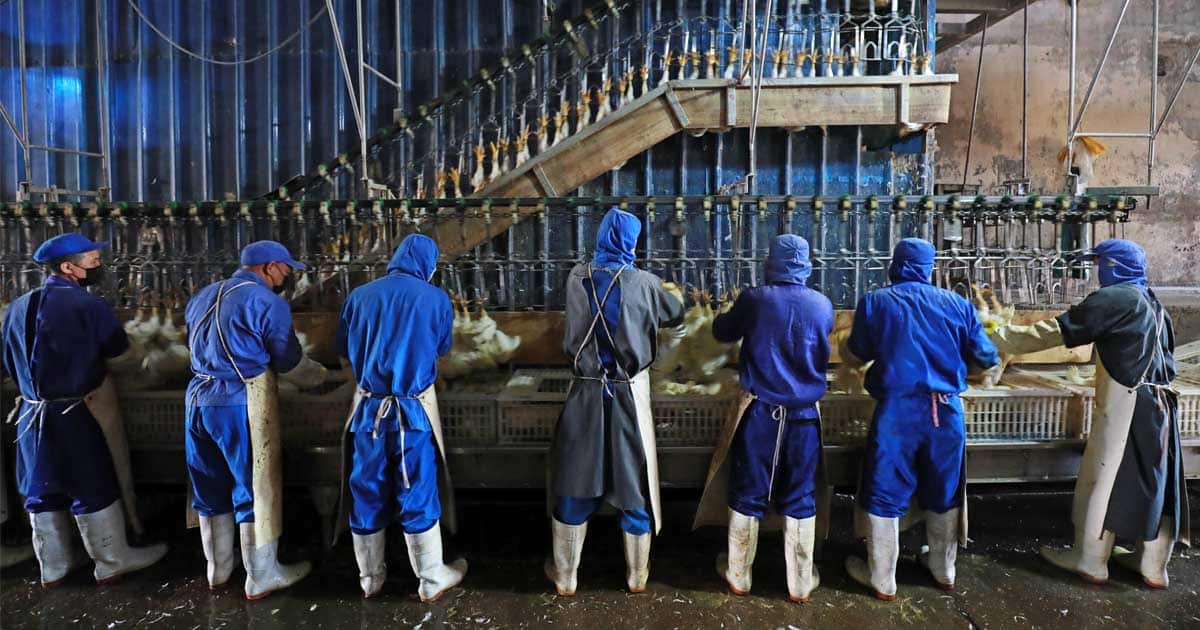
To be fair on that chart that you showed that showed the number of animals being slaughtered, beef and pork are down and those are large animals. And what’s up is chicken. So there’s some, yeah, that’s a great chart right there.
So you can see that the growth of chicken eating is really, you know, because you have to slaughter so many other of these sentient beings, you know, which drives the numbers up.
[Speaker 1]
You’re absolutely right. And a lot of people don’t even acknowledge chicken as an animal. They say, well, I don’t eat meat.
I just eat chicken. As you know, chickens are individuals and they are sentient beings. They’re not vegetables nor fish.
What’s the future? As we wrap up this incredible segment, I really want to know, Ann, are you going to do it again next year? If you do, are you going to tweak it?
What’s it going to be like? Because it was a hit. There were about 100 people there and everybody had the time of their lives.
The dress-up factor alone, the carriage, there was a carriage there. The fact that it happened in historic Philadelphia, the birthplace of our nation, this historic, beautiful college, Walnut Hill College. I mean, look at this.
Everybody was just blown away by what you accomplished here. I thought it was a one-off event. It wound up being an incredible experience for not just the people attending, but those of us putting it on.
And so I can’t completely tell you what we’re planning for this year, but I can say that we would like to do something that is another celebration. The city of Philadelphia is marking that it’s been 250 years since 1776, and there are a lot of celebrations coming up. So there’s a really good chance that we’re going to do something amazing, and we’ll be announcing that a little bit later this year.
Well, that’s exciting.
[Speaker 2]
Jane, I want to add something. I want to thank you and Unchained TV, because when I was originally thinking of this event, I was thinking, oh, this will be a media hit. We had so much media attention with Tofurky and still get it.
And I was like, this is a twist on Thanksgiving. It’s a great story. But you are the main person that saw that, and it really speaks to the magic of you and Unchained TV and how you gave it the attention that the event really deserves.
So I think that you were a shining star in having given it the attention and the energy, and you brought the dress up and the documentary and everything to the height that it was. So kudos to you and kudos to the AVS. I think if you go to Philadelphia, you got to go to the American Vegan Center right there in Old City.
And I want to give a shout out to my friend Vance, who is a member of that, who gives vegan walking tours of Philadelphia, which is amazing, and it helps uncover this hidden history. And it’s a fascinating tour, and it goes through so many different parts of veganism and vegetarianism. And he’s just awesome, along with Ann and the team that she’s created, and having this.
I think that’s one of the reasons why Philadelphia hasn’t seen some of the fallout, hitting these vegan restaurants that are still going strong. And you have people driving hours to eat at Miss Rachel’s Pantry and stuff, and veg and places like that. It’s because there’s this brick and mortar American Vegan Center that Ann and her team run with Vance.
And they’re doing the tours, and you can go there, and you can find out where to eat and all these vegan, and where you can go to the nearest cheesesteak. I mean, Philadelphia is just an underrated vegan world capital. And I think a lot of the kudos on that go to Ann and her team.
[Speaker 1]
Well, I want to say it’s a team effort, and you’ve inspired me. Actually, because we’re working on this documentary, I started thinking a lot about the importance of history. And I realized that right on my cell phone, I had, going back to 2015, a lot of historic moments in the animal rights movement.
And I started putting them together as a category on Unchained TV. For example, the world’s largest cube of truth in 2018 in San Francisco. I had gone live.
It was right on my phone. And so you’ve inspired me to explore more of the history. And then people began reaching out to me and saying, hey, I’ve got something that belongs on the history of animal rights category.
And so really what you’ve done, Ann and Seth, have sparked a whole renaissance of interest in the history of the plant-based movement. And I have a feeling that you’re just getting started, and I can’t wait to see what you do next. And also people are saying, why not California?
We have some comments. Somebody wants to do this in California. So you might have to take your show on the road and do it all over the United States.
Certainly, there’s an interest. I think people are really interested in this. So I just want to say thank you so very much.
You guys are my heroes. You pulled off something extraordinary, unique, brilliant, and very much needed. The 1890s vegan Thanksgiving gala based on this menu from the 1900s Good Housekeeping magazine.
And it was reenacted and modernized as a vegan Thanksgiving dish. Absolutely incredible. And I just hope that we can do this again for Thanksgiving or some other holiday, especially as you mentioned, there are some major milestones in the history of our country coming up.
Thank you both. And let’s keep moving forward as we step back in time.
[Speaker 2]
Thank you to both of you who made this happen.
[Speaker 1]
Unchained TV is my go-to. Unchained TV. Who knew?
Unchained baby, yeah!