
Backlash Grows After Tom Hanks Ridicules Almond Milk as “Not Real”
Share This
Tom Hanks, Almond Milk, and the Dairy Industry’s Growing Identity Crisis
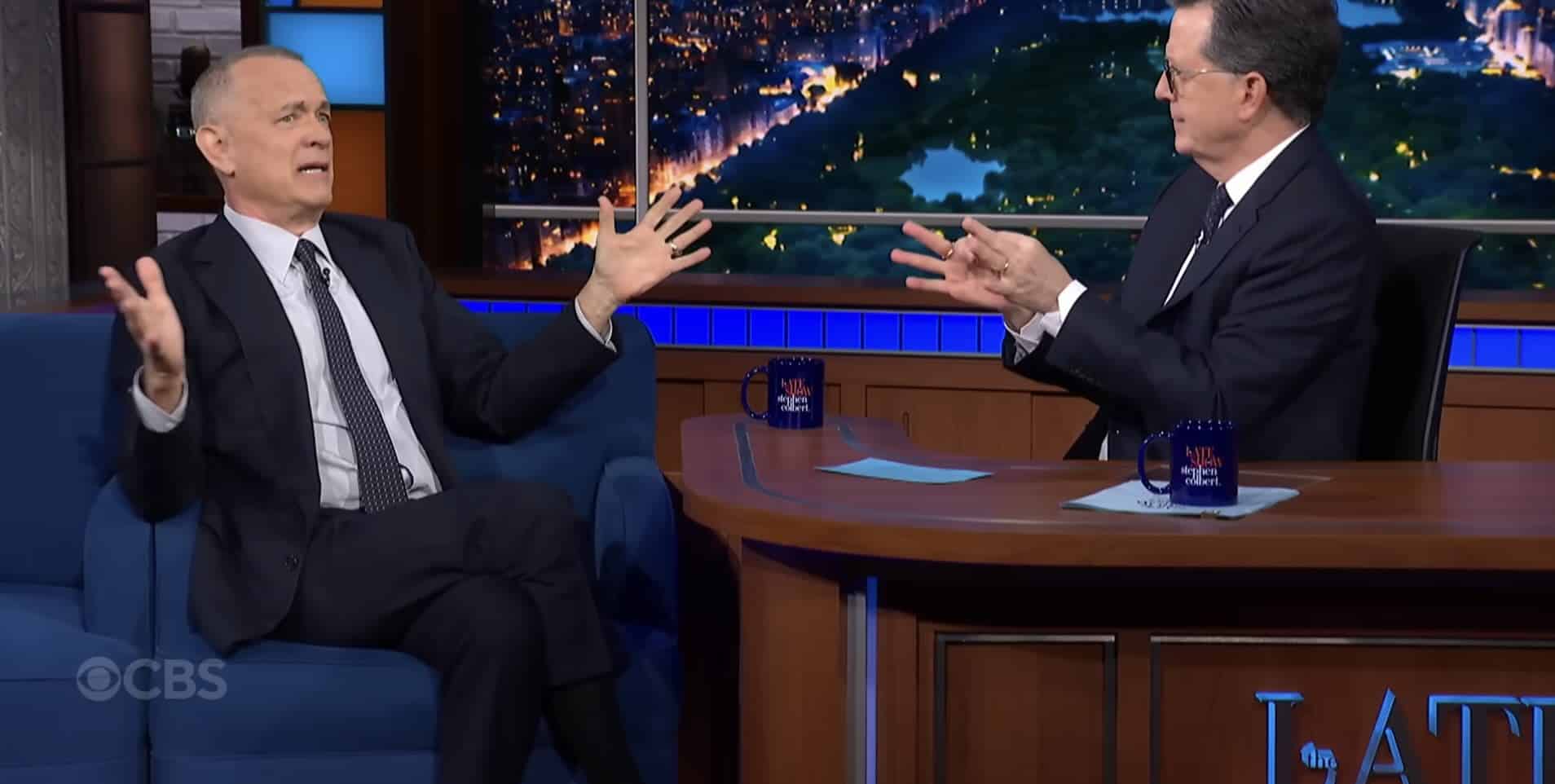
Hollywood, California, May 14th, 2026 – Movie star Tom Hanks has officially wandered into the dairy discourse — and the internet wasted absolutely no time in pointing out the hypocrisy of someone who talked about courage and honor in one sentence on the Colbert Show and then turned around and essentially shilled for a cruel industry a few seconds later.
The “beloved” actor, echoing an argument the dairy industry has aggressively pushed for years, said, “There is no such thing as almond milk,” waving around his hands as if was mystified by the notion while adding, “Just because it’s white doesn’t mean it’s milk.” To some, it may sound like a harmless semantic joke. To others, it feels like another attempt to protect a cruel and environmentally catastrophic industry increasingly uncomfortable with the fact that consumers now have healthier, compassionate, sustainable options — and are actually taking them.
For vegans and plant-based advocates, the reaction was swift, sarcastic, and deeply telling.
“Nobody is accidentally milking an almond,” became one of the recurring sentiments online. Said another tweeter, “Just because he’s a star doesn’t make him intelligent or compassionate.” One commenter dropped Hanks what you might call a truth bomb suggesting, “Tom, why don’t you do a little research. You may discover that dairy cows are raped by humans to forcibly impregnate them. Shortly after birth, the mother’s baby is abducted. If it’s a boy, the animal is either shot or put in a veal crate. The girls are isolated in hutches readied to replace their mothers when they are sold for cheap hamburger meat. Where is your vaunted honor in all of that? Isn’t that REAL? Wake up and do your homework before you open your entitled mouth.”
Beneath the comments and memes sits something much larger: a growing cultural anxiety around the decline of dairy’s untouchable status in American life.
For decades, cow’s milk was treated not just as a product, but as a default. Schools served it automatically. Advertising campaigns framed it as essential. Families built entire nutritional identities around it. To question dairy — ethically, environmentally, or nutritionally — once felt fringe to many Americans.
That world is changing.
And conversations like this reveal just how uncomfortable that shift can make people.
The Dairy Industry Is Fighting a Culture War
The battle over terms like “almond milk,” “oat milk,” and “soy milk” has been brewing for years. Dairy lobbyists and industry organizations have repeatedly pushed lawmakers and regulators to restrict plant-based companies from using traditional dairy language, arguing that consumers are somehow being deceived.
Tom Hanks recently added fuel to that debate with his appearance with Stephen Colbert while discussing how he takes his coffee.
By saying almond milk is not milk, many felt he was insulting their intelligence. It was William Shakespeare who first coined the phrase, “The milk of human kindness.” Was the Bard talking about dairy milk?
And nobody believes an oat is lactating in the back room.
Consumer behavior tells a very different story than the one dairy lobbyists often present. People know exactly what they are buying when they pick up oat milk at Starbucks or almond milk at Target. Plant-based milk alternatives have become mainstream because consumers are intentionally choosing them — not because they wandered into the grocery store in a state of dairy-related confusion.
The real issue is not confusion.
The real issue is competition.
Plant-based alternatives, like almond milk, have gone from niche health-store products to permanent fixtures in mainstream grocery aisles, coffee shops, restaurants, and fast-food chains. Younger consumers, in particular, are increasingly open to reducing animal products for ethical, environmental, or health-related reasons. Meanwhile, dairy consumption habits have steadily shifted, forcing the industry into a defensive posture it did not have to occupy twenty years ago. For some, the question arises, “Could Tom Hanks be working for the dairy industry?” He’s invited on to respond.
When industries begin losing cultural dominance, language suddenly becomes very important.
The backlash to Hanks’ comments quickly spread online, with vegan advocates, creators, and activists responding with a mix of humor, sarcasm, and outright disbelief.
Tom Hanks Is Challenged
New York City vegan advocate Hunter Peress escalated the absurdity of the moment into a direct challenge.
“Mr. Hanks, this is a challenge to you — I bet my entire home that almond milk is real. Are you up to the challenge?”
The response perfectly captured the surreal energy surrounding the debate. What started as a celebrity comment about coffee has suddenly evolved into a full-blown internet argument about language, identity and culture.
UnchainedTV founder Jane Velez-Mitchell responded with exactly the kind of unapologetic energy the debate seems to invite.
“Almond milk is real. The real fantasy is pretending cow’s milk is the only milk. The ultimate fantasy is pretending that you can be a kind person and advocate for the cruelest industry on the planet.”
After all, almond milk is probably a lot more real than the volleyball Hanks emotionally bonded with for Cast Away.
But the quote also cuts directly to the emotional center of the debate.
Because this is not really about vocabulary.
It is about who gets to define normal.
What the Debate Carefully Avoids
Lost beneath the outrage over labeling is the reality of what the dairy industry itself actually looks like.
Modern dairy production has long been criticized by animal advocates for practices involving forced impregnation, calf separation, confinement systems, and slaughter once cows are no longer profitable. Environmental researchers have also repeatedly raised concerns surrounding dairy’s enormous resource demands, greenhouse gas emissions, land use, and water consumption.
Those conversations are far heavier than arguing over whether almond milk deserves the word “milk.”
And perhaps that is part of why the labeling fight continues to dominate headlines instead.
It is easier to debate terminology than ethics.
Easier to laugh at almond milk drinkers than to confront the realities of industrialized animal agriculture.
Easier to frame plant-based consumers as confused than acknowledge that many people are making intentional choices after learning more about how dairy production works.
That tension is what gives this debate its strange emotional intensity. Underneath the celebrity commentary and social media chaos is a society slowly renegotiating its relationship with food, animals, identity, and tradition.
Celebrity Culture, Virality, and the Internet’s Favorite Food Fight
The internet, of course, thrives on exactly this kind of discourse.
Add a beloved celebrity, veganism, food politics, industry lobbying, and a few meme-worthy quotes, and suddenly a conversation about almond milk becomes national entertainment. Social media algorithms reward outrage, humor, tribalism, and conflict — and the dairy debate manages to hit all four at once.
That is likely part of why these stories keep resurfacing.
People are not just arguing about beverages.
They are arguing about nostalgia. About identity. About masculinity. About environmental responsibility. About whether cultural traditions should remain immune from criticism simply because they are familiar.
And, increasingly, they are arguing about whether industries built on animal exploitation should continue receiving automatic cultural protection.
Because let’s be honest: nobody storms into a grocery store genuinely bewildered by the existence of almond milk. Nobody stands frozen in the refrigerated aisle whispering, “Wait… almonds have nipples now?”
Consumers understand contextual language perfectly fine every single day. Coconut milk has existed forever. Peanut butter does not contain dairy butter. Buffalo wings do not contain buffalo. Baby oil is not made from babies. Society somehow survives all of this without collapsing into chaos.
But plant-based products seem to trigger a very specific kind of panic — one rooted less in confusion and more in discomfort with changing cultural norms.
For generations, dairy occupied a nearly sacred place in American life. It was marketed as wholesome, patriotic, essential, even morally neutral. Now, for the first time in mainstream culture, large numbers of people are openly questioning not just dairy itself, but the systems, industries, and assumptions surrounding it.
That shift can feel destabilizing for people who grew up seeing cow’s milk as untouchable.
Tom Hanks may not have intended to ignite a food culture war. But the intensity of the reaction reveals something larger simmering beneath the surface.
The dairy industry is no longer fighting fringe vegans on the outskirts of culture.
It is fighting the reality that the culture itself is changing.
Share This
About the Author: Brandy Walt-Rose

Latest News
Stay Tuned In
Be the first to know when new shows drop! Plus, get the hottest headlines, inspiring stories, and behind-the-scenes extras. Sign up and keep streaming!
you might also like
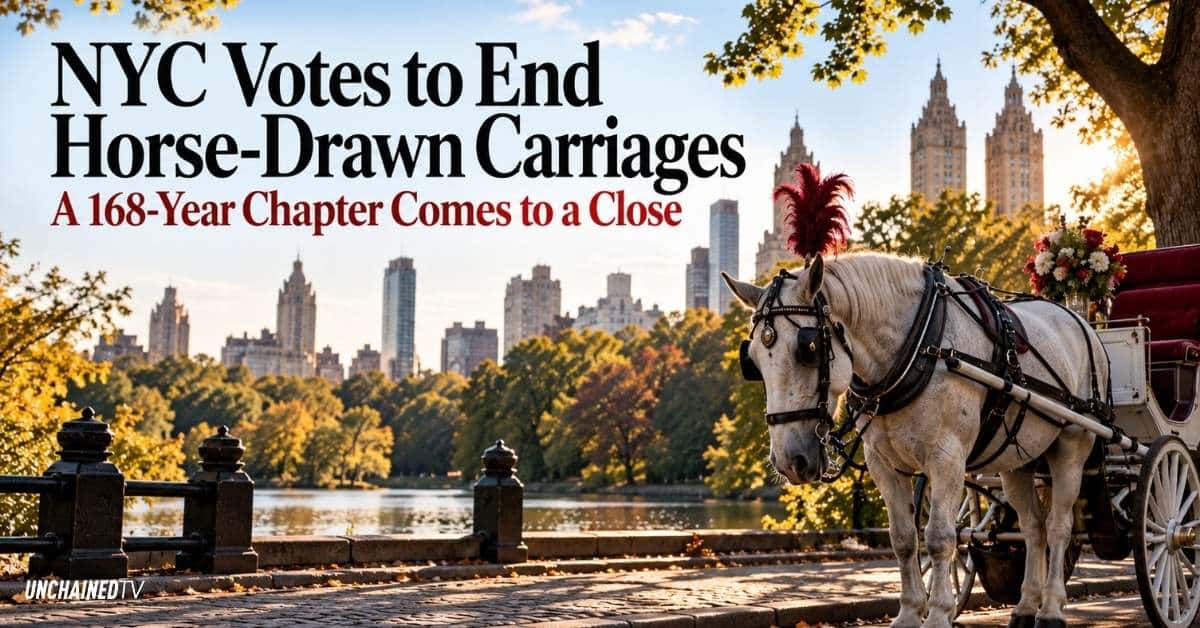
New York City's historic vote will phase out horse-drawn carriages by 2028, affecting 180 horses and ending a decades-long battle in a victory for the animal rights movement NEW YORK CITY — October 23rd, 2026 [...]

UNCHAINEDTV reports vegan Philly is surging in 2026, from a Michelin Green Star to a culinary college that requires vegan cooking to graduate.

The new documentary, Together Around Food, examines one town's 15-day experiment—and Climate Healers' ambitious campaign to make healthy, plant-based food free for everyone. CHIMACUM, Washington, October 19th, 2026 - A 15-day experiment offering free gourmet [...]