
Is Dairy Entering Its Controversial “Big Tobacco” Era?
Share This
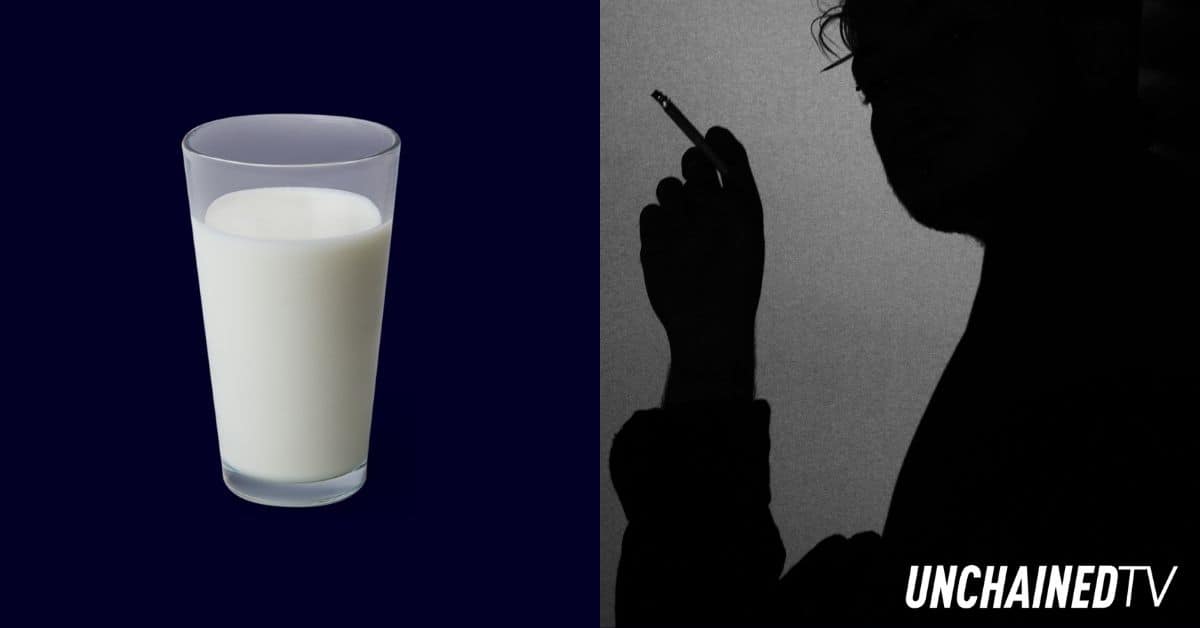
Dairy once felt culturally untouchable. In 2026, growing debates over ethics, health, and transparency are beginning to change that.
Lancaster, Pa – May 27th, 2026 – For decades, bovine milk occupied a nearly untouchable place in American culture.
Celebrities posed with milk mustaches. Public schools treated dairy as essential. Entire generations grew up hearing that strong bones, good health, and balanced living were tied directly to drinking bovine milk. Dairy was not simply marketed as food — it was marketed as normal, necessary, and unquestionable.
But in 2026, that cultural armor is finally cracking.
What once looked like a niche vegan trend is now impossible to ignore. Oat milk is in major coffee chains. Almond milk commercials run during prime-time television. Legacy brands like Breyers Ice Cream offer tubs of mouthwatering, creamy vegan ice cream made from oat milk. Entire grocery aisles have been reorganized around consumers actively searching for alternatives to bovine milk.
At the same time, social media has dramatically expanded visibility into industrial dairy practices, while younger consumers increasingly question long-standing assumptions surrounding food systems, animal welfare, and corporate influence.
As that shift accelerates, some critics are beginning to ask a provocative question:
Is dairy entering its “Big Tobacco” era?
The comparison is not about claiming bovine milk and cigarettes are similar products. Rather, critics argue the similarities lie in how both industries benefited from decades of normalization, aggressive advertising campaigns, institutional support, and carefully managed public messaging before eventually facing growing public skepticism.
And, for the first time in decades, the dairy industry no longer fully controls the narrative surrounding milk.
The Power of “Normal”
One reason the dairy conversation feels so emotionally charged may be because bovine milk was never sold as “just another product.”
For generations, dairy was woven directly into American identity.
Government dietary guidelines promoted bovine milk consumption. School lunch programs centered dairy products. Television commercials and celebrity campaigns reinforced the idea that bovine milk was essential to everyday life. Questioning dairy consumption often meant being dismissed as fringe, dramatic, or disconnected from mainstream culture.
That level of normalization matters because industries deeply embedded into daily life are often the hardest to critically examine.
For many Americans, dairy is tied to childhood memories, comfort foods and family traditions. Criticism of dairy can therefore feel strangely personal, even to people who have never seriously thought about the industry itself.
But history has shown that cultural norms are not permanent.
There was a time when questioning cigarettes in mainstream culture sounded radical. Smoking was once marketed as glamorous, sophisticated, and socially protected. Critics of the dairy industry argue bovine milk may now be entering a similar phase — not because dairy and tobacco are equivalent products, but because a once-untouchable industry is suddenly finding itself pulled into a public conversation it can no longer fully contain.
A Generational Shift Is Becoming Impossible to Ignore
One of the clearest signs of change may be generational.
Younger consumers appear far more willing to experiment with plant-based alternatives and question older assumptions surrounding food production, sustainability, and animal welfare. Vegan products that once occupied tiny corners of specialty stores are now aggressively marketed in mainstream grocery chains and fast-food restaurants.
And unlike previous generations, Gen Z grew up online.
That matters.
Today’s younger audiences have instant access to documentaries, undercover investigations, TikTok debates, viral farm footage, and creators openly discussing industrial food systems in ways that would have been almost unthinkable twenty years ago. Many social media influencers now refer to the product as “the breast milk of a cow,” the drinking of which feels gross to many, when put that way. But, cow’s milk is – in fact – the breast milk of a cow. Cows must be impregnated to produce milk. And, now, people are finally starting to wonder: what happens to their babies? The answer is not appetizing.
Questions that once got people laughed out of the room are now appearing in documentaries, viral videos, and mainstream media coverage.
The conversation is no longer confined to activist circles.
It lives on people’s phones.
Social Media Changed the Playing Field
The rise of social media may ultimately be one of the biggest factors reshaping the dairy conversation altogether.
In previous decades, large industries held far tighter control over public narratives through advertising campaigns, television placements, and institutional messaging. Today, however, a single viral video can reach millions of people overnight.
Videos showing confused and terrified calves being separated from their distraught mothers, clips from industrial dairy farms, and debates surrounding animal welfare now circulate constantly online. Whether viewers agree with the criticism or not, the visibility itself represents a massive cultural shift.
People are seeing things many industries once assumed consumers never would.
Critics argue that this visibility is changing the emotional relationship consumers have with dairy in real time. For some viewers, the issue is no longer simply nutritional. It has become ethical, environmental, emotional, and political all at once.
And once people emotionally reevaluate something they previously considered “normal,” public perception can shift surprisingly fast.
The Dairy Industry Tries Pushback
The dairy industry has strongly defended itself against growing criticism.
Industry organizations continue emphasizing dairy’s nutritional value and economic importance. Farmers themselves often argue they are being unfairly targeted while navigating difficult economic realities and changing consumer expectations.
And to be clear, the dairy industry remains enormously influential.
Millions of Americans still consume bovine milk, cheese, butter, and other dairy products every single day. The industry remains deeply tied to American agriculture, economics, politics and food culture.
But, the public conversation surrounding dairy feels noticeably different than it did even ten years ago.
Questions that once felt socially untouchable are now openly debated online and across mainstream media platforms. Critics increasingly challenge the role lobbying, advertising, and institutional messaging have played in shaping public perceptions surrounding milk consumption for decades.
Documentaries such as How Not to Die, currently streaming on UNCHAINEDTV, have also contributed to growing public conversations surrounding nutrition, food systems, and long-standing assumptions about diet and health. Even the National Institutes of Health admits that most people experience lactose malabsorption, which basically means that most people are allergic to dairy.
Combined with the rise of plant-based alternatives and nonstop social media discourse, the dairy industry now faces something it once rarely encountered on a large scale:
Mainstream skepticism.
Why the “Big Tobacco” Comparison Keeps Coming Back
Ultimately, the comparison to Big Tobacco is less about literal equivalency and more about cultural trajectory.
Critics argue that both industries benefited from decades of aggressive marketing, institutional protection, and public normalization before eventually facing growing skepticism from younger generations and independent media voices.
Again, bovine milk and cigarettes are not the same product.
But history shows that industries once considered culturally untouchable can eventually find themselves forced into public reevaluation as social values evolve and information becomes harder to control.
Whether dairy ultimately follows a similar path remains uncertain.
The industry remains enormously powerful economically and politically, and dairy products are still deeply embedded within everyday American life.
Yet one thing is becoming increasingly difficult to ignore:
The cultural immunity dairy once enjoyed does not look nearly as invincible as it once did.
Share This
About the Author: Brandy Walt-Rose


Latest News
Stay Tuned In
Be the first to know when new shows drop! Plus, get the hottest headlines, inspiring stories, and behind-the-scenes extras. Sign up and keep streaming!
you might also like

New York City's historic vote will phase out horse-drawn carriages by 2028, affecting 180 horses and ending a decades-long battle in a victory for the animal rights movement NEW YORK CITY — October 23rd, 2026 [...]

UNCHAINEDTV reports vegan Philly is surging in 2026, from a Michelin Green Star to a culinary college that requires vegan cooking to graduate.

The new documentary, Together Around Food, examines one town's 15-day experiment—and Climate Healers' ambitious campaign to make healthy, plant-based food free for everyone. CHIMACUM, Washington, October 19th, 2026 - A 15-day experiment offering free gourmet [...]