
Los Angeles Weighs Rodeo Restrictions Amid Allegations of Animal Cruelty
Share This
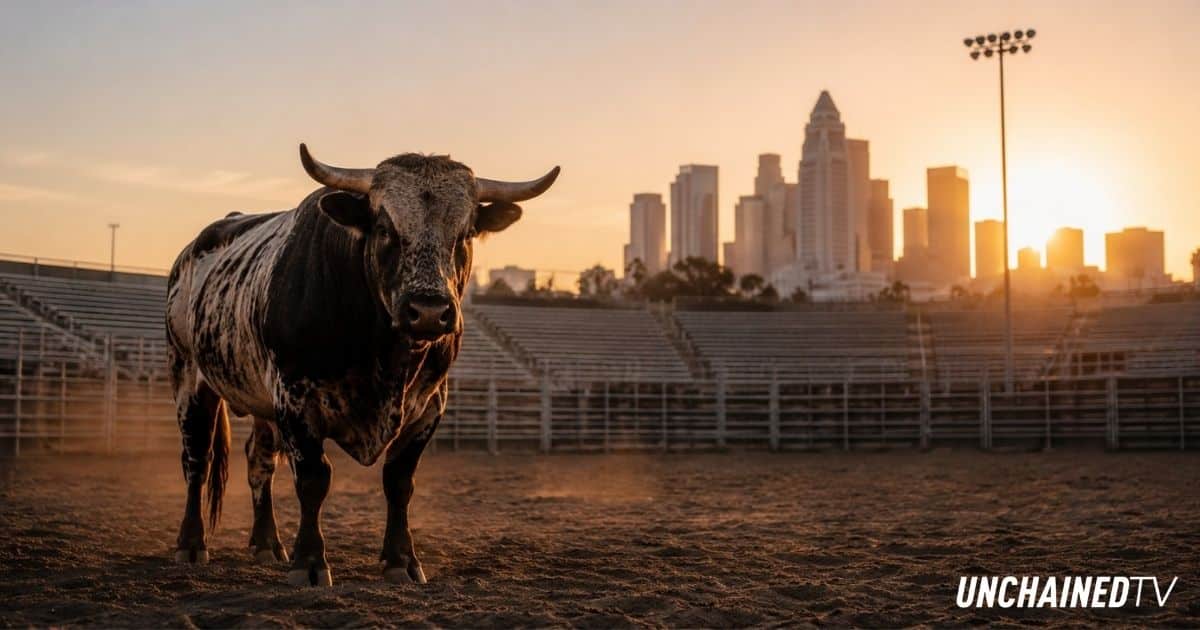
Viral videos, animal injuries, and a proposed Los Angeles ordinance are fueling renewed scrutiny of rodeo events
Los Angeles, CA – June 15, 2026 – One moment, spectators were watching a rodeo.
The next, a bull had launched itself into the stands.
Video of the incident spread rapidly online, joining a growing collection of footage that has fueled public debate about rodeo safety and animal welfare. While rodeo supporters viewed the event as an unfortunate accident, critics pointed to it as a reminder of the unpredictable nature of spectacles built around frightened, stressed, and highly agitated animals.
The rodeo controversy has erupted on both coasts. Here is a protest against rodeos at New York City’s famous Madison Square Garden.
In recent years, footage of injured animals, escaped bulls, and dangerous arena incidents has circulated widely across social media, exposing millions of viewers to scenes that rarely appear in promotional materials for rodeo events. For animal advocates, these incidents reveal what they see as the unavoidable reality behind the spectacle.
Now, that debate has reached Los Angeles City Hall.
Los Angeles Takes Up the Debate
Los Angeles officials are considering an ordinance that would prohibit several rodeo activities long criticized by animal protection organizations.
The proposed restrictions target events including calf roping, steer wrestling, team roping, bronc riding, and bull riding. Supporters say the measure is intended to reduce animal suffering and bring city policy in line with evolving public attitudes toward animals used in entertainment.
The proposal has generated intense discussion.
Opponents argue that rodeo represents an important cultural tradition and a celebration of ranching heritage. Supporters counter that “culture” is not a free pass to engage in cruelty. Cultural traditions, like all traditions, can evolve over time and should not be exempt from ethical scrutiny.
Opponents of the proposed bill have shown up in force wearing cowboy hats, wide brim sombreros and even on horseback. The debates have been fiery.
Behind the Spectacle
To rodeo fans, the events showcase athleticism, skill, and heritage.
To critics, they showcase something else entirely.
Animal advocates argue that many rodeo events depend on placing animals into situations designed to provoke fear, stress, resistance, or physical reactions. Calves are chased and roped. Steers are wrestled to the ground. Bulls are expected to buck, twist, and fight against riders.
While rodeo organizations claim they adhere to animal care standards, critics argue that the animals themselves have no choice as to whether or not they want to participate.
The Injury Reporting Question
One of the most contentious issues surrounding rodeo involves injuries.
California law requires veterinarians who treat rodeo animals for injuries to file reports with state authorities. Animal protection organizations, however, have repeatedly alleged that compliance with reporting requirements is inconsistent and that some injuries go undocumented or unreported.
The issue gained renewed attention following the 2023 Orange County Fair rodeo.
During that event, a bull suffered a catastrophic leg injury that was captured on video and widely shared online. Public reaction was swift. The incident generated significant criticism and contributed to increased scrutiny of rodeo practices throughout California.
Afterward, fair officials signaled that rodeo events were unlikely to return to the Orange County Fairgrounds.
Matt Rossell, of the Animal Legal Defense Fund, charges that the incident wasn’t reported to the state, as is required by law.
For advocates seeking stronger protections, the ultimately fatal bull injury has become a symbol of a larger problem.
Not simply one injured animal, but a system they believe too often hides the costs borne by animals behind the excitement of competition.
Cruelty Is Not Culture
Perhaps the most emotionally charged aspect of the debate involves culture.
Some opponents of the Los Angeles ordinance have framed the proposal as an attack on cultural traditions associated with rodeo and charreada events. Animal advocates reject that characterization.
Many point out that opposition to animal cruelty exists within every community, including communities whose traditions are frequently invoked during these debates.
In Los Angeles, Latino animal advocates have increasingly challenged the notion that compassion for animals and cultural identity are somehow incompatible values. They argue that preserving heritage does not require preserving practices that cause suffering.
UnchainedTV’s Jane Velez-Mitchell, a Latina herself, spoke at an LA city council committee hearing and described the whole “culture” argument as offensive. “Torturing animals in rodeos is not a celebration of Latino culture, that is an insult,” said Velez-Mitchell, adding, “Almost half of the population of Los Angeles is Latino. 1.8 million people. How many of them do you see riding around on bulls and wearing cowboy hats and sombreros? This is cynical political theater. I dare say most of the sombreros in Los Angeles are in this room right now.”
More Than a Rodeo Vote
The Los Angeles ordinance is ultimately about more than a single city or a single sport.
It reflects a broader shift in how many people view animals and humanity’s responsibilities toward them.
Scientific understanding of animal cognition, stress, and emotional capacity has grown significantly in recent decades. Public expectations regarding animal welfare have evolved alongside that knowledge. Activities once accepted without question are increasingly being reevaluated through a different ethical lens.
As viral videos continue to expose the realities of rodeo to new audiences and as public concern for animals continues to grow, more communities may soon find themselves confronting the same question.
How much animal suffering should society accept in the name of entertainment?
For supporters of the proposed ordinance, the answer is simple.
Culture can be celebrated.
History can be honored.
People can be entertained.
But, none of it should be at the expense of animals who never volunteered for the role or for the pain they suffer.
Share This
About the Author: Brandy Walt-Rose


Latest News

Stay Tuned In
Be the first to know when new shows drop! Plus, get the hottest headlines, inspiring stories, and behind-the-scenes extras. Sign up and keep streaming!
you might also like
New York City's historic vote will phase out horse-drawn carriages by 2028, affecting 180 horses and ending a decades-long battle in a victory for the animal rights movement NEW YORK CITY — October 23rd, 2026 [...]

UNCHAINEDTV reports vegan Philly is surging in 2026, from a Michelin Green Star to a culinary college that requires vegan cooking to graduate.

The new documentary, Together Around Food, examines one town's 15-day experiment—and Climate Healers' ambitious campaign to make healthy, plant-based food free for everyone. CHIMACUM, Washington, October 19th, 2026 - A 15-day experiment offering free gourmet [...]