
Global Protests Against Mass Dog Killings in Morocco Ahead of Soccer’s World Cup
Share This
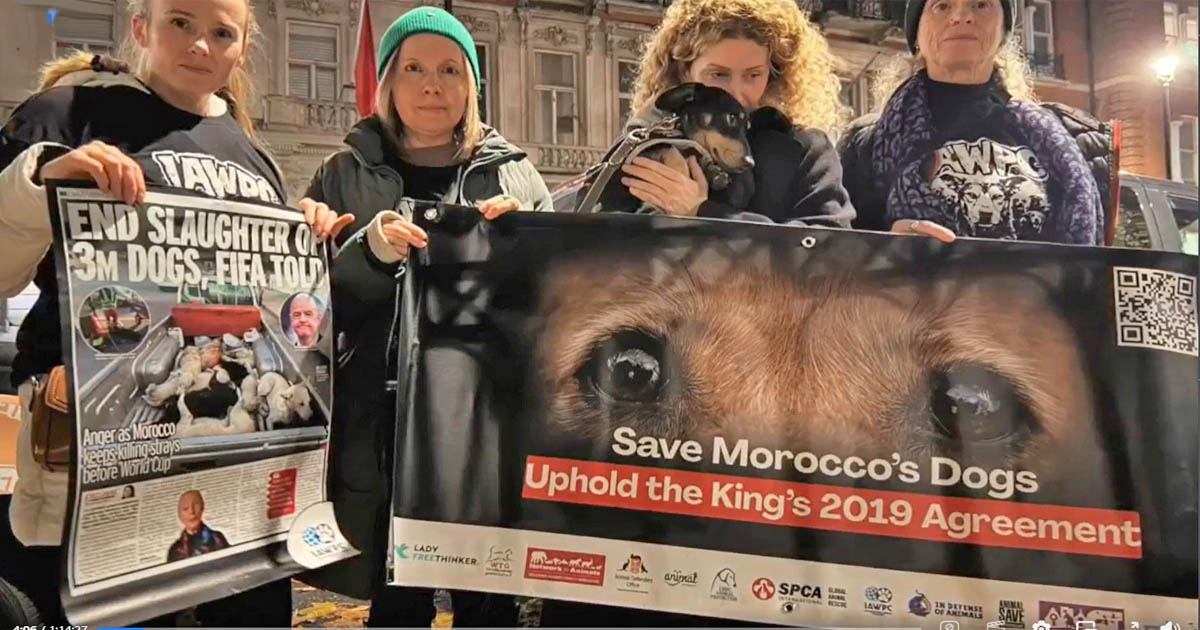
Campaigners target Moroccan embassies worldwide protesting over mass dog killings ahead of 2030 FIFA World Cup
Jane Velez-Mitchell, Fleur Dawes and Jami Sassone talking about Mass Dog Killings in Morocco
Washington, D.C., November 18, 2026 — Global protests have surged against the Mass Dog Killings occurring in Morocco ahead of the 2030 FIFA World Cup, as activists demand humane treatment and management of stray dogs. This week, the International Animal Welfare Protection Coalition (IAWPC) launched coordinated demonstrations across six continents to demand an immediate end to the shooting, poisoning, and catch-and-kill operations targeting up to three million canines.
Emerging Protests Against Mass Dog Killings in Morocco
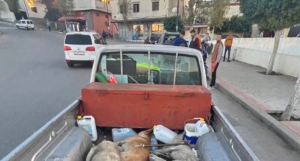
Footage of dogs killed in Morocco courtesy Soi Dog
Coordinated demonstrations erupted on November 17 outside Moroccan embassies and consulates in Washington, D.C., London, Paris, Rome, and across India. According to Yabiladi coverage of the protests, the campaign spans 13 countries and reports that huge numbers of stray dogs and cats have been shot or poisoned in several Moroccan cities. In the United States capital, reporter Jami Sassone documented peaceful demonstrators holding flowers, displaying red cards, and stamping red paw prints on banners while a mobile billboard circled the diplomatic block.
Katie Rebb of SPCA International confirmed that representatives from the Washington vigil traveled directly from the consulate to the Moroccan embassy to ring the bell and deliver an official letter demanding humane reform.
This Petition Has Gotten Over 46-Thousand Signatures
The International Animal Welfare Protection Coalition consists of 84 animal welfare organizations campaigning to end the slaughter of street, community, and owned canines. Les Ward MBE, chairman of the IAWPC, issued a direct statement regarding the demonstrations: “On November 17, organizations around the world stand together with a clear message for Morocco and FIFA: the killing must stop. Dogs inhumanely and without any compassion whatsoever, are being shot, poisoned and removed from the communities that care for them, to meet a certain and inhumane death, out of sight in some miserable building. Behind every killing is a sentient animal capable of fear, pain and suffering, with people left grieving or traumatized by what they have witnessed.” Those who want to express their opposition to the dog massacre can click here to sign the petition that’s already gotten over 46-thousand signatures.
Fleur Dawes of In Defense of Animals noted from London that the global day of action deliberately targeted diplomatic missions because King Mohammed VI specifically requested reports on any demonstration occurring outside a Moroccan consulate or embassy.
Calls for a Boycott of Moroccan Tourism Until the Dog Killing Stops
UnchainedTV host Jane Velez-Mitchell suggested another effective way to get the King’s attention would be to call for a boycott of Moroccan tourism. Said Velez-Mitchell, “Up until now, I had always wanted to visit Morocco. No longer. I wouldn’t be caught dead in that country considering this barbarism. I suggest the IAWPC puts pressure on travel companies to boycott Morocco until this mass killing of dogs stops.” Velez-Mitchell also suggested going after FIFA’s huge corporate sponsors, some of the biggest names in the world of business. “These companies also need to know that they are tarnishing their brand by being connected to this extremely violent and totally unnecessary mass dog massacre.”
Replacing Mass Dog Killings with humane population management requires a nationwide commitment to trap, neuter, vaccinate, and release (TNVR) protocols. The IAWPC has emphasized that campaigners are not opposed to football and want Morocco to host a successful World Cup, provided the government honors its existing commitments to sustainable animal welfare legislation. Standard TNVR procedures involve administering a rabies vaccination and performing a brief sterilization surgery before returning the animal to his or her familiar territory, stabilizing the population and creating an immunological barrier against disease.
IDA’s Animal Warrior: Fleur Dawes
Cultural and Political Drivers Behind Mass Dog Killings
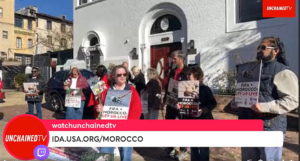
Washington D.C. protest at Moroccan Consulate against mass dog killings
The primary catalyst behind the current wave of Mass Dog Killings is an aggressive municipal push to present sanitized streets before international visitors arrive for the 2030 tournament, which Morocco will co-host with Spain and Portugal. According to the Goal.com analysis of the bid, the Hassan II Stadium in Casablanca is in contention to host the final with a target capacity of 115,000 spectators, and the stadium and its associated facilities will cost more than $1 billion. As competition intensifies for global prestige, local authorities have accelerated their killing campaign in order to project a modernized image. Ironically, says Velez-Mitchell, “It’s all having the opposite effect. Mass dog killings are not a modern way of dealing with pet overpopulation. It’s literally a medieval solution that offers nothing but bad public relations for this nation.”
Dawes agreed that municipal authorities are attempting to project a clean, modern image by removing street dogs and that the policy is producing the opposite effect as daily evidence of violence circulates globally. Local Moroccan citizens, who care for community animals and keep pets, oppose these roundups, which frequently result in owned companion animals being seized by paid catchers using metal poles.
Current municipal killing operations directly contradict established national decrees and international assurances. Campaigners point to a February 2019 agreement signed by Morocco’s Interior and Health ministries, the National Food Safety Office (ONSSA), and the National Order of Veterinarians to implement trap, neuter, vaccinate, and return programs, following a royal decree from King Mohammed VI supporting humane management. Furthermore, FIFA’s November 2024 Bid Evaluation Report recorded Morocco’s claim that “animal culling had been prohibited since August 2024 and that resources were being allocated to expand clinics and support programmes for stray dogs.”
Despite these official assurances, the IAWPC has gathered photographic and video evidence showing ongoing Mass Dog Killings across the country. Municipal workers continue to transport captured animals in trucks to facilities labeled as shelters or pounds, which Dawes identified as enclosed killing stations where animals are executed out of public view without adoption or sterilization options.
Town Hall to Save Turkey’s Dogs!
Mass Sterilization and Vaccination Is the Most Effective Method

Protest in India against mass dog killings in Morocco
The continuation of mass dog killings carries severe implications for public health, community trauma, and corporate governance. In terms of public safety, unmanaged stray populations present real challenges; according to CNN reporting on Morocco, around 100,000 people are bitten every year, 40% of them children under 15. However, the IAWPC briefing cites World Health Organization guidance confirming that mass canine vaccination is the most effective measure for controlling rabies, alongside World Organization for Animal Health findings that mass killings alone fail to manage population numbers. In short, authorities can’t kill their way out of a pet overpopulation crisis.
The psychological toll on Moroccan residents is substantial. The coalition warns that children witnessing violent shootings and poisonings face risks to their psychological wellbeing and moral development, an issue Dawes noted contravenes the UN Rights of the Child Charter. Citizens attempting to protect community animals or film the operations face intimidation, while the discharge of live ammunition in residential streets has resulted in physical injuries to members of the public.
Ward criticized FIFA and its president, Gianni Infantino, for remaining silent in their Zurich offices rather than enforcing the animal protection assurances recorded during the bidding process. When journalists submitted the IAWPC press release to FIFA for comment this week, the governing body issued an automated response stating it would investigate the inquiry.
The infrastructure to end Mass Dog Killings is available through international partnerships. The IAWPC has repeatedly offered its technical expertise to Moroccan authorities, local veterinarians, and FIFA to establish a comprehensive nationwide TNVR program supported by community education on responsible ownership. Every Moroccan city requires sufficient veterinary staffing, clinic capacity, and vaccination supplies to execute the 2019 inter-ministerial agreement effectively.
We invite any organization or institution mentioned in this story to comment at any time.
Hero Dog Documentary
Video Transcript
Global Protests vs Morocco's Mass Dog Killings ahead of FIFA 2030 World Cup [Speaker 1] We are bringing you team coverage of global protests against Morocco's dog massacre ongoing leading up to the 2030 FIFA World Cup. But why? Why kill animals when there's a cheaper, more effective solution to pet overpopulation?
Trap, neuter, vaccinate, release. They have plenty of time. There's a global uproar, protests around the world.
But we're going to go live to our reporter, Jamie Sasson, who is outside the Moroccan consulate in the nation's capital, Washington, D.C. Bring us up to date.
[Speaker 4] Hi, Jane. So we have the protests just about to kick off here in D.C. We've already seen updates from worldwide protests in Rome, Italy, Paris, France, London, all over the world, really. They're protesting.
This has been organized by the International Animal Welfare Protection Coalition, made up of 84 animal welfare organizations for one simple ask. Yes, to ask the Moroccan government to stop the killing. So yeah, we have protesters here.
They're holding flowers for the dogs being slaughtered in Morocco. And I think we have more D.C. activists joining us soon. We have a truck that's circling the block that's displaying the message.
We have some folks from SPCA International here with us.
[Speaker 1] Wow. And very polite people. And I think that's part of it.
It's a point of saying we're the good guys, right? We're not the bad guys. We're asking for peacefully violence to stop.
I want to go to London, England now, where we're also live with Fleur Dawes of In Defense of Animals. What is the message? And is the king of Morocco watching this?
Does he know this is happening?
[Speaker 2] Thank you so much, Jane and Jamie. Yeah, so this action, this global day of action, is having 12 different countries on six different continents. So we have a huge number of people taking part today, which is absolutely wonderful for the dogs, because they really need every voice that they can get, because they are being brutally, brutally rounded up in the streets, despite the fact that the people there in Morocco love these dogs.
They want to protect these dogs. And the government is just ripping them from their homes and causing a lot of problems as a result. So the reason that this global protest is happening at embassies and consulates around the world is because the king of Morocco has specifically asked to know about any demonstration or protest going on at a Moroccan consulate or embassy.
So every single one of these amazing activists who has stood outside, laying flowers, holding up red cards, holding up bloody footballs, soccer balls, those will be told directly to the king of Morocco, because he's asked for it. And what's interesting is in 2019, he actually delivered a royal decree that dogs should be humanely trapped, muted, vaccinated and released. So what's going on here is actually a contravention of what the king of Morocco has himself requested to happen to the dogs.
I mean, look at this. This is India.
[Speaker 1] This is Rome. It's happening all over the world. And I'm sorry, how dumb is this?
How dumb on so many levels? There is a more compassionate, cheaper, more effective solution. And that is trap, neuter, vaccination, release, TVNR.
It's doable. Instead of grabbing the dogs and beating the dogs and shooting the dogs, you give them a little shot. You do the surgery in five minutes.
We all know how it goes. And the irony is that they want to modernize and show the world that they're modern when they get the global attention of the FIFA World Cup in 2030. But this is medieval.
This is the opposite of modern flirt.
[Speaker 2] Yeah, you're absolutely right. There's the worst thing. I mean, there's so many bad things to say about this awful policy.
But it does actually run counter to what they're trying to do. Of course, they're trying to show, oh, hey, we're modern. We've got clean streets.
We're a modern country that takes care of things. And they don't want any trash. They don't want any dogs.
They want to look good for the global community. But little do they know that they're having the exact opposite effect. Because daily, we are members, one of the 86 members of the IAWPC and the IAWPC is showing activists are putting these pictures out, like you're seeing on this truck right now.
[Speaker 1] Yeah, you're looking at live pictures of the truck going by the nation's capital, Washington, D.C., the Moroccan consulate. And you can see there are some media there. There's some people taking photographs of this.
I think legally, they can't just sit there. That's why they keep going around the block. I'm going to go back to Jamie, who is live in Washington, D.C., at the Moroccan consulate. What's happening there, Jamie?
[Speaker 4] We are just respectfully demonstrating here at the Moroccan consulate, Jane. We have, like I said, some folks from SPCA International who helped organize here.
[Speaker 1] Can we talk to them?
[Speaker 4] Yes. It looks like we have some more local activists joining us now. So they're greeting them.
Then I will have them come on over and chat a little bit more about some of the updates.
[Speaker 1] My question to you is, has anybody opened that door at the consulate? You know they're looking out the windows. But has anybody made a statement or come out or said go away or called the police?
What has the response been, if anything?
[Speaker 4] Nothing yet. We do see a few police cars here parked just in front of me. I can flip and show you.
So I don't know if they're here because of us, but it is a few police cars there. We haven't had anybody open the door yet here at the consulate, but we did just start. So we'll see what's to come.
Maybe we can get Katie Rebb of the SPCA over here.
[Speaker 1] That would be absolutely incredible. While you do that, we do have a statement from the IAWPC, the International Animal Coalition. It's about a minute.
So I'll play that and then we'll talk to whoever you have.
[Speaker 7] As the FIFA World Cup lights up stadiums across Mexico, Canada and the United States, millions of football fans are glued to their screens celebrating the beautiful game. But outside some of those stadiums, another story is being told. Members of the International Animal Welfare Protection Coalition, the IAWPC, have been holding peaceful protests to raise awareness of the mass slaughter of dogs in Morocco ahead of the 2030 World Cup.
For many football fans, this is the first time they may have heard about the issue. They stop, ask questions, take leaflets and learn more. And that matters because changing hearts and minds starts with a conversation.
Let us be clear. We are not against football. We want Morocco to host a successful World Cup that the country can be proud of.
What we want is simple. We want an end to the killing. We want humane, sustainable dog population management through catch, neuter, vaccinate and return programs, education and animal welfare legislation.
We want the promises already made to be honoured. Every supporter who learns about this issue becomes another voice for change. The World Cup may last a few weeks, but for Morocco's dogs, the stakes could not be higher.
We will not look away and we will not stop.
[Speaker 1] Wow. Let's go back out to Washington, D.C. Jamie sats on in the nation's capital. It's really very, very simple.
Stop rounding up and killing dogs. It's not the way. You can do trap, neuter, vaccination, release.
You can even do trap, neuter, release. It's done all over the world. And it costs less money than hiring these people to go out and round these dogs up.
And they're also apparently creating these killing stations that they're calling shelters. But when the animals get into those quote unquote shelters, they're killed. You can interrupt us anytime, Jamie, that you've got those guests, because I know it's hard to grab them.
But while we're waiting, Fleur, tell us about those killing stations that they're saying, they're telling the people of Morocco who love dogs. I was on a Zoom call with you like six months ago, where the people of Morocco were crying and weeping and saying this. We don't want this to happen.
It's not the people of Morocco.
[Speaker 2] It's the government. That's exactly right, Jane. You know, the caring people on the ground are also the ones who are suffering secondary trauma from this, including children who are witnessing very bloody scenes right in front of them, which actually contravenes the UN Rights of the Child Charter.
But essentially, what's going on is the government is pretending that everything... Firstly, they're pretending that they're not killing dogs. So despite all of these photos and videos daily coming in across Morocco, showing the absolute bloody reality of what's happening to these dogs, they are still denying it.
And they have been building these killing stations. So these killing stations, they are being called shelters or pounds. And the dogs are caught with poles.
They are thrown onto trucks and they are driven to these killing stations, just like you see here. And those terrified dogs end up in these killing stations. And we have evidence that they are being killed at these places.
They are not receiving... They're not able to be adopted out. They're not being vaccinated or neutered and released back to where they came from.
It is really just a place where you get rid of the dogs hidden away from public view. So it's an absolutely desperate situation. It's happening all across Morocco.
It's horrendous for the dogs. It's horrendous for anyone who cares about these dogs. And what people don't really realise, maybe the government doesn't realise, is each one of these dogs, each animal, each human being, we are all individuals.
We are irreplaceable. You know from anyone who is connected with an animal or who has a dog or a cat knows that that is a unique individual. When you get rid of that life, that is gone forever.
You are not getting that back. And I hope that one day they realise the severity of what they've done here and feel like they will put in place a system that will work a lot better for themselves as well as for the dogs, for the people. It'll be less expensive.
And they will get that reputation that they want of being a modern country.
[Speaker 1] It's so disturbing. And as we've mentioned, it's not the Moroccan people. They don't want this.
They have their pets and their companion animals. And sometimes those animals are dragged as well. We heard stories of people saying they grabbed my pet because they'd probably get paid by the number of dogs they come in.
I don't know that for sure. But these people are probably not doing it as volunteers. I mean, can you imagine?
I want to say that we reached out to FIFA for comment. And you can see there that we filled out the contact form and we got an automated response from FIFA saying that they are going to investigate this request for comment. Basically, I included the news release from IAWPC in there that explains the entire situation.
And we invite FIFA or any of their corporate sponsors on any time. And that's another aspect of this. Some of the biggest companies in the world.
We don't need to name them now, but some of the biggest companies in the world, household names are sponsors of FIFA currently and presumably down the road as well. So what about putting corporate pressure on those companies? Because I say, always follow the money.
And Judith Allen is saying, I didn't know about this happening. That's one of the things that these protesters are trying to achieve is showing that this is happening to the world. Frankly, I've always wanted to go to Morocco.
It seems like a very glamorous, exciting place. But no, am I going to go as a tourist to a place where I know dogs are being massacred? Hell no.
I'm an American tourist. I love to travel. I'm your customer, Morocco.
I'm not going to go there if you're doing this. I'm going to boycott you. And that's another aspect.
I think you've got to get to the pressure points. So this is going to the king. Then you've got the corporate sponsors.
And then you've got the consumers, the people who book travel trips, which is Morocco, I'm sure, relies a lot on tourism. So those are the pressure points. Fleur, before we go back to talk to people at the protests at the consulate in Washington, D.C., are there plans to hit those other pressure points by reaching out to the sponsors?
[Speaker 2] Yes, Jane. And I want to thank you personally for having started a lot of that strategy. So yes, behind the scenes, of course, IAWPC is speaking with FIFA, but we've been speaking with the corporate sponsors of the World Cup.
It's a little bit far ahead right now to confirm for sure which the 2030 sponsors are. But as soon as we know that they have those sponsors, we will do that. And I will say that it's really some companies that you would expect to give a damn about cats and dogs.
So please stay tuned. Sign up for Interfence of Animals alerts. We release them every Friday.
And we will give you continued opportunities to take action for these dogs. And if you want to take action right now, you can go to IDAUSA.org slash Morocco, IDAUSA.org slash Morocco. And you can send a message to the king right now.
[Speaker 1] Okay, IDAUSA.org forward slash M-O-R-O-C-C-O, correct?
[Speaker 2] Yes, IDAUSA.org. So no, the first dot is removed. IDAUSA.org slash Morocco. That's one.
[Speaker 1] IDAUSA.org forward slash Morocco. So let's do that one. Is that the correct one right there?
No, this one. Yes, yes. Okay.
All right. We had another link before that we were using, but this is good. Go to IDAUSA.org forward slash Morocco. And let's get this done. Let's let people know that this is... I want to tell a personal story.
And you just let me know, Jamie, when you want us to come back out there. You're looking at a live protest outside the Moroccan consulate. Okay, let's go.
Let's go there. Hello, what's happening?
[Speaker 4] So we have Katie here from SPCA International. She can tell us a bit more.
[Speaker 3] Hi, everyone. We are currently in Washington, D.C. out of the Moroccan consulate. And we are doing a vigil, so a peaceful demonstration.
And I'll maybe pan this a little bit over here. So we are laying down flowers in honor of the lives of the dogs who perished. And for those that we are fighting for.
We are also going to stamp red paw prints on the banner to signify the dogs that have already been killed. So it means a lot for us to be here. And we just hope that the Moroccan government will abide by their own agreement of implementing more humane solutions like trap, neuter, vaccinate, release.
[Speaker 1] Let me ask you a question, because I've done a few protests at consulates and various other government offices. Something is triggered when you ring the bell. When you ring the bell, there's a whole system back there where they have to figure out, are we going to let you in?
Aren't you? Who you are? Are you going to ring the bell today so that it just double emphasizes that you're there and they can't pretend you're not there?
[Speaker 3] Yes, absolutely. So actually, after this demonstration, my colleague Hannah and I will be going to the embassy. We're at the consulate now, but we will be traveling up to the embassy to deliver a letter.
[Speaker 1] Oh, wow. Well, I don't know if you want to, but I'd say for good measure, hit that doorbell before you leave.
[Speaker 3] Yes, definitely let them know that we are here.
[Speaker 1] I remember it because I was doing something similar involving another issue and there are TV cameras. So they are recording you and they're having discussions behind the scenes. What do we do about this?
Who do we call? It moves things up the chain of command. And our understanding is, first of all, I certainly applaud you for doing this and the global protest.
How do we know that the decision maker, who apparently is the king of Morocco, is getting this information about this global protest happening today, Katie?
[Speaker 3] Absolutely. So the king has made a statement that any demonstrations, anything that's going outside of an embassy, he wants to be notified. So our voices globally in six different continents, in 12 different countries is being heard today.
[Speaker 1] Wow. And so a couple of other questions, because obviously your organization is one of the leaders and a very powerful organization. Indeed.
We were talking about leverage points and how you always have to follow the money. The corporate sponsors. And I had an experience where I was at a party in Venice kicking off FIFA and there was a big company that was a FIFA sponsor for this vote go round.
And I ran up to her and I said, do you know what's happening with the Moroccan dogs? And she said, oh, no. What?
I said, I told her. And I said, what's your, can I have your card? Oh, well, just reach out to me on LinkedIn.
I did three times, didn't hear back. Then finally, working within Defensive Animals, we got her email. I emailed her, copied a lot of people three times.
Finally, she responded. We don't know what we're going to be doing for FIFA 2030. Basically, buzz off, lady.
So, you know, we can't leave it there. Even if they're sponsors now, they still have a responsibility. It doesn't matter that it's 2030.
You can't say I'm not responsible. I mean, I think of an analogy or a similar situation if you're in a situation. I was a crime reporter for years.
And if you know somebody is going to commit a crime in four years from now, you can't say, well, I'm not going to call the cops because it's not four years from now yet. Let me wait till that happens. And then I'll call the cops.
No, when you find out something wrong is happening and your brand is associated with it, you have a moral responsibility. So what are your thoughts about reaching out to? Again, we invite anybody who is any company, organization.
We reached out to FIFA for comment and they acknowledged receiving our email, but they have not commented back. We invite anybody connected to this story on to respond. But are you going to put pressure on the corporate sponsors?
[Speaker 3] Absolutely. We have already been a part of two other demonstrations this year. We were in Vancouver earlier this year when FIFA was meeting for their Congress and we were right outside of the building.
So we had conversations with some of the members of FIFA who didn't even know this was happening. Some of them were taking pictures. And we also did another demonstration in L.A. outside of a fan club, a FIFA fan club during a game. So we definitely want them to hear and choose compassion over cruelty because people who care about sports and people who care about camaraderie, they don't want to see despair and hurt and pain and killing. So the smart thing for FIFA to do is to choose compassion. And it is to pressure their soon-to-be host country to choose compassion.
And the fans want that. There are so many fans who love animals. And another pressure point that we did.
So Adidas is sponsoring also with FIFA. And they were releasing a pet line where they had, you know, different pet swag that, you know, during the FIFA games. And so we saw a lot of ads and a lot of different things on social media.
And so we would tag FIFA and Adidas in the comments and say, do you know that this is what's happening in Morocco? Do you know that this is going to be where you're going to do the games in 2030? Is this something you really want to be aligned with?
So we are trying from every angle we can to really not only open the public's eyes, but also open the fans' eyes. And also really just plead with FIFA to please, please, please, if you care about animals, if you care about compassion, just the link from, if you are violent to the animals in your country, there is a good chance that you might be violent in other facets. So you are showing a global display of how you handle and address issues.
And FIFA needs to see it first-handedly.
[Speaker 1] And also Morocco does rely to a certain degree on tourism. I mean, it's a very glamorous, exotic place that I personally have always wanted to visit. And I was just saying to Fleur, who's live with us from London, that I'm not going to Morocco, not while they're doing this, until they disavow this completely and stop the dog massacre.
And so that's another pressure point. I think any companies that do tours to Morocco should immediately stop. And as far as Adidas, who we invite on any time, I was also involved with the campaign to get Adidas to stop using kangaroo leather.
And we successfully convinced them after a multitude of in-store protests in New York, in LA, in London, and all over. I mean, first you ask nicely. You always ask nicely.
Then you send the evidence and you say, here's why this is morally reprehensible. And then when it's crickets, you move in and you do peaceful, nonviolent disruption. Because that's how you get their attention.
And some of those protests in New York particularly were unbelievably dramatic. Die-ins inside the Adidas flagship store. But Adidas has seen that movie and knows how it ends.
So maybe you don't have to go through all of that. You could get them to... It's also great branding.
People love animals. They particularly love dogs. Dogs are the gateway to greater animal rights.
The entire world loves dogs. The idea that this is happening to dogs, Katie.
[Speaker 3] Yes. No, it's horrific and heartbreaking. Sometimes when I'm laying next to my dog at night going to bed with his head on my pillow, I'm how fortunate that you...
And he was born in the South with heartworm and had all kinds of harsh predicaments, but so vastly different than what's happening in Morocco right now. And that he had a chance of rescue. And right now, even the rescuers are being penalized for helping these animals.
So even having a similar pathway of what my dog had, it's apples and oranges. It is just... It's a completely different world.
And it's so heart-wrenching because we love our pets. They're everything to us. They are our lifelines at many points.
So it's... Honestly, it's disorienting and it's heartbreaking. And I just really want Morocco to hear us today.
And they're going to, whether they want to listen or not. They're here and we are loud and proud.
[Speaker 1] I want to thank you so much for what you're doing and for taking the time to talk to us. Really appreciate it. Good luck.
Keep us posted. We can go live again at any time, depending on developments. Unfortunately, it's not usually a miracle event.
It's a process and it requires over and over again. For example, you mentioned Adidas, the Adidas protest. Or as the people in Australia say, the Adidas.
Because we had members of the Australian Animal Rights Party come to New York, Emma Hurst, and give speeches and come here to LA. And there were fundraisers. There was a campaign.
And it was successful, but it was not a one-off. So the king of Morocco, if you're watching, you should know this is not a one-off. It's going to continue and it's going to get more intense until you do the right thing, which is the smart thing anyway.
This is what I don't understand. The last question. The big why.
It's less expensive to do trap, neuter, vaccinate, and release. You have long-term benefits. Your people, the population is happier because you're not stealing their dogs off the street and torturing them and killing them.
And it's a win-win for the public relations aspect. As well as public health. And public health.
Why are they doing this? Is it some kind of business deal where somebody who's rounding up these dogs? I don't know.
Why are they doing this? It makes no sense.
[Speaker 3] I feel like it's a panic, right? They see the dogs differently than we do, right? And they want to have this perfect picture for when the games come.
And honestly, you rang it. You are speaking the truth. Because TNVR is the only effective way to actually address the problem and actually have longevity.
It's the only way that the animals will stop reproducing. The population will decline. And the more you vaccinate, the less rabies outbreaks you're going to have.
It's a win-win-win-win-win-win-win-win. And I think it's a lack of education. I don't think that they see that big picture.
I think that they're just kind of racing to a finish line and want to have these expectations for when people do travel from all over the world to come there. And people are listening. And people are walking by.
And they're honking. And they're asking, what's going on? It is getting out.
So if you choose this compassionate way of using trap, neuter, vaccinate, release, it is all together just a win-win. And people will look to you as a leader in animal welfare and in human health.
[Speaker 1] Thank you so much. Appreciate what you're doing. And we are also live in London.
We're live in the nation's capital, DC, and in London with Indefensive Animals. You were listening, Fleur. Do you have any inkling as to why they are so hell-bent on this backward, violent, self-destructive approach?
[Speaker 2] Yeah, I would say I think that it's being used as a quick fix. It's like, oh, well, you know, it's cheaper to hire people to go out and shoot and round up dogs. And it will be taken care of.
It happens at night. It's like it will be a quick fix solution. And then it will all be pretty and nice.
But that's actually not the reality. It's like picking up. It's like having a well-planned diet will keep you full and keep you nourished and keep you healthy, or picking up a soda and chips.
It's like it appears like food. It makes you think that you're going to be full. But actually, it's harming you.
And I think that's exactly what's going on here. It's a quick fix. But it's not actually a fix at all.
And they're doing themselves a lot of damage in the process.
[Speaker 1] Here's the URL, the website, IDAUSA.org forward slash Morocco. You can sign a petition there. I urge you, share this out.
Share this video out. Everybody who knows about this needs to become part of the campaign. One of the things that was so tragic and ironic is that in their bid to be a FIFA location for the 2030 World Cup, they described it as a joyous celebration of shared humanity.
A joyous celebration of our shared humanity. Let's go out and torture and massacre a bunch of dogs to celebrate our shared humanity. Not.
Not. Is there any way to try to... What's the next step for this campaign?
[Speaker 2] Let me ask you that, Fleur. Well, the next step for this campaign. Ultimately, what needs to happen is that the government needs to say, yes, we will accept your help.
You've got Independence of Animals. You've got SPCAI. You've got Lady Freethinker.
You have PETA. You have IAWPC making up all these very large and well-informed organisations and organisations that can bring resources to this to make a really sustainable TNVR programme. One that actually causes a population to decline manageably.
And we are all ready and waiting, but we can't do that if they keep on gunning down the dogs. It's just not a practical solution for us to be going and vaccinating and neutering dogs that are then rounded up and killed. So we really need an agreement from the government to say, yes, we accept your help.
And as soon as that happens, boom, you're going to have international organisations like Independence of Animals, SPCAI, IAWPC will be moving in to help create that infrastructure that's needed for a really good TNVR programme.
[Speaker 1] Oh, wow. Well, let's go back from, we're talking, we're very global today. We're talking from London and we're also live in Washington, D.C. with this video you're seeing live, a protest outside the Moroccan consulate. Jamie, the crowd is getting bigger. I see one, do I see a little doggie there as well? No, maybe those are boots.
But do we see anything from, anything at all happening from inside? And please, when they ring that doorbell, please go up and see what happens. Because I can tell you there's cameras, whether you think there are or not, whether it looks obvious or not, there's cameras.
And that's going to go all the way up the chain of command when they start ringing on that doorbell. And I've experienced this with many protests I've done, is that you want to get a reaction. You want to remind them very forcefully, you are there.
We are here. Even if every single one of those people goes and rings the doorbell. Go ahead, what's happening?
[Speaker 4] Yes, Jane, well, yeah, it'll be interesting to see what happens when they ring the doorbell. I did see myself in one of these windows up here, somebody filming on their phone, looking out the window. So they are aware that we're here.
[Speaker 1] So you saw a camera filming. Okay, that's significant.
And what about media? Obviously, Unchained TV, we are live and we are the only, if you're just tuning in, we're the world's only global streaming and fast channel animal rights TV network. So we cover these things as they happen real time.
Jamie is one of our top reporters who's done an incredible job. I'm just hoping she doesn't get snapped up by CNN or NBC or ABC because she's really good. But are you seeing other media there?
[Speaker 4] Not yet. No, I was told there will be more media coming. And I think, as you said, Jane, we're seeing more and more people joining us as the hour goes on.
So we'll see. But right now, it's Unchained TV has the prime coverage.
[Speaker 1] All right, we could say exclusive. All right. I don't want the exclusive, unfortunately.
[Speaker 4] But if I was told about some media coverage in the other locations worldwide, I believe Rome, Italy was getting some media coverage. And I was seeing some other locations were getting some media coverage.
[Speaker 1] How many do we know? How many cities all told? And feel free to jump in, Fleur, if you've got some new information coming out of London.
How many cities is this happening in?
[Speaker 2] Yeah, so we've got 12 cities. So we've got London, Paris, Berlin, Rome, Lisbon, Canberra, Pretoria, New Delhi, Buenos Aires, and Morocco. And on top of that, later, in fact, happening right now, we've also got Ottawa, as well as the D.C. protest, which Jamie is at. And then also, there's going to be a bonus day of action in Montreal this weekend, as well, on Sunday, November 22nd. And we've seen, you know, crowds here. You've got, I think that was the New Delhi protest.
You have the Rome protest. We have like dozens and dozens of people out all around the world today to say, please stop killing the dogs. And we are so grateful.
And the activists in Morocco have sent us some really touching messages saying, you know, we've been feeling so terrible about what's going on. And they really feel the global community's support today. So I want to say, if you're tuning in, whether you've taken action, whether you've signed a petition, whether you've stood outside one of these embassies or consulates, then thank you very much, because you're making a difference for the dogs.
And you're also making a difference for the activists who've been feeling like they really needed some support. So thank you again.
[Speaker 1] And one of the reasons why it's important what we do, we write an article about this. And then that also gets scraped by artificial intelligence that incorporates that this is happening around the world, because AI takes the information written primarily, but also transcripts. So when we post this on YouTube, for example, what it is live on YouTube, ultimately YouTube produces a transcript.
That transcript is scraped by AI. So AI, when you ask, you know, are there controversies about Morocco? It's going to spit out to anybody or travel to Morocco, any concerns.
It's going to spit that out that there's this controversy. Honestly, I can't make heads or tails out of this. It doesn't make any sense to me.
People are doing horrible things to animals all the time. Obviously, we also cover what's happening here in the United States. And one of the things that I want to say is, we don't ever want to imply that some cultures or nationalities are less compassionate to animals than others.
The people of Morocco are very compassionate to animals. I was on a Zoom with people from Morocco who are literally sobbing over this issue. And we cannot sit on, I don't want to say our high horse, because that's a speciesist phrase, but we can't just say, oh, we're so great because look at what we do with the beagles.
So we are in the United States having a huge controversy over animal experimentation, particularly involving beagles. And we have a situation that we covered live where they went and literally rescued these beagles and were attacked by police with tear gas and rubber bullets. Those are people in the white are trying to rescue animals.
And they cuffed the leader of the group. They pushed everybody around. So we can't say that we're any better here in the United States in terms of compassion to animals.
I think we might hide it better. If anything, we hide it better. Animals who are behind the closed factory farm windows and doors, and they're suffering here just as much.
It's a global, like, for example, here's an image of the dogs in Asia bound for the dog meat trade. Horrific. People scream and yell, and they go crazy about that.
Well, take a look at this. This is direct action everywhere, a graveyard for goats in goat farming. We do horrible things to animals.
And we persecute the people who rescue them. These people were charged after rescuing goats from the facility where that graveyard is. So we cannot say, oh, we've got it figured out, you know, in New York or London or L.A. But that doesn't mean that we shouldn't speak up when animals are being abused in other parts of the world. Right, Fleur?
[Speaker 2] You are so right, Jane. And, you know, it's one of those old, old adages that prevent, you know, an ounce of prevention is worth a pound of cure. And it's really the case, whether it's dogs and doing TNVR and preventing, you know, or spay neuter, whether that's here or in Morocco, spay and neutering your animals is really important, and so is preventing harm.
And that prevention really starts on your plate. You have three opportunities a day to save animals by not eating them. I think it's really the least we can do.
And it's the most important thing that you can do to create a shift in consciousness and a change for all animals everywhere, because I don't care if I was born a dog or an elephant. I care about my life and I want to live. And I really want that for all animals everywhere, regardless of where they are or what species they're born.
[Speaker 1] Well, you know, the tragic irony of all of this is that most of the world's problems can be traced back to our abuse of animals. If you talk about climate change, fossil fuels is not the only culprit. Animal agriculture is using almost 40% of usable land.
And that means it's denuded of trees. Trees absorb carbon. So one of the reasons why the current strategy is not working and we're shooting past the goal set by the Paris Climate Accords and the temperatures are getting hotter and the weather's getting more extreme is that we're ignoring the animal agriculture aspect of it.
And so that also creates habitat destruction, wildlife extinction, not to mention human world hunger. We're feeding most of the food we grow to animals, not people. People are dying of hunger.
75% or 80% of all soy is fed to farmed animals. And that's also involved ocean dead zones and water pollution. I mean, the list goes on and on.
Preventable health lifestyle diseases like heart disease from eating meat and dairy that creates plaque. Even dementia now. We have a documentary on Unshamed TV about the connection because when it happens in the body, it's systemic.
So there's vessels in the brain that are getting clogged with plaque too. So there's so many things. And we are like constantly trying to tell people.
And people who are normally very, very smart about other things, for some reason, can't connect the dots on this issue, which sometimes a 15-year-old or a 13-year-old, you talk to them and they go, yeah, I get it. So a 13-year-old can get it. But some of the smartest people and the richest people in the world can't.
I don't know. Here we are back in D.C. outside the Moroccan consulate and they are getting the message in there. They know that there are global protests.
There's a truck that's going around and around the consulate. Look how large this is now. It's growing.
We were there at the very start of the protest. So let's go back to Jamie Sasson live in the nation's capital. Jamie, it's getting bigger and bigger.
Tell us.
[Speaker 4] Yeah, we have more and more folks joining us. We have passers-by who seem very curious, asking questions. We're handing out little flyers with more information for them.
And yeah, they're showing their support. Nobody likes to see dogs massacred. As you said, Jane, the people of Morocco are outraged about it.
And according to the International Animal Welfare Protection Coalition, as you were saying, this is all interconnected. And not only does this obviously harm animals, it threatens the lives of humans. Some of the reports that I was reading from the coalition mentioned humans who have been injured in some of these shootings of the dogs by stray bullets.
It's also harmful to the children of Morocco, who often will form bonds with these dogs and then see them killed. Um, so like, just like you were saying, Jane, that this really it affects everyone and it's all interconnected. Wow.
And are there going to be speeches today? Um, you can ask Katie about that. I think it's going to be mostly a quiet vigil.
I think she mentioned that we'll be doing a demonstration with some red handprints here soon. Um, that'd be good to see.
[Speaker 1] Maybe you could go up and just ask people, like flip the camera around. You're so good at that. And then just go up.
And unfortunately, you have to stick it right in their face to hear. But, you know, ask him, why are you here? What's your message?
That would be really, really good because these people, some of them have come from long distance. Some of them, you know, have come from New York. Maybe we could find out where they've come from.
I know Jamie, our reporter, got up at the crack of dawn or before and came all the way from upstate New York to be here. So she's really sacrificed a lot to drive all the way to the nation's capital. And having done that ride before, I can tell you that is a brutal trip.
Yeah, go ahead. Take it, Jamie. Who do you want to talk to?
Maybe the lady in red here.
[Speaker 4] Yes, this is Katie here. Her colleague is here as well with SPCA International. She traveled here as well.
I believe you said from Boston?
[Speaker 5] Yes, just outside of Boston. And we are absolutely committed to really imposing the king to uphold his agreement for the trap and their vaccine release. So it's very important we're here today.
[Speaker 1] What would you say to the king? If the king is watching, you never know. What would you say?
[Speaker 5] Sure. I think we would just really encourage that this idea of mass killing is a real tragic loss of really important life. And there's a much more humane way to take action.
So if he could uphold the TNBR agreement that he made, I really think that we could have a much better outcome, as well as, I think Katie mentioned, it being part of a health crisis with there being rabies, obviously overpopulation. So it's not just about what's happening right now. It's the future of what Morocco could look like in a humane way.
[Speaker 1] You mentioned something very important, that there was an agreement. If you could tell me a little bit about that. And what it says to me is they know there is an alternative.
It's not like their heads are under the sand and they've never heard of trap, neuter, vaccinate, and release. They know that option exists. Can you elaborate a little bit?
Because it's very perplexing to me. I have no idea why they're doing this. It seems very like, shoot yourself in the foot.
Sure, sure.
[Speaker 5] It's definitely a known fact. Again, it was an agreement. I am not sure I know how to answer your question because we're all just as perplexed as you are.
And it does not make any logical sense. And it's something that, again, right, over 80 countries in this coalition are trying to speak about to really make them understand why it's the wrong decision to be inhumanely calling these dogs. So I wish I had a better answer.
It's tragic.
[Speaker 1] But they are claiming that they're not doing this, but obviously there's a lot of video of them doing this.
[Speaker 5] Correct. So we do have evidence that this inhumane action is still taking place. And it's unfortunate that the agreement is not being upheld.
So we're here. We're here to hopefully have a change and just really committed again to taking this action seriously.
[Speaker 1] Thank you so very much. I so appreciate your time. And maybe, Jamie, you could talk to one or two of the other people down the line.
We'll get a scent all the way from Boston to D.C. Again, that's quite a trip.
[Speaker 4] We actually have Max here, if you're willing to speak. Max is local to D.C. He's actually a leader of the local animal rights movement here. So he'll be interesting to talk to.
[Speaker 1] You'd have to raise that a little up higher, you know. You're a tall guy.
Thank you.
[Speaker 6] Good to be with you.
[Speaker 1] Tell us why this is so important and why this is part of not just a one-off but a campaign.
[Speaker 6] Yeah, well, you know, here we are at the Moroccan consulate with just some amazing volunteers, organizations, part of a coalition that are working to elevate this issue. And in Washington, D.C., we're in a strategic position. I'm with a group called D.C. Voters for Animals. And, you know, the nation's capital is well positioned to be talking about issues on the national stage as the embassies and consulates from all over the world are here. And, you know, when we see something that happens in another country that feels really dire and horrific towards animals, this is an opportunity for people to show solidarity from all across the world.
[Speaker 1] Is there any possibility that the United States government, which does a lot of terrible things to animals, too? We just discussed that. But is there any way that the U.S. government could put pressure on either FIFA itself or the Moroccan government or the corporate sponsors, which, you know, the government seems to have a lot of conversations with companies these days? I mean, one phone call could end this.
[Speaker 6] You know, I'll express cautious optimism, right? We've seen some really exciting things from our U.S. government in regards to protecting dogs, protecting animals in the past few years. And so, you know, I would really encourage our elected leaders to step up and be in touch with the Kingdom of Morocco to talk about why this issue is so horrific and expanding their moral circle of compassion.
[Speaker 1] Yeah, I mean, there's obviously an ambassador to Morocco, right? That's right. Yeah.
So that's another thing. I always say my feeling is go for the pressure points, follow the money. That's why the corporate sponsors, biggest companies in the world, we don't even need to mention them, just the ones that if you think company, that comes up to your mind.
They could probably end this with one phone call. OK?
[Speaker 6] You're absolutely right, Jane. And that's why I'm so excited to be out here with good folks who are really working to elevate this issue and doing so in strategic ways to bring it right here to the home of the Moroccan voice in Washington, D.C. And we heard that there was somebody videotaping from a high floor from inside the consulate.
[Speaker 1] Does that give you hope?
[Speaker 6] Yeah. Obviously, you like to see people who are paying attention to this and hopefully they take it back to their leadership.
[Speaker 1] Yeah. Let's hope that the King of Morocco is watching. Thank you so much for taking the time and for being there.
And we're going to move along to maybe somebody else. And again, they're going to be doing a symbolic painting of paws in red soon. But as we wait, we can talk.
What about this gentleman right here? He's got the PETA. He's got the PETA logos.
[Speaker 8] Hi. I'm the D.C. campaigns manager for PETA. So someone, Lady Freethinker, forwarded the information about this vigil to Ingrid.
And she asked me to come and join and show support.
[Speaker 1] That's why I'm here. Well, PETA is, in my opinion, one of or the most effective animal rights organizations on the planet. And when PETA gets involved, oh my gosh, things happen.
So is PETA going to continue to be involved? We're going to support, yes. Yeah.
I mean, what I love about PETA is that no matter what I'm doing, no matter how busy I am, when I get a PETA email, I stop what I'm doing because I know in 30 seconds, I can send emails to literally dozens of people. Like it's like bing, bing, bing. I think that's what they need.
They need one of those bing, bing, bing. All the companies, all the companies that are corporate sponsors, you go right down the list. Then to the ambassador of Morocco, the U.S. ambassador to Morocco, then to the king of Morocco, then to the U.N. representative for Morocco at the United Nations. I mean, there's a list of... And IDA is very good at this too. So maybe you can either both do it or one of you do it.
But would you mind suggesting that to Ingrid and Tracy Ryman, who's another one of my heroes?
[Speaker 8] Yeah, I will definitely take this back to them and explain exactly what happened here. And then we can strategize something.
[Speaker 1] Yes, well, that, I mean, suggest that because that's what IDA is really good at. These instant messages that can go to like 12 different power brokers on a particular issue. And I really feel like if they did one of those, it would hit these companies and it would hit the Moroccan government pretty quickly.
And that's another way to get their attention. Because what I've learned from my years covering a lot of these and participating as well, I mean, let's face it, objectivity in news has gone away a long time ago. You have MS very much on the Democrat side.
You have Fox News very much on the Republican side. Well, we're on the animal side here at Unchained TV. So I feel very comfortable suggesting to you that this would be a great strategy is to have an email campaign so that they see that it's not just these people in front of this consulate, it's global outrage.
[Speaker 8] Right. Yes. Yeah.
Yeah. So I will definitely take this back with me and have a discussion. I cannot make any decisions here.
Of course. Or comment anything, you know, by myself. Yes.
[Speaker 1] Well, I want to thank you for taking the time again. You know, Pete is one of my favorite organizations. I speak at their events sometimes because I know they get things done.
I wake up every morning, I see another email and they're getting things done. And just like IDA is getting things done and SPCA International is getting things done. These are really effective organizations.
And the fact that you're there also says a lot, you know. So thank you, sir. I appreciate it.
Let us know, Jamie, when they're going to be going into the next phase of this protest. I think it's so fascinating that nobody steps out of the door. I mean, it's Tuesday morning.
Usually you'd see people coming and going. It's like they're barricaded in there.
[Speaker 4] You know, Jane, it seems like we've seen some people maybe coming out this back door here. Woo! So I don't think we've had anyone coming out at the front.
But they haven't come out to speak to us. I think we've maybe handed them some of our flyers, some folks who were coming out. But they seem like they're mostly being pretty evasive.
[Speaker 1] Well, let me say this. You're a reporter and as a reporter, you always try to get the other side of the story. So before this is over, go up there and ring that bell and say you'd like to get a comment from the people inside to what's happening outside.
Because that's really what we do. I also emailed FIFA and I sought a comment from them and they gave me an automated response. But I did reach out to them.
Any company, the corporate sponsors, FIFA, the Moroccan government, they're invited on any time to be a part and to give their opinion. We'd love to dialogue with you. So again, if you're just joining us, we are live outside the Moroccan consulate in Washington, D.C. They're also going to march to the Moroccan embassy, which is at a different location. But there were logistical issues involving that location, which is why they decided to hold it here. They've got an ever-growing crowd of people. And I would urge you just to try to put it on the tripod when you can and plop down because it does get a little blurry when we're moving.
Thank you so much. But you're doing an incredible job. And basically, these are global protests that are happening.
And I'll show you just some pictures. We've got it happening in Paris. It's happening in London.
It's happening all over the world in India. We're also live in London with Fleur Dawes of Indefensive Animals, one of the groups that's taken the lead. I've attended numerous Zoom calls with IDA strategizing.
So you're taking this all in, Fleur. Where do you see this happening next? What is going to happen next?
[Speaker 2] Well, I want to say I'm just very grateful to you and to everyone who is taking part in these global demonstrations today. And of course, we do have a lot of strategic discussions behind the scenes. We are talking weekly with activists on the ground, with people, just regular mums who have experienced this extreme cruelty and who want to see an end to it or who have had their children actually injured by these stray bullets that have been flying around.
It's absolutely heartbreaking, really, what's going on there. And a lot of these people also have been criminalized. So I think I really would like to say that for all of the discussions with FIFA that have been happening since this World Cup bid was won, now over two years this campaign has been going, FIFA cannot be blind to what is happening here.
Morocco says, oh, we're not doing this. We're not killing any of these dogs. But we have daily records, daily documentation, videos, photos, accounts, media reports showing what is actually going on to the dogs on the ground.
There's no denying this. Yet Morocco does continue to deny it as a government. And not only that, but if you want to have another piece of evidence that shows what's happening on the ground is now that a law has been passed as of August 10th, which actually criminalizes compassion.
So anyone who wants to feed a dog on the street is prevented from doing so. That's now an illegal act, which you could be punished for. So it's absolutely crazy.
Clearly, the legal route is not going to work in Morocco. I think continuing to pressure FIFA, which is the biggest organization, which actually does give a damn about what we think, we the people, and those corporate sponsors who really, the reason that they want to get involved in the World Cup is it's for fun. It's supposed to be showing a good image of them.
We're sporty, we're having fun, we're being athletic, we're being active. They want to show themselves in a positive light. They want to sell their products.
They want people to get involved in the fun of the games. But really, this is not at all fun. It's the complete opposite of what's happening on the streets.
Thank you, Jane and Jamie, for continuing to show and for elevating the voices of everyone who's been standing out here today, going to the consulate in DC, in Ottawa right now as well, video trucks roving around, laying flowers, giving red cards, painting red footballs. We've got really people all over the world doing amazing things, dozens and dozens of people flyering, educating, and you are doing that work too. So we will continue to push all of those pressure points that we can, including Morocco.
We're not giving up on Morocco. We're going to keep on giving that message, including right here, right now to the king. I see the activists are standing right there with the video truck, with that amazing banner, with those eyeballs looking right up at the consulate.
I defy anyone to ignore a scene like this.
[Speaker 1] It's tragic. It's so awful. I'm sitting here with my two dogs and I'll get one just because...
Come here. Come here, buddy. Because we have to be reminded.
We have to be reminded of what's at stake here. What's at stake are lives, lives just like little Wednesday here. She was from the streets of LA, which by the way, has its own problem with stray dogs.
That's a subject for another day, but we have a completely out of control stray dog population. If you, every day on next door, it's just stray dog, stray dog. It's horrific.
So, but we're not running around guns and torture devices, shooting them. So it's a different kind of problem, but it all boils down to the same issue. Spay, neuter, here in Los Angeles.
Oh, here we go. Hold on. Let's see what's happening at the scene and unmute and let us know.
[Speaker 4] All right, Jane. So as you saw, we just got some group photos here and I believe the protest here at the consulate is going to wrap up soon. They're going to break for lunch and then head to the embassy to ring the doorbell there.
Before we leave, I think Katie and I are going to try ringing the doorbell here to see if we can request a comment. Oh, Jane, I think you're mute.
[Speaker 1] Excellent. That's the way to go. I would love to see you do that and just plop it down so that it's steady and just ask away.
We'd like to see what's happening there.
[Speaker 4] All right, Jane. We'll set you up here and see if we can get anyone.
[Speaker 2] I see someone coming out the back door, if I'm not mistaken. Oh, there's somebody at the back.
[Speaker 1] Yes, you are eagle eyes, Fleur Dawes. We are live here. Yeah, wow.
Trying to get this. This is effective though. I assure you there's cameras there.
There's cameras there. Maybe in the back. Maybe we could get that.
We'll go back there. Yes, let's get them. We're seeking comment.
Just go on there. Yeah, we're seeking comment.
[Speaker 4] Katie has gone to talk to him. He said he requested not to be on camera.
[Speaker 1] Well, I don't know why. He's requesting not to be on camera. Hold on.
I don't know if you get to do that when you're, you know, I mean, come on. This is something that we need to let them know that we're here. But I defer to Katie.
If Katie says turn the camera off, we'll turn the camera off.
[Speaker 4] Yeah, we'll let Katie talk to him for a moment and then we can still report back to us on what he said.
[Speaker 1] Exactly, exactly. This is breaking news, people. We're breaking through to let the government of Morocco know in no uncertain terms.
We see you. We know what's going on and we're going to stop it.
[Speaker 2] I'm so interested to hear what they're going to be saying. You know, I mean, there's really no defense for this. They know exactly what's going on.
And unfortunately, what we have had is that some constituents that we've had, we've spoken with today have been unfortunately denying. They've sent statements saying, oh, this is, it's not happening. There's no, there's no dog killing going on.
So if they try and claim that, that's going to be extremely disappointing. But also very interesting.
[Speaker 1] What's this? What's this then? Look at these images.
This is soy dog. Soy dog got these photos. And we've got plenty from other organizations as well.
You know, we have a lot of footage we're not showing you because people get so upset that they turn the channel. But there's plenty of evidence. I've seen it.
Certainly you've seen it, Fleur. Oh, here we go. Let's see what's happening.
Okay.
[Speaker 4] All right, Katie. What did we hear?
[Speaker 1] Okay. Let's settle, let's settle down with the camera though, because it's, thank you. Perfect.
[Speaker 3] We have a little bit of an uneven ground here. Yeah. Essentially, we were told to just bring this message to the embassy.
So after lunch, we will be up there and we will deliver our letter and we will reiterate what we've been saying here all day. And, you know, of course, I told him how important it is to not only implement, but actually do what you were going to say to do and trap, neuter, vaccinate and release these animals because it is the only way for a compassionate future and actually the longevity of protecting animals and people. So again, reiterating the message, I told him, please take this to the top, but we will be taking it to the top this afternoon at the embassy as well.
[Speaker 1] Well, incredible work. Unbelievable. It's good.
It's good. Yes. Because once you talk to a human being, you know, it's taking it to the next level.
It really is. And they have to report that. They can't just keep that to themselves.
So it goes up the chain of command. So well done, Katie, from SPCA International and our reporter Jamie on the ground there who does such a great job. Really appreciate it.
So is this the end of your protest now?
[Speaker 3] It's the end of the public protests, but our team will be heading up to the embassy within the hour. So wow. The fight.
[Speaker 1] Well, thank you so much, Katie. And I want to thank everybody involved in this. Jamie, of course, does a bang up job every time she's involved and Fleur Dawes of In Defense of Animals, an incredible organization.
I think it's very appropriate that we're hearing dogs barking in the background as we wrap up this live video, because that's what it's all about. It's all about these little babies, these innocent animals who we love so much. This is my little Wednesday off the streets of Los Angeles, and she's a mischief muffin, but I can't even imagine something like that happening to her.
So think of the people of Morocco, the children who have pets and who love dogs. Personally, I became an animal rights activist because my parents gave away my dog when I was eight years old without telling me. And to this day, it's the worst thing that ever happened to me in my life.
I get choked up. These children are horribly, horribly impacted by seeing animals tortured and abused.
[Speaker 2] It's child abuse as well, Fleur, isn't it? Oh, it absolutely is, Jane. And this is something that is now very well studied.
I want to say I'm so sorry that that happened to you. And I am just so relieved that you turned it around to make it about your life fighting for animals. And I think that's, in a way, a beautiful thing that you turned it into.
But unfortunately, it can go the other way. Children who witness abuse of animals, it can impact them so badly that they go on to have a higher risk of actually harming other beings. And we're talking anywhere from animals to human beings as well.
So it's, you know, you're actually creating a violence that persists years into the future and in a myriad of different ways. I want to just cover one thing before we go.
[Speaker 1] It's this Mal Plant has been sending stuff, links to government edicts. And he says, Moroccan government introduced a law this past August that punishes anyone who abuses or kills a homeless animal. I don't really, you know, there's a lot of laws that are passed for political reasons and it could be a cover.
So they can turn around and say, look, we're fighting this. But in truth, it's the government who's paying for these dogs to be rounded up and killed, is it not?
[Speaker 2] Yeah, that's exactly right. It's in a lot of ways, this is a smoke screen. Some of the legal laws that have been passed over the past, not just recently, but a couple of years before as well.
So it enables the government to say, oh, no, look, we're passing an animal welfare law. But in actual fact, what they're doing is, you know, criminalizing compassion, preventing the, you know, preventing people from giving food or water to animals on the street. I mean, does that sound like a humane law to you?
And the government itself should be contravening. If there were any decent laws, the Moroccan government itself would be liable because of the extreme cruelty that is happening and that it is perpetuating to dogs on the streets.
[Speaker 1] Wow, well, we're going to stay on top of this story. I want to thank Fleur Dawes of InDefense of Animals live from London. I want to thank Jamie Sasson, our reporter extraordinaire who came all the way from New York to DC to report on this.
Thank you very much. Great job as always. I think I'm going to give you the final comment before we sign off.
[Speaker 4] Sure, Jane. Well, yeah, it was great to be here and to see, you know, so many people showing up to advocate for the dogs of Morocco. And I know that this is something that the people of Morocco and their animal welfare organizations in Morocco, that they've been working on this.
And I've seen messages from them that they're so grateful to feel the support from all these organizations worldwide. So yeah, it's a hopeful feeling. And the fact that somebody from the consulate here came out to speak to Katie, hopefully they get someone at the embassy later today.
And it'll be interesting to stay tuned on that.
[Speaker 1] We're going to stay on top of this story. Thank you both. Incredible work.
And everybody share this out. And also the last, last thing I'll say is go to IDAUSA.ORG forward slash Morocco and weigh in. It's very easy.
IDAUSA.ORG forward slash Morocco. Let's do this, people. Let's end this dog massacre in Morocco.
So it's a vegan Netflix. OK, that's the craziest thing I've ever heard. I love Unchained TV.
[Speaker 6] Unchained, Unchained TV, your life will change. It's just that easy.
[Speaker 5] Unchained TV has all sorts of content for everybody. Unchained TV changed my life. Unchained TV is crushing it.
I love Unchained TV. Unchained TV is my go to. Unchained TV.
Who knew?
Share This
About the Author: Jordi Casmitjana

 "Toxic Neighbors", the new Polish documentary exposing the harm of animal factories
Latest News
Stay Tuned In
Be the first to know when new shows drop! Plus, get the hottest headlines, inspiring stories, and behind-the-scenes extras. Sign up and keep streaming!
you might also like

Toxic Neighbors, the new Polish documentary from the Green REV Institute, exposes how animal factories and the proposed stench law harm rural communities.
HOLLYWOOD, November 12th, 2026 — The planet is careening toward an ecological brick wall, and your dinner plate might be to blame. That is the explosive wakeup call delivered by The Climate Healers, a gritty [...]

The defendants face continuing felony prosecution following the rescue of 22 beagles from a Wisconsin breeding facility that has since closed, raising questions about animal protection and the right to rescue. MADISON, WISCONSIN — November [...]