
21 Dead Gray Whales in 3 Months: The Ocean Is Sending a Warning
Share This
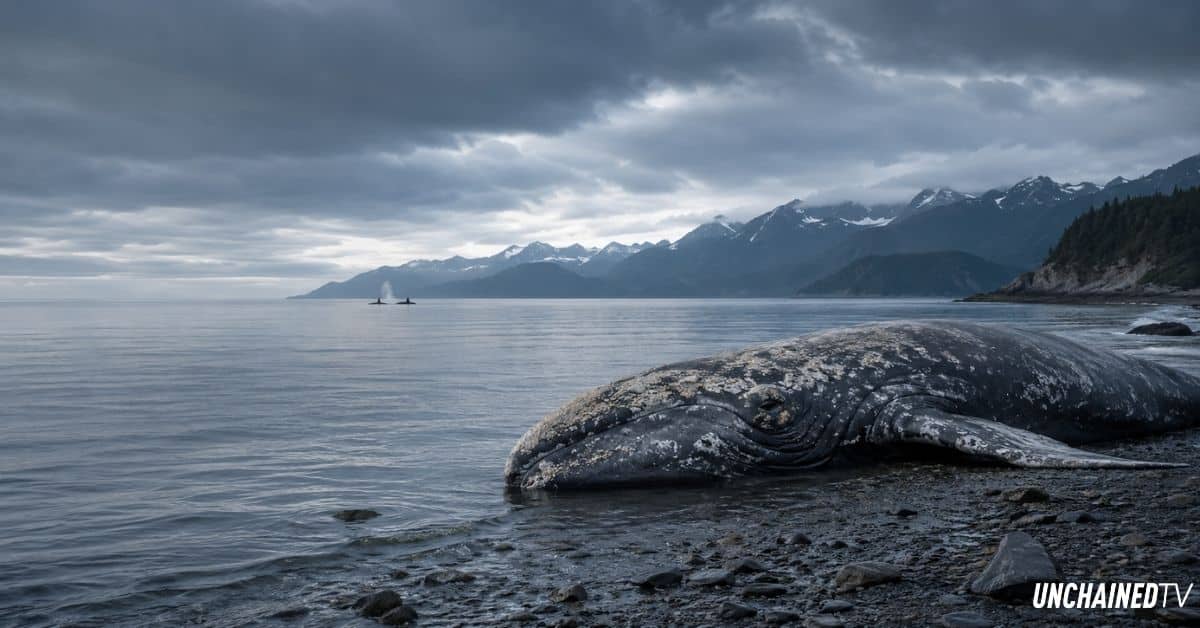
As dead gray whales wash onto Pacific shores thin and weak, the documentary Where Have All the Orcas Gone? puts the crisis in a larger context: sea animals are not vanishing quietly. They are telling us something is broken.
Lancaster, PA – June 14th, 2026 – Dead gray whales are washing up on Pacific shores, and the images are hard to ignore. In just three months, 21 dead gray whales have been reported, many appearing thin, weak and visibly depleted. Researchers suspect the problem may begin far north, in the Arctic, where climate disruption is affecting the food supply these whales depend on to survive one of the longest migrations on Earth.
This is not just another sad animal story. It is a warning sign from the ocean.
NBC News recently reported that the dead gray whales have been appearing along Pacific shores at an alarming pace, with scientists looking closely at whether melting Arctic ice and changing marine ecosystems are leaving gray whales without enough food. These animals travel thousands of miles between feeding and breeding grounds. When they do not find enough food in the Arctic, the consequences do not stay hidden offshore. They surface as bodies on beaches.
Why the Orcas Documentary Belongs Here
The documentary Where Have All the Orcas Gone? widens that lens. The film, streaming on UnchainedTV, focuses on orcas in the Pacific Northwest, but its relevance goes far beyond one species. It asks a question that now feels painfully urgent: what happens when the sea animals we once treated as permanent fixtures of the ocean begin disappearing?
The answer is already washing ashore.
Gray whales and orcas are different animals facing different pressures, but their stories belong to the same ocean. One is showing up dead and emaciated on beaches. The other has become an enduring symbol of marine intelligence, family bonds and survival under pressure. Together, they reveal a brutal truth: the ocean is not an endless backdrop for human activity. It is a living system, and that system is under assault.
The Ocean Is Not a Dumping Ground
For decades, society has treated the ocean as if it can absorb anything: warming, pollution, ship traffic, fishing gear, sonar, plastics, oil, noise, fireworks and industrial extraction. The result is not theoretical anymore. It has a body count.
Gray whales are especially vulnerable because their migration is so demanding. They feed heavily in northern waters and then travel south to warmer breeding areas, often fasting along the way. If their food supply collapses or shifts, they do not simply “adapt” in some clean, inspirational nature-documentary way. They burn through reserves. They weaken. They wander into risky areas. Some are struck by ships. Some starve. Some wash ashore as evidence of a system failing faster than the public wants to admit.
Soft Language Cannot Hide Hard Truths
This is where the old comforting language starts to fall apart.
We call it a “strandings event.” We call it “mortality.” We call it “ecosystem stress.” Those terms may be scientifically useful, but they can also soften the horror. These are gray whales dying in visible distress. These are intelligent, feeling beings, whose lives are being squeezed by forces humans helped create and continue to defend.
And, as Where Have All the Orcas Gone? reminds viewers, sea animals are not background scenery. Orcas live in complex social groups. They communicate, learn, grieve and depend on family structures. Gray whales, too, are not drifting biological units in a marine spreadsheet. They are living individuals moving through ancient migration routes now altered by a rapidly changing planet.
The Pacific Is Becoming a Crime Scene
The Pacific is becoming a crime scene with no single suspect and too many accomplices.
Climate change is disrupting Arctic ecosystems. Commercial shipping creates collision risks in busy coastal waters. Industrial fishing removes massive amounts of marine life from the food web. Pollution and noise disturb animals who rely on sound, migration memory and environmental cues. And, behind much of it is the same human habit: taking from the ocean as if the bill will never come due.
Now the bill is arriving on shorelines.
This Is Bigger Than One Species
The deaths of gray whales should be treated as more than a marine biology concern. They are climate news. They are food system news. They are animal rights news. They are a public warning that what happens to sea animals eventually reaches everyone.
When whales starve, it means the food web is shifting. When whales are struck by ships, it means commerce is being prioritized over life. When orcas vanish from waters where they once thrived, it means something has been taken from the ocean that cannot be replaced by policy slogans or corporate “sustainability” campaigns.
There is also a moral failure in how often these stories are treated as spectacle. A dead whale on a beach draws cameras, crowds and headlines. But the deeper question is not simply why this whale died. The deeper question is why humans keep building systems that make these deaths predictable.
Bringing the Crisis Into Focus
Where Have All the Orcas Gone? belongs in this conversation because it refuses to let viewers treat sea animals as abstractions. It pulls attention back to the lives at stake. These animals are not symbols first. They are beings first. Their disappearance is not just an environmental loss; it is an ethical indictment.
The gray whale deaths are still being studied, and researchers will continue working to understand the immediate causes. But we do not need every final report to understand the larger pattern. The ocean is warming. Food sources are shifting. Migration routes are becoming more dangerous. Human activity is pressing harder against animals who already live at the edge of survival.
There is nothing “natural” about watching body after body wash ashore while pretending the system that produced them is untouchable.
The Warning Is Already Here
The question now is whether the public will treat these deaths as a passing headline or as the warning they are. Because the whales are not just dying somewhere far away. They are dying along the same coasts where people vacation, ship goods, fish, drill, build, consume and look out at the water believing the ocean will always be there.
The ocean may remain. But who will be left in it?
If 21 dead gray whales in three months does not shake us, what number will?
Where Have All the Orcas Gone? gives viewers a place to begin—not with despair, but with recognition. The crisis facing whales is not isolated. It is connected to climate, captivity, consumption, shipping, fishing and the way humans have treated the ocean as both playground and dumping ground.
The whales are not asking politely anymore.
They are washing ashore.
Share This
About the Author: Brandy Walt-Rose



Latest News





Stay Tuned In
Be the first to know when new shows drop! Plus, get the hottest headlines, inspiring stories, and behind-the-scenes extras. Sign up and keep streaming!
you might also like

New York City's historic vote will phase out horse-drawn carriages by 2028, affecting 180 horses and ending a decades-long battle in a victory for the animal rights movement NEW YORK CITY — October 23rd, 2026 [...]

UNCHAINEDTV reports vegan Philly is surging in 2026, from a Michelin Green Star to a culinary college that requires vegan cooking to graduate.

The new documentary, Together Around Food, examines one town's 15-day experiment—and Climate Healers' ambitious campaign to make healthy, plant-based food free for everyone. CHIMACUM, Washington, October 19th, 2026 - A 15-day experiment offering free gourmet [...]