
The Documentary “The Climate Healers” Envisions ‘Planet B’ Beyond Animal Agriculture
Share This
The Climate Healers documentary follows activists, scientists, and advocates who argue that a plant-based food system could help address climate change, biodiversity loss, hunger, and harm to animals.
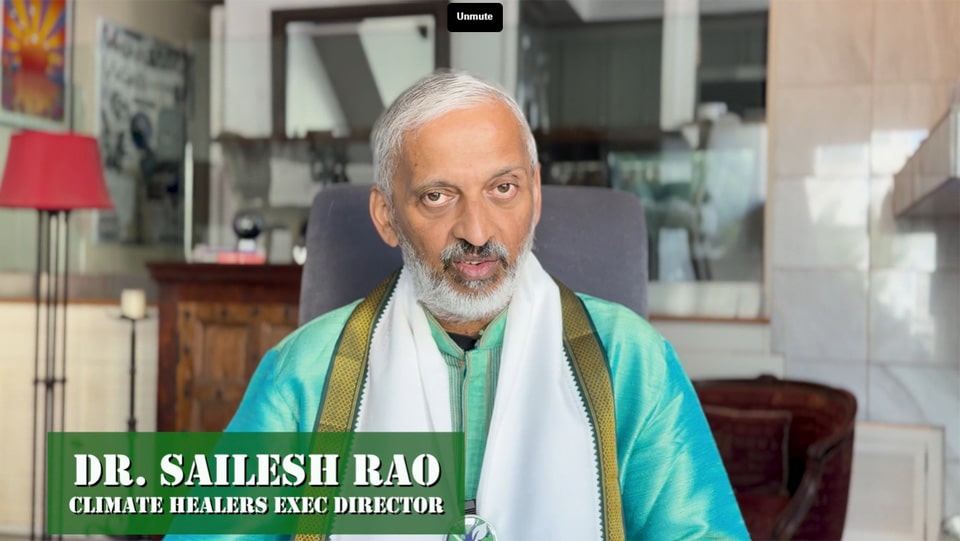
Dr. Sailesh Rao in The Climate Healers
Los Angeles, CA, June 19, 2026 — The new documentary The Climate Healers, produced by UnchainedTV in 2026 and narrated by Jane Velez-Mitchell, opens with a stark warning about the environmental crises unfolding around the world, from devastating wildfires to ecosystem decline. But, rather than dwelling solely on catastrophe, the film follows a diverse group of advocates who gather in Toronto to explore what they see as a practical path forward. Led by engineer and systems analyst Dr. Sailesh Rao, who is the executive director of the vegan and environmental organization Climate Healers, the convergence examines whether transforming the global food system could unlock solutions to some of humanity’s most pressing challenges. Throughout the documentary, participants wrestle with difficult questions about culture, economics, politics, and personal responsibility while imagining an alternative future they call Planet B. You can watch the documentary here:
A Mission to Change Minds
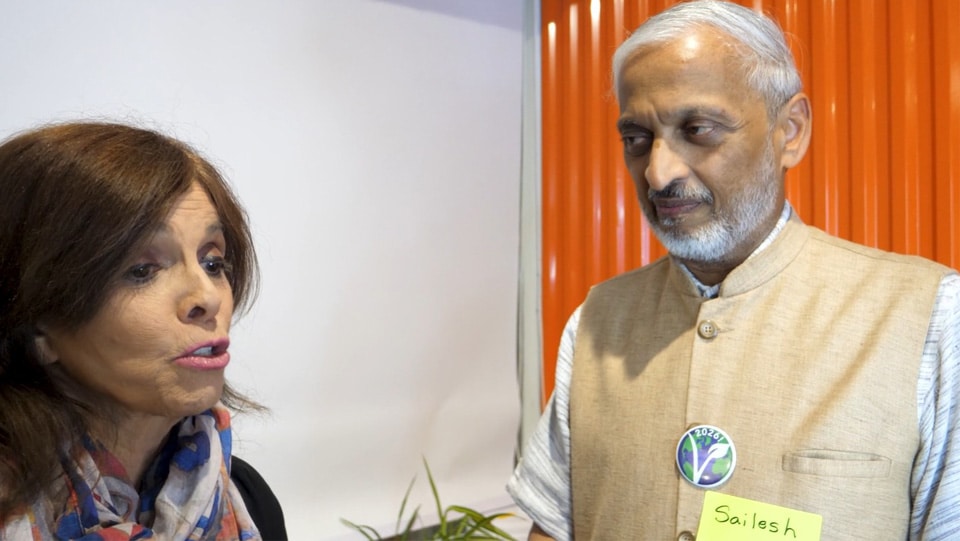
Jane Velez-Mitchell and Dr Sailesh Rao in The Climate Healers
The documentary begins on a relatable note. As Velez-Mitchell and other vegans navigate Toronto’s transit system, they encounter an everyday commuter who rejects the idea of veganism outright. The exchange becomes a symbol of the broader challenge facing the movement. Participants argue that many consumers remain disconnected from the realities of industrialized animal agriculture because they rarely see how animals are raised and killed.
The film suggests that public awareness remains one of the biggest barriers to change. Activists contend that consumers are making decisions based on incomplete information and that media coverage often overlooks the connection between animal agriculture and environmental degradation. The documentary repeatedly returns to the question of how to communicate difficult truths in ways that inspire action rather than defensiveness.
For Dr. Rao, the issue is not simply about persuading individuals. He frames it as a systems problem. Drawing on his experience helping advance internet technology, he argues that societies can undergo dramatic transformations when better models emerge.
Participants to the V-COP convergence also debate strategy. Some emphasize public pressure, while others advocate creating attractive alternatives that naturally draw people toward new behaviors. Dr. Rao favors the latter approach, arguing that lasting transformation comes from building better systems. He says, “I think it’s about building a new model that’s so attractive that people will say, ‘What am I doing here?’ That’s the way I envision it happening. It’s not about going and saying. ‘You are bad, and you have to change,’ and so on. It’s a different model.”
The Cow in the Room
From Climate Crisis to Planet B
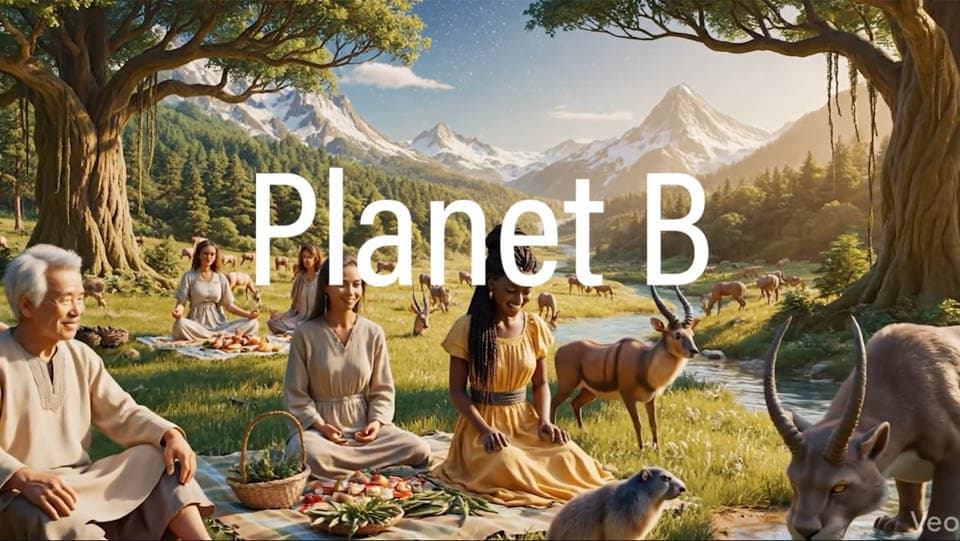
Image from the documentary The Climate Healers depicting Planet B
At the heart of The Climate Healers is the concept of Planet B, a proposed framework for living within ecological limits while improving human well-being. This pretty much matches the concept of “The Vegan World” which is the ultimate goal of the veganism movement. Participants gather to brainstorm ideas, write declarations, and envision a society organized around compassion, ecological restoration, and nonviolence.
The discussion extends beyond climate change. Speakers argue that industrialized animal agriculture contributes to deforestation, biodiversity loss, pollution, and food inequity. Several participants emphasize that a redesigned food system could help feed more people while reducing pressure on ecosystems. Dr. Rao maintains that current systems prioritize profit and excess consumption rather than efficient distribution of resources.
The film’s urgency is underscored by repeated warnings that time is running short. Referencing climate targets and environmental indicators, participants express concern that incremental changes may no longer be enough. Dr. Rao delivers one of the documentary’s most direct messages: “It is preventable. It’s preventable by just shutting down the killing machine.” Whether viewers agree with that assessment or not, the statement captures the documentary’s central thesis that animal agriculture sits at the center of multiple interconnected crises.
Sunday Salon with Dr. Sailesh Rao
Building a Movement for Systemic Change
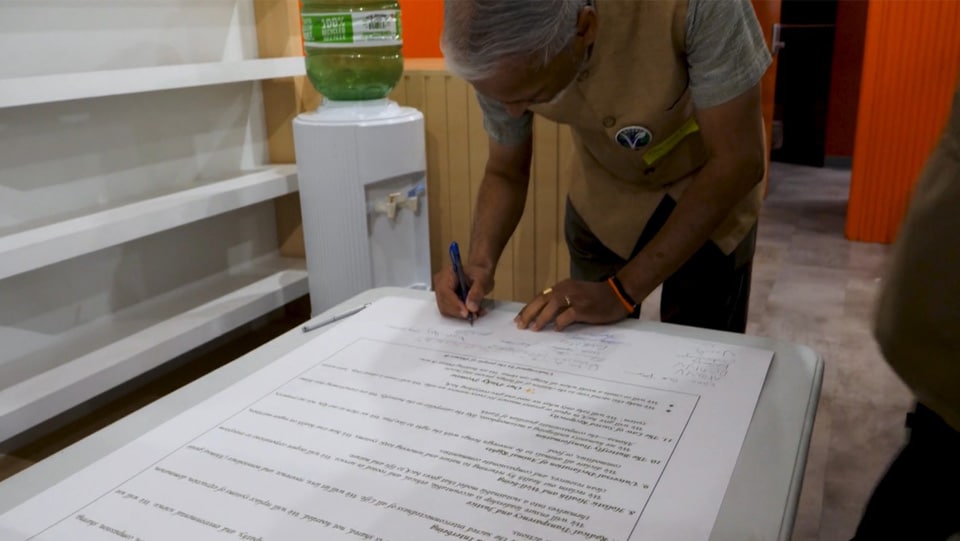
Signing the Plant B Declaration in The Climate Healers
While the documentary presents alarming predictions, it ultimately focuses on collective action. Activists discuss campaigns such as the Plant-Based Treaty, city endorsements, policy reforms, reforestation efforts, and educational outreach. The film portrays social change as a gradual process driven by organized communities rather than isolated individuals.
When looking at the numbers within the current food system, the change needed may not be as big as one may think, because plants remain the majority of the food people consume. Dr. Rao says, “Only 12% of the food comes from land animals; 3% comes from the ocean. So, it’s a total of 15% you need to remove and replace with plant-based products. Because our bread comes from plants, our grains come from plants, and our nuts come from seeds, fruits, and vegetables. They all come from plants.”
As the gathering concludes, attendees share their visions of Planet B. Their aspirations range from rewilded forests and restored ecosystems to educational reform, animal protection, and new economic structures that reward ecological stewardship. The documentary ends on a note of cautious optimism. Despite acknowledging powerful institutional resistance, its participants remain convinced that change is possible. Dr. Rao points to the growing vegan movement as evidence that a foundation already exists for a different future. Whether Planet B emerges exactly as envisioned remains uncertain, but The Climate Healers leaves viewers with a challenge: to reconsider humanity’s relationship with animals, food, and the living world that sustains us.
Velez-Mitchell summarizes the final goal: “Dr. Rao believes these ideas can form the basis for a realistic, non-violent new world order. Hence, the Planet B proclamation signed by all the participants, establishes veganism as Planet B’s moral baseline. And banning the killing or exploitation of animals for food, fashion, or entertainment, thereby completely abolishing animal agriculture.”
Countdown to Year Zero
Check out this show and more at UNCHAINEDTV
Share This
About the Author: Jordi Casmitjana


Latest News
Stay Tuned In
Be the first to know when new shows drop! Plus, get the hottest headlines, inspiring stories, and behind-the-scenes extras. Sign up and keep streaming!
you might also like

After roughly 15 miles, 40,000 steps and more than a few blisters, marchers reached Schenectady on Day One of a two-week journey across New York aimed at putting animal experimentation—and one of its largest suppliers—squarely [...]

Spanish seafood company Nueva Pescanova has abandoned its plans for a proposed commercial octopus farm in Gran Canaria after years of scientific criticism, animal advocacy, and international public pressure.

Renee King-Sonnen, founder of Rowdy Girl Sanctuary, embarks on her rancher-to-vegan book tour in Los Angeles, featuring sponsorship from Beyond Meat and a signing at Gentle Barn.