
State Dismisses Charges Against Vegan Activist Wayne Hsiung After Court Reversal
Share This
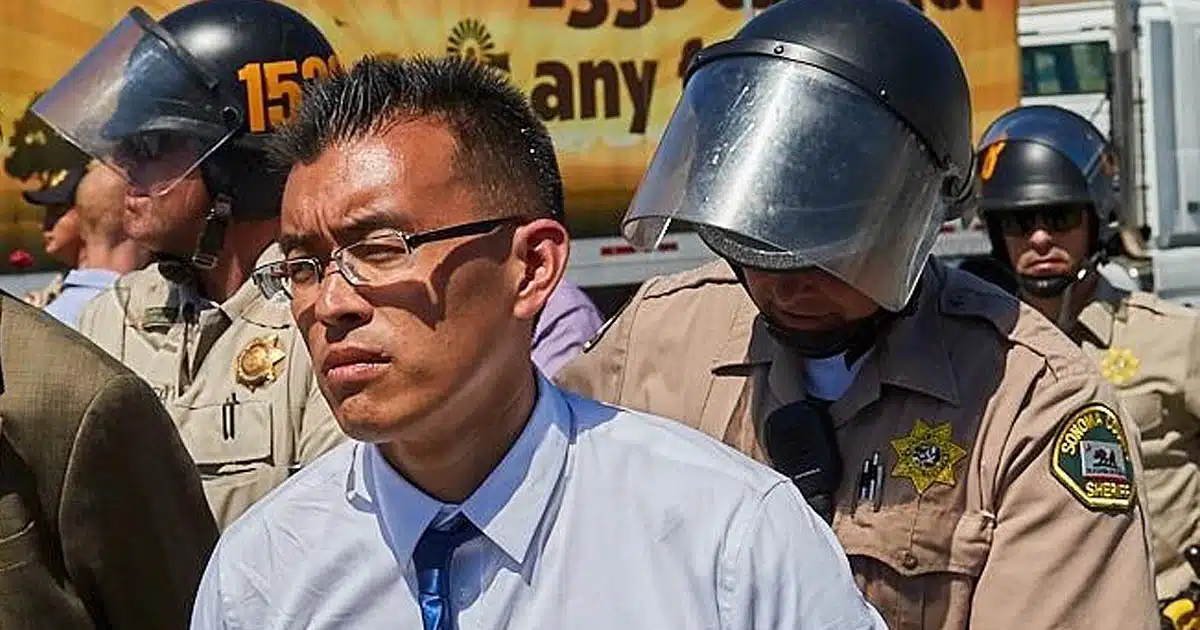
California dismisses charges against animal rights activist Wayne Hsiung after appellate court reversal on his Open Rescue case

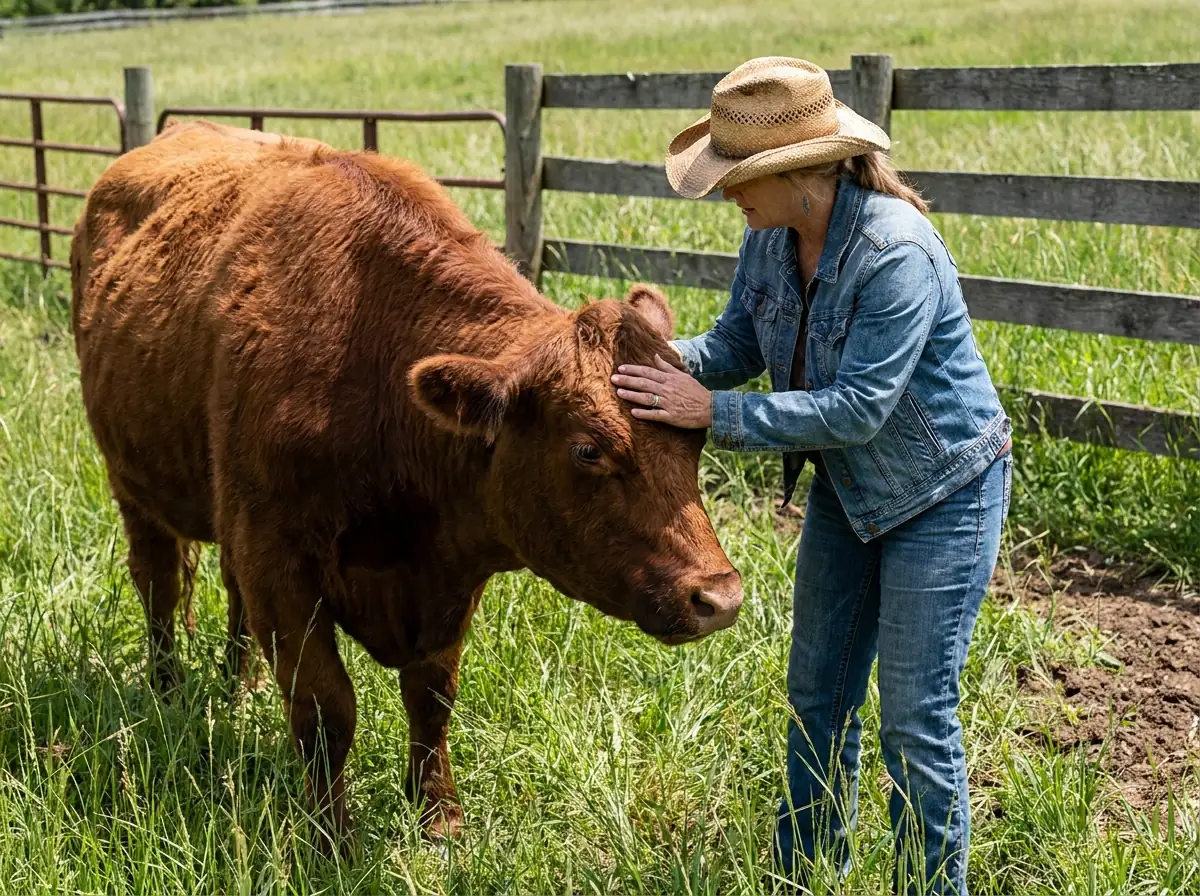
Wayne Hsiung and his dog companion Julie
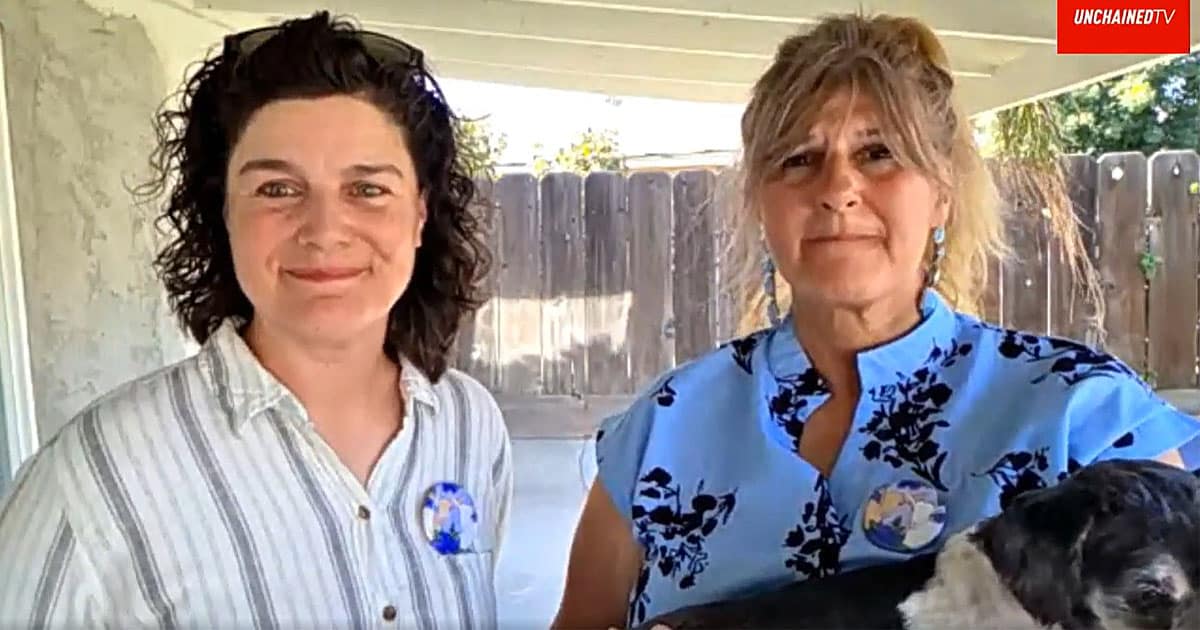
Los Angeles, CA, September 3rd, 2026 — Sonoma County prosecutors have dismissed the remaining reversed charges against vegan animal rights activist Wayne Hsiung, co-founder of Direct Action Everywhere and the Simple Heart Initiative. The charges stemmed from his role in two protests at Sonoma County animal factories in 2018 and 2019. This dismissal ends a prosecution that drew constitutional objections from Harvard legal scholars, the ACLU of Northern California, and the Center for Constitutional Rights, closing one of the highest-profile open rescue prosecutions in California history, covered live by UNCHAINEDTV.
The California Court of Appeal overturned two of Hsiung’s three convictions last spring — felony conspiracy and a misdemeanor trespass — just days after oral argument. Rather than take the case back to a jury, the State voluntarily dismissed the reversed counts.
The timing did not go unnoticed. “Mr. Hsiung’s prosecution was aimed squarely at quelling protests that drew massive attention to extreme animal suffering throughout Sonoma County animal agriculture,” said Steffen Seitz, litigation fellow at the Animal Activist Legal Defense Project at the University of Denver Sturm College of Law.
Backstory: When Open Rescue Leader Wayne Hsiung Was Freed from Jail
What Was Wayne Hsiung Prosecuted For?
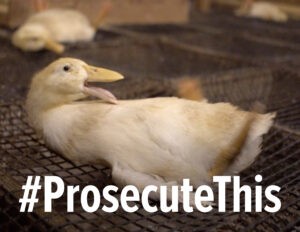
Key image from the #ProsecuteThis campaign based on Open Rescue cases Wayne Hsiung was charged for.
The convictions stemmed from protests at Sunrise Farms, a “certified humane” egg supplier to Whole Foods and Amazon, in 2018, and Reichardt Duck Farm, California’s largest duck farm, in 2019. Both facilities market themselves as humane. Hsiung argued that years of undercover investigation told a different story: ducks diseased, starving, and scalded alive; chickens immobile, severely injured, or dead and decomposing.
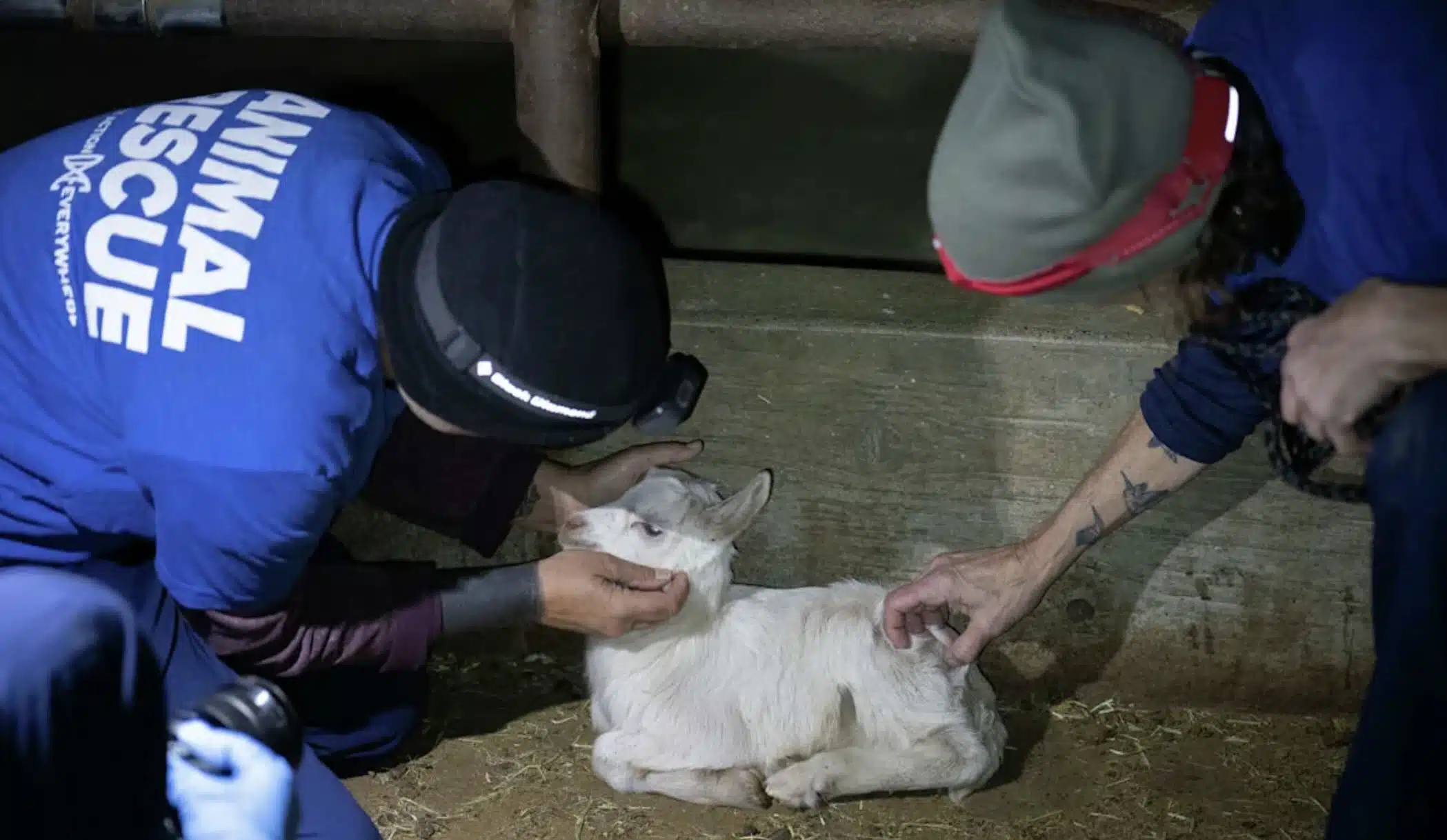
During those actions, activists removed 38 chickens and 32 ducks, secured veterinary care, and rehomed them at sanctuaries. One chicken died of her condition before placement. Wayne Hsiung, a lawyer himself, cited California statutes that permit civilians to aid animals in distress — the same legal family as the state’s “hot car” law. Prosecutors called it conspiracy.
The trial judge severely restricted the animal cruelty evidence Hsiung could present, leaving him unable to rebut the farms’ claims that their animals were treated well. That eight-week trial, with One Green Planet’s case analysis noting the jury deliberated for six long days, ended in guilty verdicts and a 90-day jail sentence. Hsiung served 38 days. The evidentiary gag became the spine of his appeal, which Hsiung won regarding the federal convictions.
A single misdemeanor trespass conviction remains. Hsiung is now appealing a restitution order of $191,704 that was calculated on the basis of a felony and two misdemeanor convictions — two of which no longer exist.
Backstory: Hsiung Found Guilty On 3 Counts. Sent to Jail with NO Bail.
The Amicus Wave That Preceded the Reversal
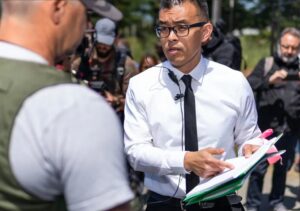
Wayne Hsiung talking to law enforcer
A year before the reversal of his federal convictions, an unusually broad coalition filed friend-of-the-court briefs. Kristen Stilt, Professor of Law at Harvard Law School and Faculty Director of the Brooks McCormick Jr. Animal Law & Policy Program, argued that California’s hot car law, Good Samaritan law, and Impound Law all protect animal rescue — and none exclude farmed animals.
The Justice for Animals Program at the University of San Francisco School of Law filed on behalf of two dozen animal law scholars. “Sometimes one must violate the letter of the law to uphold its spirit,” said Matthew Liebman, who chairs the program. “The jury should have been allowed to hear all of the relevant facts before deciding Mr. Hsiung’s fate.”
Climate Defense Project, the Nonhuman Rights Project, the Center for Constitutional Rights, the ACLU of Northern California, the National Lawyers Guild, Canada’s Animal Justice, and Professor Jens Bülte of the University of Mannheim all filed. Bülte’s brief concluded that a German court applying German necessity law “would acquit Mr. Hsiung on the grounds of justifiable emergency.”
The free speech briefs cut hardest. “Wayne’s absurd prosecution, premised on the idea that expressing support for civil disobedience is a felony, threatens to chill a wide variety of dissenting speech urging resistance against the powerful,” said Shayana Kadidal, Senior Managing Attorney at the Center for Constitutional Rights. Animal Justice’s brief documented prosecutors asking a UC San Francisco criminal law professor whether she was raising her child vegan, and whether her legal opinion was her “vegan opinion.”
Backstory: Verdict Watch Team Coverage!
Why the Wayne Hsiung Dismissal Matters Now
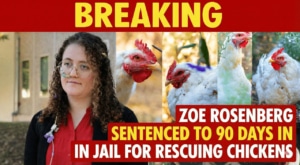
Animal Rights Activist Zoe Rosenberg Sentenced to Custody
Prosecutions of open rescue have increased in California in recent months even as appellate courts scrutinize them. Last fall, animal rescuer Zoe Rosenberg was convicted of three misdemeanors and one felony conspiracy count for removing four chickens from Perdue’s Petaluma Poultry slaughterhouse — the second high-profile Sonoma County rescue prosecution in three years.
The appellate ruling was narrow. The court addressed whether a jury may consider a defendant’s honest but mistaken belief about the law, and held that necessity is not a legal defense to the activists’ actions. That leaves the central question raised by the Harvard and USF briefs unresolved: whether animal suffering counts as a “significant evil” for necessity purposes. Advocacy groups are already rethinking strategy around that gap.
Public sentiment regarding animal exploitation has shifted meaningfully. The animal rights movement’s growth is visible in events like the New York State march to end animal testing, and in the mainstreaming of veganism. Gatherings like the Animal & Vegan Advocacy Summit and the growing calendar of community events, including LA’s vegan summer bonfire, reflect a base that has grown rather than retreated under legal pressure.
Now, the restitution appeal is the live question for Wayne Hsiung. A $191,704 order built on a felony and two misdemeanors, two of which have been vacated, invites recalculation, and organizations are watching because restitution has become the primary financial deterrent against activists when jail time proves short.
After his acquittal in 2024 for rescuing two sick piglets from a farm in Utah, Hsiung has argued that the legal reclassification of a farmed animal from thing to person carries “…dramatic implications beyond saving one baby pig. Our primary goal is to effect these shifts — and bring about those dramatic implications that could save billions of living beings from suffering,” as he told an interview on animal rights strategy. The Sonoma dismissal did not deliver that reclassification, but it did remove a felony conspiracy conviction from the record of a man who walked into a barn and carried out sick animals to safety.
Backstory: Opening Statements & Rescue Trial Shockers
Share This
About the Author: Jordi Casmitjana

Latest News


Stay Tuned In
Be the first to know when new shows drop! Plus, get the hottest headlines, inspiring stories, and behind-the-scenes extras. Sign up and keep streaming!
you might also like

The provocative animal rights documentary Viral for the Animals is reaching viewers worldwide on UNCHAINEDTV with new subtitles, helping its message travel even further. Hollywood, Ca. - October 13th, 2026 - It’s called Viral for [...]

A federal strategy would gun down 450,000 barred owls. As shooting begins in Oregon, animal and environmental advocates are expressing outrage and charging the real reason is to help the timber industry. Los Angeles, CA [...]

PCRM celebrates $88 million in NIH grants for human-based research as FDA and EPA policy shifts mark a turning point against animal testing in 2026.