
Victory for Activists after Charges Reduced in California Goat Rescue Trial
Share This
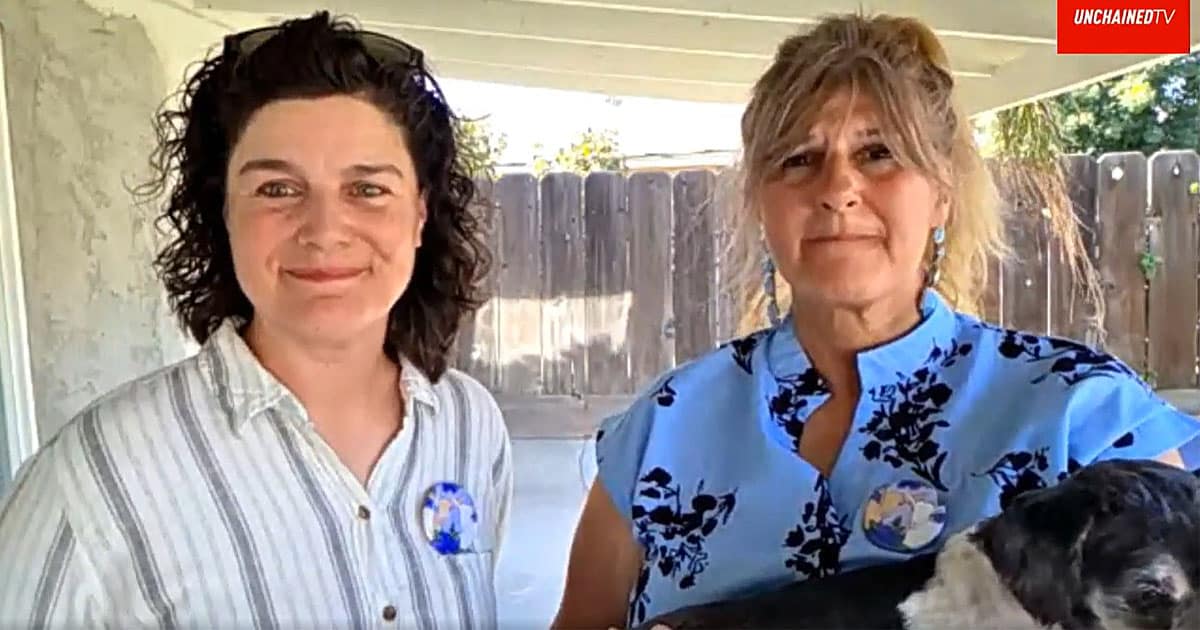
The felony charges against four animal rights activists from Direct Action Everywhere in the California Goat Rescue case have been reduced to misdemeanors
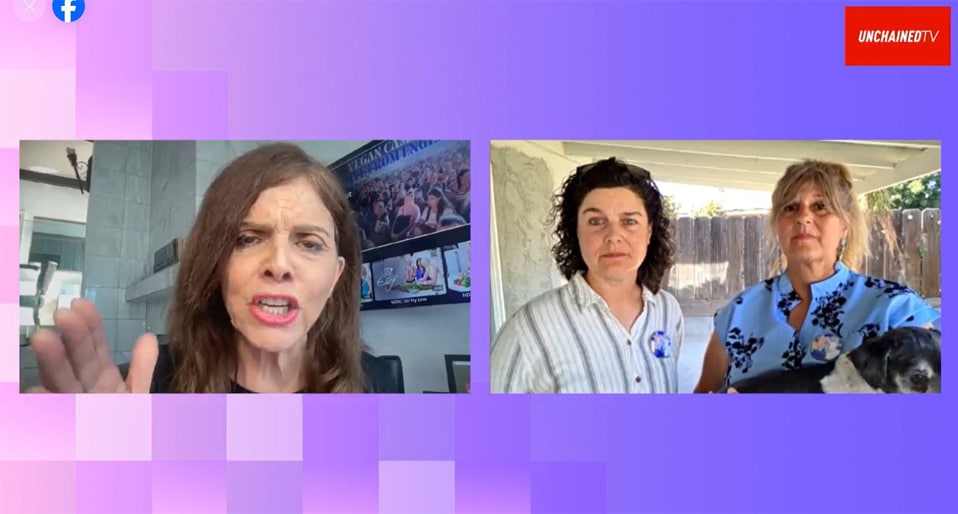
Jane Velez-Mitchell, Carla Cabral, and Sally Zito
Los Angeles, CA, August 30th, 2026 — Felony charges against four Direct Action Everywhere (DxE) activists in the California Goat Rescue case have just been reduced to misdemeanors, in a victory for those charged. The shift removes the threat of more than six years in prison for defendants Carla Cabral, Sally Zito, Joe Allman and Taj Uppal. The reduction, granted by a judge who had signaled hours earlier that he intended to keep the felonies intact, matters because it lands amid rising legal scrutiny of how California prosecutes open rescue cases. UNCHAINEDTV’s Jane Velez-Mitchell interviewed defendants Carla Cabral and Sally Zito about this dramatic development, moments after court ended. You can watch their entire conversation here:
Judge Reduces Felonies in the Goat Rescue Case
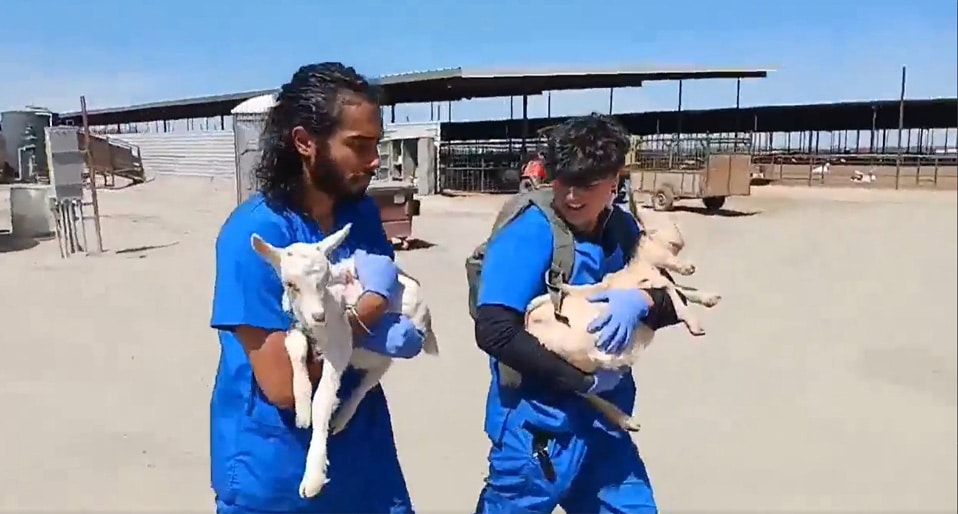
Open Goat Rescue in California phot, courtest DxE
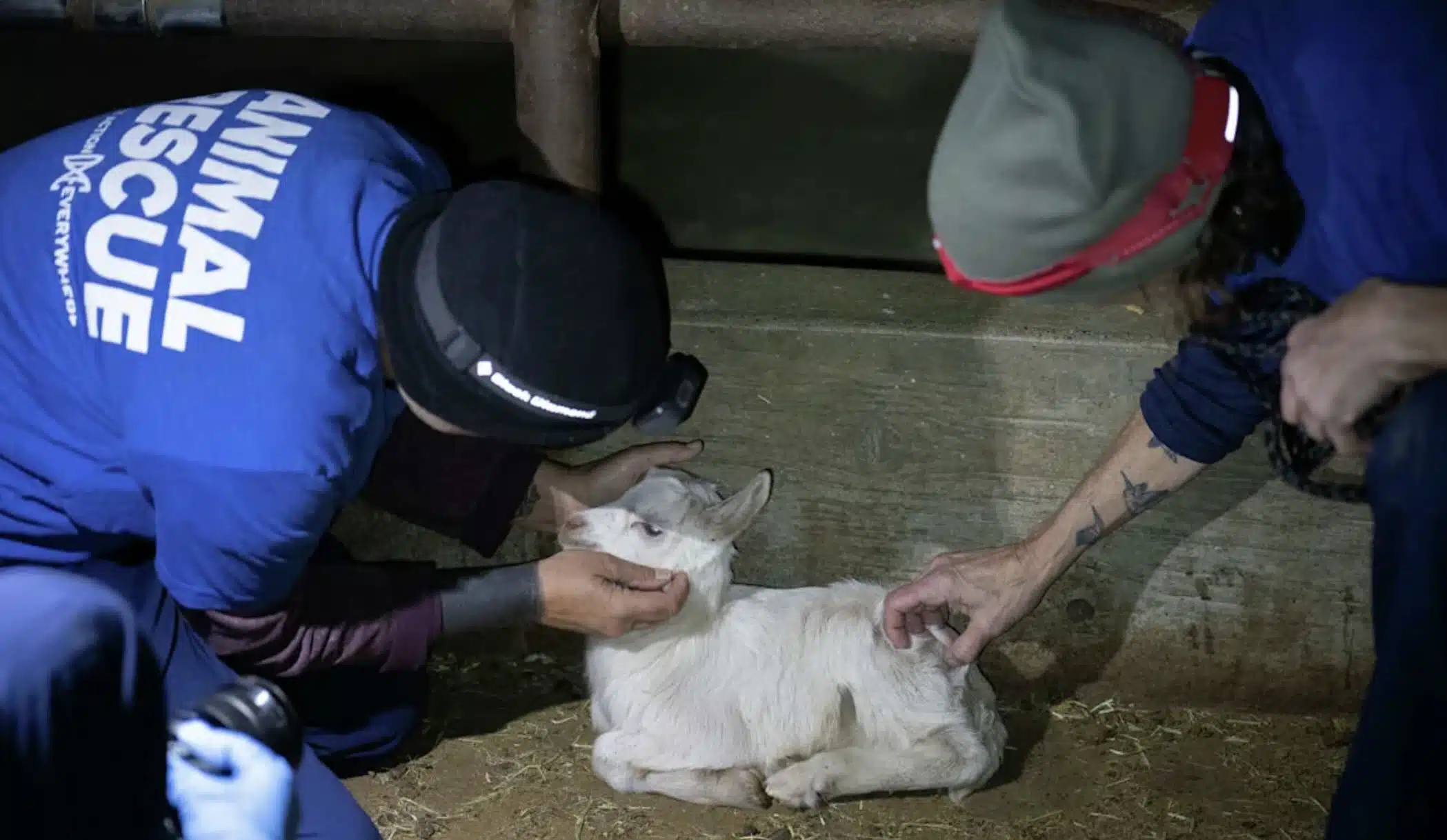
The four defendants faced felony charges stemming from the May 2025 open rescue operation where two baby goats, named Phoebe and Celia, were rescued from Vera Goat Dairy, a factory farm south of San Francisco. The activists say the goats were rushed to a veterinarian and found to have pneumonia and conjunctivitis. They add that the animals were treated and are doing fine. Five activists were arrested at the time during an animal liberation convergence and were labeled the Goated Five by supporters.
DxE alleges that the goats were taken from a facility that also had what they described as a “massive dead pile” of mother and baby goats — conditions they say violate California’s own animal cruelty statutes. DxE says it repeatedly reported the dead pile to authorities, but no law enforcement action was ever taken by any government agencies.
Cabral confirmed to Velez-Mitchell the outcome of the latest hearing on the goat rescue trial. “The charges were reduced to misdemeanors,” she said, adding that the defendants hold “mixed feelings” because the matter remains unresolved. She described the judge as “one of the most neutral and unbiased judges that I have been around,” noting that he had “originally said that he was probably going to side on keeping them felonies” before reconsidering.
Defendant Sally Zito described the reversal as unexpected. “He seemed very firm on keeping these as felonies as recently as this morning,” she said. “And, so, we were bracing ourselves for that decision.” According to Zito, the judge cited additional evidence and “very persuasive arguments from the legal team” in changing his stance.
The court also moved toward judicial diversion: 40 hours of community service and six months without further legal trouble, after which the charges would be dropped. The prosecution is expected to oppose that arrangement at a hearing scheduled for September 23rd.
Beagle Rescuers Get Out of Jail
Further Disputes Around the Goat Rescue Trial
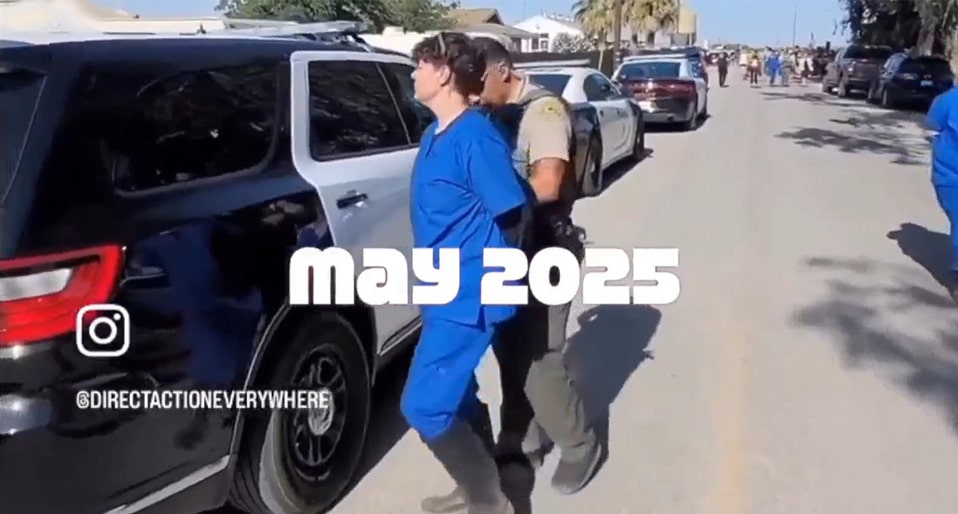
Arrest for Goat Rescue Trial photo DxE
Controversy has escalated over the district attorney handling the case. Direct Action Everywhere alleges that Sarah Hacker, before becoming county prosecutor, served as private attorney for the same farm from which the goats were taken.
The defendants say they learned this through a public records request rather than disclosure from the prosecution. “We were very surprised to see that the DA had, in fact, formally represented the landowners of this dairy and did not disclose that to us,” Cabral said. Zito noted that such disclosures are typically volunteered by the party with the potential conflict.
A motion to compel further information about the prosecutor’s involvement was granted by the judge. Cabral framed the effort as forward-looking: “We hope that, by continuing forward with that motion to compel information from the DA, it will prevent future instances for other people who might also have a conflict of interest.”
Dead Pile or Animal “Composting”… What’s the Difference?
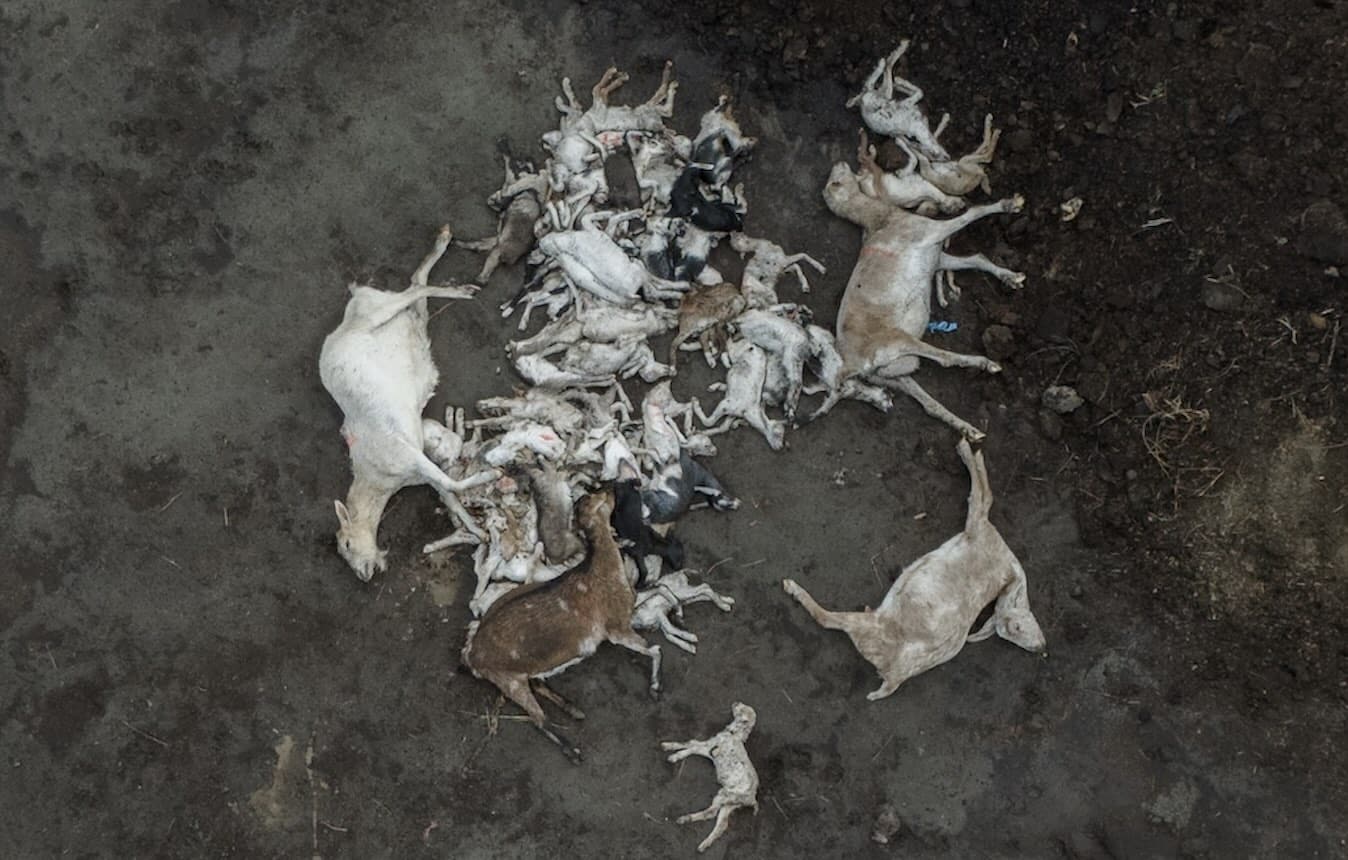
Dead Pile of Goats, courtesy DxE
A separate dispute continues over the large open dead pile of goats photographed on the property by the activists. The district attorney’s office has stated that its investigation found “…no merit to the allegations presented by DxE,” while also confirming that investigators did find goat carcasses buried under manure, describing the practice as “composting” that “…aligns with evolving state guidance.”
UNCHAINEDTV was unable to get a comment from Vera Dairy because they appear to have no listed website or contact information online. But, Meyenberg Goat Milk, the top producer and best-selling brand of commercially distributed goat milk in the United States, told the Fresno Bee that the company was alarmed to hear about the “upsetting allegations of animal mistreatment.” It added it does not own the farm, but “we do buy milk from Vera Farm. We have followed up with on-site visits and have found no evidence to support the claims being made against Vera Farm.”
Why the Outcome Matters for Animal Rights Litigation
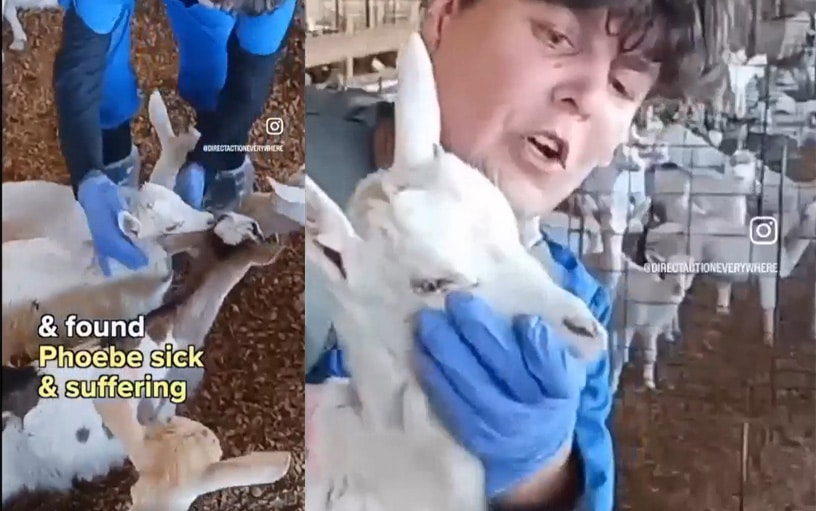
DxE Open Goat Rescue
Charge reduction changes the risk calculation for open rescue actions. Felony exposure of more than six years functions as a deterrent; misdemeanor exposure with diversion does not carry comparable weight, and legal teams are recalibrating strategy accordingly.
The defendants are not treating the reduction as a clean win. Diversion means no trial, and no trial means no public forum for the evidence. “Going to trial is important so that we can present this evidence to the general public,” Cabral said, referring to the goats at the dairy supplying milk to Meyenberg.
The unresolved conflict of interest question carries consequences beyond this case. If the motion to compel produces documentation of an undisclosed prior attorney-client relationship between the prosecutor and the farm, defense attorneys – in comparable prosecutions – gain a procedural argument that did not previously exist in California animal cruelty litigation.
The September 23rd, 2026 hearing will determine whether the misdemeanor reduction and judicial diversion hold. Zito described the schedule plainly: the defendants hope the judge will “stick to what we think with the misdemeanors,” while acknowledging that “anything can happen in that time.”
We invite the farm, any of the companies involved and the district attorney in this case to comment at any time.
DxE’s New Factory Farm Map!
Check out this show and more at UNCHAINEDTV
Video Transcript
Dramatic Court Hearing in Goat Rescue Trial [Speaker 2]
A slew of arrests in Northern California as the animal rights organization Direct Action Everywhere help a huge animal liberation convergence. A smaller team of activists capped it all off with a dramatic open rescue of two baby goats from a factory farm south of San Francisco, goats they described as sick. The goats whom they named Feedy and Celia were rushed away to get medical care.
[Speaker 4] Then the activists returned to the farm. You as a lawyer should know, you can't trust us if it's still people's property, right? It's livestock.
Well, actually, according to the California Incest Unit maps, when it is an emergency, it's significant animal cruelty.
[Speaker 2] One activist tried unsuccessfully to show sheriff's officers what he called evidence of an emergency, necessitating rescue.
[Speaker 4] We can turn around and get back to your lawyer.
[Speaker 2] Coined the Goated Five, the five activists were hailed as heroes by supporters gathered around them as they were led away by authorities. That was back in May of 2025. Four of those activists ended up being charged with felonies that could have landed them behind bars for six years.
And the breaking news we can tell you about today is that those charges have reportedly been reduced to misdemeanors. And direct action everywhere is calling that a huge victory. We've got two of the defendants here alive, Carla Cabral and Sally Zito.
And Sally is with her dog. No, that's not a goat, but that is her dog that we're holding. So he doesn't bark.
Tell us what happened. You guys are smiling. So I assume the reports that your charges have been reduced are accurate.
[Speaker 1] They are accurate. The charges were reduced to misdemeanors. And I think that we have mixed feelings among the defendants about how this is progressing because it's not quite over yet.
But we were happy that this judge who has been extremely fair, this has been, in my experience, one of the most neutral and unbiased judges that I have been around. They have not been either swayed wholly by our side of things, nor have they been able to be influenced by the prosecution, in my opinion. So I think that the fact that they came to this conclusion after seeing the overwhelming amount of evidence that we had of animal cruelty and the unfair nature with which we were charged with felonies, even though he originally said that he was probably going to side on keeping them felonies, he did ultimately reconsider and change us to having only misdemeanors.
[Speaker 3] Yes, and that was a bit surprising that he did reconsider because he seemed very firm on keeping these as felonies as recently as this morning. And so we were bracing ourselves for that decision. And then apparently, upon reading some more of the evidence, and he said some very persuasive arguments from the legal team, he said that he had changed his stance.
So it was quite a surprise.
[Speaker 2] And so what I find fascinating is that you're not celebrating. Normally, someone would say, oh, my God, I'm not going to go to prison for six years. The maximum with misdemeanors, I don't know what it is, but it's certainly not a lot of time behind bars.
But you are more concerned with getting your story out to the public and having your day in court. Is that correct?
[Speaker 1] Well, honestly, it's about having Phoebe and Celia's stories told, letting them have their day in court. We are simply the proxy, you know, working as whistleblowers, being firsthand able to witness what these animals are going through. And after I had identified Phoebe and Celia as really being in need of emergency medical care, it really comes down to telling their stories.
And you can see how many goats are on this facility. You know, we heard reports of anywhere from 5,000 upward to 9,000 goats on this dairy, none of whom are getting to run through grass or eat leaves off of trees. You can see that they're just in these dirt lots right there.
You're looking at babies, right? That's Phoebe right there who had feces on her. Celia also had feces on her, crusted over eyes, crusted noses, indicative of severe respiratory infections.
Their abdomens were distended, which can mean that they might be carrying a load of parasites. And in fact, when I had retrieved some dead baby goats from the large, massive dead pile on the facility and had them tested at UC Davis, we found that those babies had died from severe emaciation, that they were lacking in nutrition, that they did have parasites, respiratory infections. And so when I saw Phoebe and Celia, all I could imagine was that they were going to be in that dead pile next.
And we could not let that happen. It just wasn't going to happen.
[Speaker 2] So while we have this incredible news that the charges have been dropped to misdemeanors, there are other controversies. I would like to play a clip from Direct Action Everywhere starring you and some of the other defendants where you talk about what you call a conflict of interest by the prosecutor. Let's hear it, and then we'll discuss on the other side.
[Speaker 5] Guess who donated thousands of dollars to the prosecutor charging us for rescuing goats? The goat farm.
[Speaker 4] But wait, it gets worse. Before becoming county prosecutor, Sarah Hacker was the private attorney for this very farm.
[Speaker 6] Meaning, Hacker's office is now prosecuting a case on behalf of a former client.
[Speaker 5] Isn't that a conflict of interest? Well, at least the sheriff's office got its wish. And I need an exact amount for those goats.
Make sure it's a frequent seller. Are you recording?
[Speaker 2] Okay, I guess you caught that curse by the law enforcement officer there. So, how did you discover this and what was the reaction? Was it brought up in court?
Because you're saying it's a major conflict of interest. In fact, it sounds like a major conflict of interest.
[Speaker 3] Yes, I think what I understand is that these are usually brought to the court by the person who possibly has the conflict of interest. So, how we may have expected to have found out would be that the DA would have revealed it to us and the judge at some point to say, Look, just want you to be aware of this. But I believe we found out through a Freedom of Information Act request.
[Speaker 1] Right, a public records request. We had a lot of documents to go through. And we were very surprised to see that the DA had, in fact, formally represented the landowners of this dairy and did not disclose that to us.
And, in fact, one of the other things that happened today was that we had a motion to compel because we had asked the DA to provide information to us about her involvement. And she refused to do so, or at least that's my understanding. So, we put forward a motion to compel and the judge granted that.
So, we were expecting also and still are expecting to get more information to clarify why we weren't told about this and what exactly is going on between her and the dairy even today. Because we know that not just did she represent them for workers' rights violations, but also having given thousands of dollars to her campaign election from that dairy. It just doesn't look good.
[Speaker 2] Yeah, pretty wild. So, do you expect your attorneys to continue to bring this up? I mean, it seems like it's a big issue.
[Speaker 1] Yeah, I do hope that this continues forward because while everything is not complete, and like we said, the judge, after reviewing everything, decided to reduce our felonies to misdemeanors. But he also then went a step further and decided to have a judicial diversion for us where we were being offered 40 hours of community service and six months where we don't get into any legal trouble. And if that goes forward, then everything is dropped.
We wouldn't be charged further for this. And we hope that by continuing forward with that motion to compel information from the DA, that it will prevent future instances for other people who might also have a conflict of interest. And we would hope that if we can get this out there, that the DA won't hide this from anyone else for any other reason.
[Speaker 2] This is very interesting stuff. I want to put up a couple of comments from this district attorney, and we invite her on anytime. We would love to dialogue with you.
This is the district attorney who you're talking about, and I'm holding a letter from last August where she essentially said, nothing to see here. All of Direct Action Everywhere's allegations have no foundation. And I want to dive into the smoky gun, as it were, is the dead pile.
So Direct Action Everywhere photographed this pile of goats, saying this was at the dairy in question. And one of the reasons you went in, because there's at least looks like two dozen goats there. And your contention is that, well, this is a dead pile.
It's a mass grave. It's horrifying. And their reaction to this is that if you look at it, there's approximately 5,000 to 5,500 goats.
This is according to the DA. And that approximately one goat dies per day on average. And during kidding season, January through April, approximately three to four die every day.
And that's based on the National Animal Health Monitoring System. The overall goat mortality rate for adults is 7.2% annually for adults and 13.8% for kids. So that they're saying the dairy, and we invite the dairy on any time to discuss this, their mortality rate is within industry standards.
And they also said that this dairy disposes of deceased animals via composting, placing carcasses beneath manure piles located on the north side of the property away from the herd. This practice aligns with evolving state guidance. So what is your reaction to that?
Because it sounds like what they're describing is this, but these goats, A, are not covered by manure. And secondly, is your contention that that is legal?
[Speaker 1] There is some debate about whether that was legal or not legal at the time. We contend that it was not legal because the Water Quality Board cited them for it. Why would they have a citation if it was perfectly legal to do?
And then later, the law was changed. But even so, that's not the only open dead pile that we have evidence of. We went back multiple times and got drone footage of several different dead piles that were just out in the open.
And we even have footage of the dogs that are on the property ingesting the dead flesh off of these carcasses. And that is not okay. They are supposed to dispose of these animals in a way that discourages scavenging.
And usually, one might think that it would be a vulture that would come in and perhaps scavenge on these animals. But instead, it was the dogs on the property tearing their flesh apart. I mean, it was absolutely abysmal.
And when you're there, there's just no way to describe the smell and the visual of all of these thousands of goats and other animals. I saw myself bones of a cow that was mixed in as well because it's not just that dead pile. There are huge rows of large piles of dirt.
And you can see all scattered through that are bones. And there are varying degrees of decaying animals. I mean, it's a hellscape for sure.
And even if it's legal at the moment, that doesn't make it okay.
[Speaker 2] And we invite that farm on. We also reached out the dairy farm supplies, Meyenburg, which is the largest distributor of goat milk. And they did not respond to us, but they did issue a statement to the Fresno Bee.
We have followed up with on-site visits and have found no evidence to support the claims being made. And the farm was recertified in October of 2025. And that is recertified by an organization that monitors for humane standards purportedly.
So what is your response to that?
[Speaker 1] I mean, they are certified humane. And I feel horrible because the average consumer does not know that in order to get recertified, they pay for that. It is a paid service where they come out.
And sure, I mean, if there's an announced visit and they choose to look in certain places and they don't look in other places. I mean, we reported the dead pile. The animal control officers went out and said, we don't see any dead animals.
And we went back the very next day that we received that report. And there was still a dead pile right out in the open. So to get recertified, I don't believe myself that that is actually folding these places to some grand higher standards than one might think.
[Speaker 3] Absolutely. And especially the fact that we do have this in writing that they went out, they saw no dead animals. And then the drone went up and saw dead animals.
So you just it just makes you think, where is the disconnect? The dead animals have been there for it looks like decades. The level of bones sticking out of the dirt.
This is not like just a few years.
[Speaker 2] Let me ask this because they're saying essentially that it's composting. That this is the D.A. saying that this dairy disposes of deceased animals via composting, placing carcasses beneath manure piles located on the north side of the property. And that this practice aligns with evolving state guidelines.
And they even mention a new law that hadn't been passed yet. It went into effect in 2026. But your investigations happened in 2025.
So maybe you could discuss that a little bit, because it seems to me that you're talking about a dead pile. They're also talking about carcasses and the differences. They're saying that the carcasses are covered in manure and that makes it OK.
[Speaker 1] Yeah, I mean, we can talk all day long about what it means to actually compost. They did pass AB411 that changed the law so that they would be able to dispose of carcasses on the property. Whether they're doing it exactly up to standards or not, I can't say.
The evidence that I saw with my own eyes back when we took it said no, that was not legal. Whether things are being done different now, unfortunately, I can't go back right now and take a look. But what really we need to take a look at is not whether the composting is being done properly or not.
But why are all of these animals dying? This is a function of having these massive warehouses full of thousands of animals. Anytime you have these concentrated animal feeding operations, you are going to have disease that runs through here.
And I'm sorry, I just cannot accept what they call acceptable losses. To think that animals are just dying every day and that that is acceptable. I mean, 13 point some percent of animals being considered an acceptable amount.
And oh, just because they have, according to what they're telling us, fewer than that. To say that that is all right, in my eyes, is an abomination when we're talking about being good stewards of these animals. They cannot be properly cared for when they are kept in these massive numbers.
It's not OK.
[Speaker 2] I think the point you're making is that the very fact that this is within industry standards is a reflection of the entire industry. And that this doesn't necessarily, this is not necessarily out of the norm. In fact, the D.A. is saying, well, this is absolutely normal and this is happening across all of these dairies.
[Speaker 1] Yeah, I will say that. We have to push against things like acceptable standards like this. And when we faced Sergeant Fousnet, the one who said, make it a fucking felony.
He was very flippant in court saying, well, you know, animals are going to die. Animals die. People die.
Go to a morgue. You'll find dead people as if that's the same thing. And we all know it's not.
And like I said, when I had the baby goats evaluated at UC Davis, it wasn't. Well, they were poor doers and some animals are going to die. I think we can all agree that, yes, some animals are going to die.
But this is excessive to that, whether it's within industry standards or not. This is unacceptable to have this number of animals die and to see that they were dying from malnutrition, from emaciation, muscle atrophy, parasite infection. That is not normal, nor should it ever be.
[Speaker 2] Well, I don't know if we've covered all the controversies surrounding this case, but we certainly have covered a lot of them. And my final question to you is, what's next? When does your trial occur?
[Speaker 3] Yeah, I guess there is another hearing on September 23rd to see if we can cement or dry the ink on these thoughts that the judge is having. We hope that they will stick to what we think with the misdemeanors, the felonies coming down to misdemeanors and possibly diversions. But we have to wait and see because anything can happen in that time.
[Speaker 1] Yeah, it's really a matter of us actually not going to trial. And that's why we're not so celebratory as one might think. Because, again, going to trial is important so that we can present this evidence to the general public, so that we can elevate the story of Phoebe and Celia and all of the other goats that are at this Whole Foods goat dairy that's supplying milk to Meyenburg under cruel conditions.
And we're not going to get that day in court. And, you know, we can still spread the word and we can still talk about this. But, yes, we are, to some degree, very hopeful and grateful that the judge was able to see through what the industry was trying to sell.
And really, I don't know, he wasn't on our side, but luckily he was able to see the cruelty evidence and also just the law. He read the law for what it is and he decided to do the judicial diversion and the prosecution is going to oppose that. And so this isn't quite over, but we will find out September 23rd, the final ruling of how this will go down.
[Speaker 2] So to clarify, it's not clear as to whether you'll even go to trial. Correct. And so in September, you're going to go back to court.
And is it ironic? Are you actually going to be fighting to go to trial when most defendants do everything in their power to not go to trial? Just clarify for people who don't understand the nuances of the law.
[Speaker 1] Yeah, I think that normally we would be fighting to go to trial, again, to elevate what's happening to all of the goats on these factory farms. But the judge really wanted this to be over with. I think that he saw that there was overreach by the prosecution to artificially inflate these charges to felonies.
And after seeing all of the evidence, he really wanted this to be done. And so he offered the 40 hours of community service and six months where if we are on good behavior and don't do anything wrong, that everything will basically go away. And I think that we are all all right with that.
I think it still gives us an opportunity to talk about what happened and to make sure that people understand how important it was to make sure that Phoebe and Celia were taken care of and that they are happy and healthy today, as far as we know. And hopefully in the future, people will question what is happening on these farms and question what the industry norms are and whether they should actually be what they are.
[Speaker 2] I just want to thank both of you. I know it's been a very long, trying day for you. I appreciate the fact that you took the time to talk to us.
And please keep us posted because people are interested in this case so we can bring the very latest to our viewers when you make your next appearance. Thank you. Thanks so much.
Bye. Thank you. And once again, I want to say, as we've said before, any companies involved, you are invited on Unchained TV, we would love to dialogue with you.
And that goes for the district attorney as well.
[Speaker 5] So it's a vegan Netflix. Okay, that's the craziest thing I've ever heard.
[Speaker 3] I love Unchained TV.
[Speaker 4] Unchained. Unchained TV. Your life will change.
It's just that easy.
[Speaker 3] Unchained TV has all sorts of content for everybody. Unchained TV changed my life.
[Speaker 5] Unchained TV is crushing it. I love Unchained TV. Unchained TV is my go-to.
Unchained TV. Who knew?
[Speaker 4] Unchained, baby!
Share This
About the Author: Jordi Casmitjana

Latest News
Stay Tuned In
Be the first to know when new shows drop! Plus, get the hottest headlines, inspiring stories, and behind-the-scenes extras. Sign up and keep streaming!
you might also like

PCRM celebrates $88 million in NIH grants for human-based research as FDA and EPA policy shifts mark a turning point against animal testing in 2026.
-
Groundbreaking, culture-shifting progress is underway in the fight to end animal testing, and UnchainedTV's Truth Files dives deep into this monumental shift with host Jane Velez-Mitchell and guest Wayne Pacelle, President of the Center for a Humane Economy and Animal Wellness Action.
-
The global study of vegans, the “Huge Vegan Survey”, has reached 10,000 participants but is still open to more Huge Vegan Survey logo London, England, October 1st, 2026 - The independently run Huge [...]