
Gray Whale Deaths Surge to 145 as Scientists Warn of a Deepening Pacific Crisis
Share This
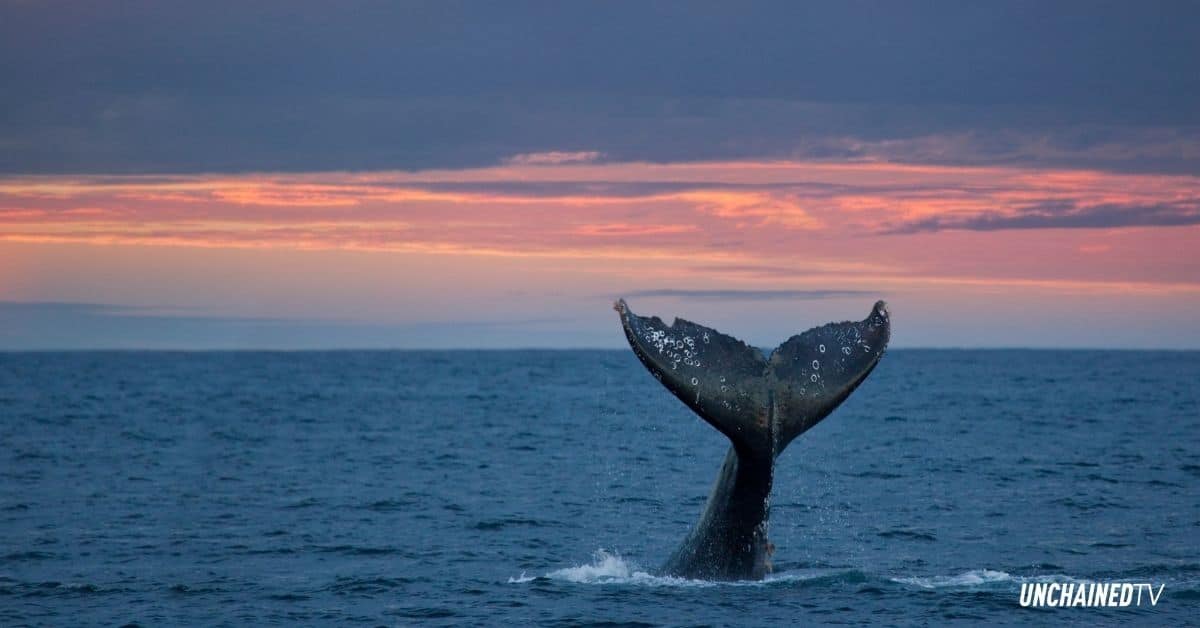
As gray whale deaths surge along the Pacific Coast, scientists point to malnutrition, a changing Arctic food web and mounting human pressures—renewing calls for stronger protections.
Monterey, CA — July 20, 2026 — The alarming rise in gray whale deaths along the Pacific Coast of North America has escalated from 21 to approximately 145 in just a few weeks. This increase has sent shockwaves through the scientific community, prompting urgent calls for action to address what experts fear may be a significant decline in the eastern North Pacific gray whale population. Each of these 145 whales represents a unique individual, an animal who has navigated a perilous journey for millennia, now tragically lost.
On June 14, 2026, UnchainedTV reported that 21 gray whales had died within a three-month period, a figure that was initially seen as a distress signal from a warming ocean. This earlier report, 21 Dead Gray Whales in 3 Months: The Ocean Is Sending a Warning, has now become a prelude to a much graver narrative. Just weeks later, the count has surged nearly sevenfold along the entire West Coast range, which encompasses the United States, Canada, and Mexico.
Understanding the Rapid Increase in Gray Whale Deaths
The National Oceanic and Atmospheric Administration (NOAA) has confirmed that the toll now stands at 145 gray whales dead along the West Coast. This includes regions in Mexico and Canada, as reported in a recent USA Today article. This figure encompasses animals who have either washed ashore dead or become stranded this year.
The rapid escalation in numbers is partly attributable to the northbound migration, which concentrates whales in a narrow coastal corridor during spring. Consequently, carcasses that had been drifting or impacted by feeding failures have surfaced within a brief timeframe. Historical data indicates that the average annual number of strandings from 2006 to 2023 was approximately 43. Last year, a staggering 179 gray whales were reported dead. Importantly, what washes ashore is only a fraction of the actual mortality; scientific literature estimates that the ratio between unobserved offshore mortalities and observed onshore strandings ranges from 7-to-1 to 25-to-1.
A concerning trend has emerged: many of the stranded gray whales appear thin and malnourished. Estimates reported by The Guardian suggest that between 2,500 and 8,000 gray whales may have died during 2025 and 2026, a range that researchers assert meets the criteria for a catastrophic mortality event—a term used by scientists and advocates, though not an official federal designation.
Challenges of a Long Migration
Gray whales undertake one of the longest migrations of any mammal, traveling approximately 12,000 miles round trip between the nursery lagoons of Baja California, Mexico, and their Arctic feeding grounds. According to National Geographic, the species is a specialized bottom feeder, relying heavily on amphipods and other small organisms found in seafloor sediment.
This specialization presents a vulnerability. Declining sea ice and warming waters in the Arctic and sub-Arctic disrupt the sediment communities that support amphipod populations. As a result, when whales arrive at the lagoons, they often do so already depleted, unable to accumulate the energy reserves necessary for nurturing a calf. A migration of this magnitude allows no margin for error for a whale who has failed to adequately fatten up. The link to ocean warming is a primary scientific explanation, though not every individual death can be attributed to a single cause. Coverage such as Oceans Under Threat: How Our Diets Are Harming Sea Creatures has helped raise broader public awareness of these pressures.
Compounding Human Pressures
Food scarcity is compounded by additional human-induced pressures. Ship strikes, entanglement in fishing gear, pollution, and ocean noise all exert additional stress on these already vulnerable animals. In 2025, 24 gray whales were reported struck by ships along the coasts of California, Oregon, and Washington. However, scientists believe this figure significantly underrepresents the true toll, estimating that approximately 80 whales may die annually in the Western United States due to such encounters, as reported by obrag.org.
This situation echoes historical threats; a century ago, humans nearly eradicated gray whales through commercial whaling. Their coastal migration routes and nursery lagoons made mothers and calves particularly easy targets for whalers. Eventually, the eastern Pacific population rebounded and was removed from the U.S. Endangered Species List in 1994. Today, the pressures faced by gray whales are less conspicuous than a harpoon, yet arguably more challenging to reverse.
Historical Context and Current Concerns
NOAA’s officially declared Unusual Mortality Event from 2019 to 2023 involved 690 documented strandings, primarily linked to ecosystem changes in Arctic and sub-Arctic feeding areas, malnutrition, reduced calf production, and increased mortality, according to NOAA Fisheries documentation on the closed event. While this event has officially concluded, current warning signs suggest that the population’s resurgence may have plateaued. The eastern population has dwindled to about 13,000 individuals in 2025, the lowest since the 1970s, down from roughly 27,000 in 2016. One researcher has cautioned that the changing environment may now be evolving at a pace that challenges the population’s historical capacity to rebound while adapting to a new ecological regime.
Calls for Renewed Protections
With gray whale populations reportedly declining by half over the past decade, conservation advocates are actively discussing the need for renewed Endangered Species Act protections. Their proposed measures are concrete: reducing vessel speeds in migration corridors, implementing safer fishing practices to minimize entanglement, protecting critical habitats in feeding and calving areas, and enhancing federal monitoring to detect population declines earlier.
What Can We Do?
To a large degree, this crisis boils down to consumer choices. Overfishing and fishing net entanglements are two threats facing these majestic creatures. So, consumers can choose something else. Plant-based fish alternatives, like Gardein’s Plant-Based F’sh Filets get high marks for providing the same taste experience as an actual fish filet. There are many other similar products on the market. And, since the whale crisis is part of the overarching and ongoing climate emergency that warms oceans and disrupts natural ecosystems, we can all do our best to lower our carbon footprint by choosing a sustainable, plant-based lifestyle, which is the single most impactful thing an individual can do to reduce their carbon footprint. As the New York Times reported of an Oxford University study, “Researchers examined the diets of 55,500 people and found that vegans are responsible for 75 percent less in greenhouse gases than meat-eaters.”
Gray whales have survived one era of human destruction and clawed back from the brink of extinction. Their survival should not necessitate a never-ending battle against a succession of crises brought on by thoughtless human activity. A species that has withstood commercial whaling faces the risk of being undone by a rapidly transforming ocean, leading to the tragic loss of 145 individuals—each with a journey they will never complete.
Share This
About the Author: Brandy Walt-Rose



Latest News




Stay Tuned In
Be the first to know when new shows drop! Plus, get the hottest headlines, inspiring stories, and behind-the-scenes extras. Sign up and keep streaming!
you might also like

Animal Advocates urge citizens to halt the Save Our Bacon Act which threatens state animal welfare laws

After roughly 15 miles, 40,000 steps and more than a few blisters, marchers reached Schenectady on Day One of a two-week journey across New York aimed at putting animal experimentation—and one of its largest suppliers—squarely [...]
-
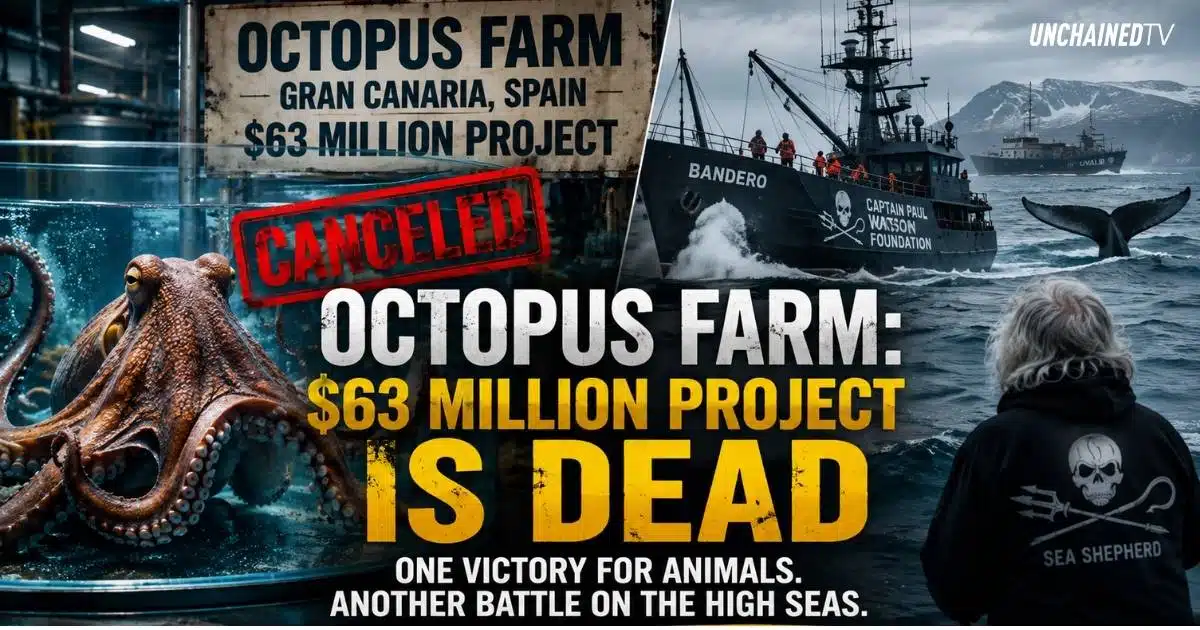
Spanish seafood company Nueva Pescanova has abandoned its plans for a proposed commercial octopus farm in Gran Canaria after years of scientific criticism, animal advocacy, and international public pressure.