
The Physicians Committee for Responsible Medicine (PCRM) Celebrates its Victories
Share This
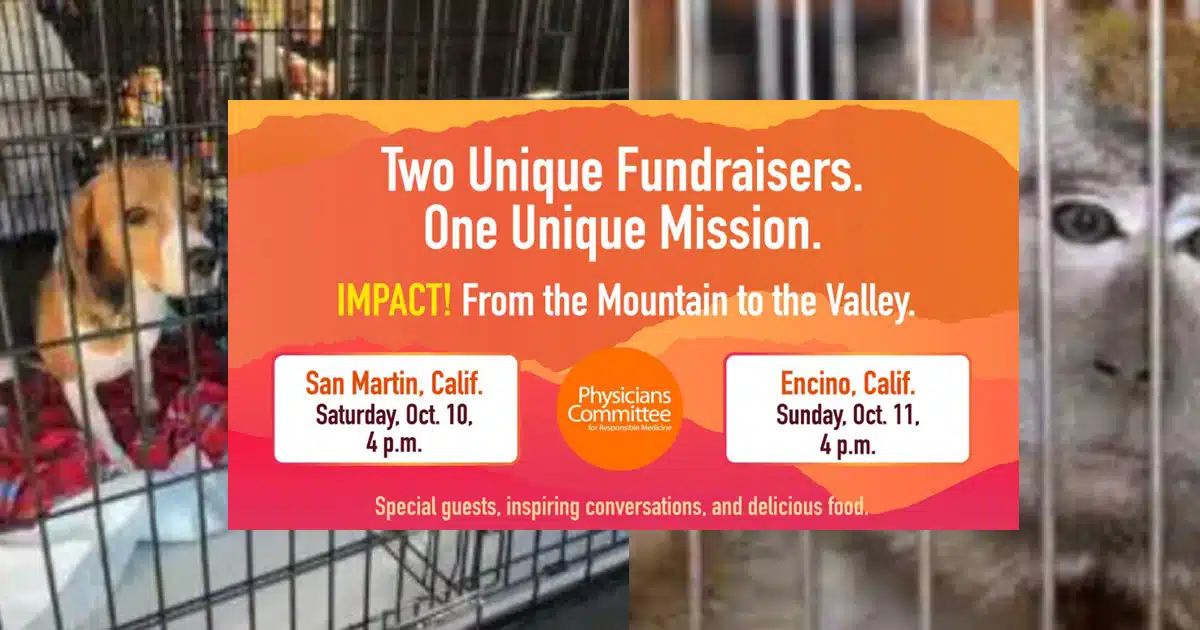
With several parties in California in October, the Physicians Committee for Responsible Medicine (PCRM) is celebrating its recent achievements in advancing animal protection and human health causes.
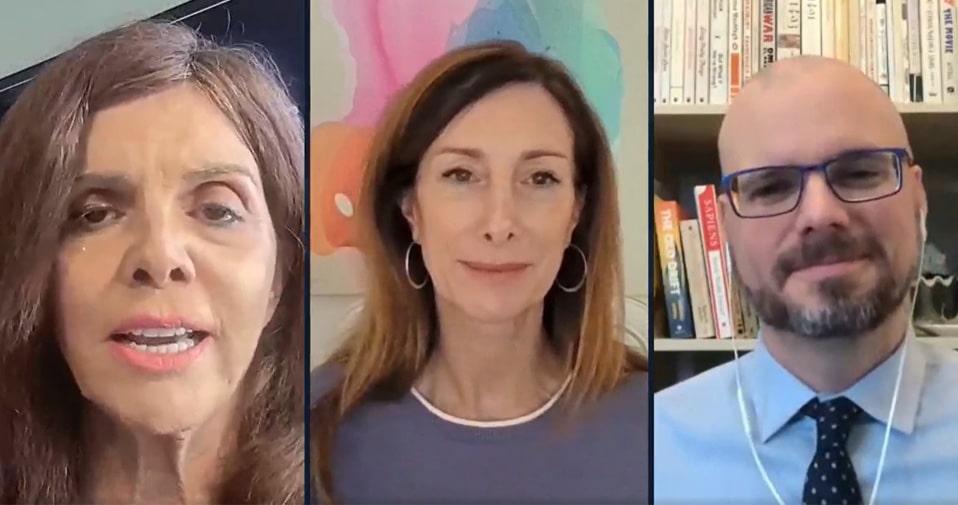
UNCHAINEDTV’s Jane Velez-Mitchell with Betsy Wason and Ryan Merkley from PCRM
Los Angeles, CA, October 5th, 2026 — Recently, the Physicians Committee for Responsible Medicine (PCRM) has been significantly advancing in its campaigning goals, and its now celebrating this progress with two fundraisers on October 10 and 11. The Northern California event takes place at 4:00 PM at Moose Mountain Vineyard in San Martin, hosted by Dr. Richard Schmidt, where the organization will recognize Ocean Robbins and honor John Robbins posthumously. The Los Angeles event follows October 11 at 4:00 PM in Encino, hosted by Mick Davoudian and Jeff Hoffman, recognizing Chef Tal Ronnen of Crossroads.
Among PCRM’s many victories are a series of federal wins after the National Institutes of Health (NIH) awarded 10 grants totaling $88 million to build or modernize laboratories dedicated to human-based research as opposed to animal-based research. The awards followed direct recommendations the organization brought to NIH last year, and they arrive alongside parallel moves at the Food and Drug Administration and the Environmental Protection Agency. Together, these developments mark the fastest shift away from animal experimentation the United States has ever seen. UNCHAINEDTV’s Jane Velez-Mitchell discussed these advances with PCRM’s Director of Research Advocacy Ryan Merkley and Senior Vice President of Development Betsy Wason. You can watch their conversation here:
Federal agencies accelerate the move toward human-based research
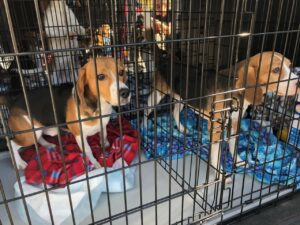
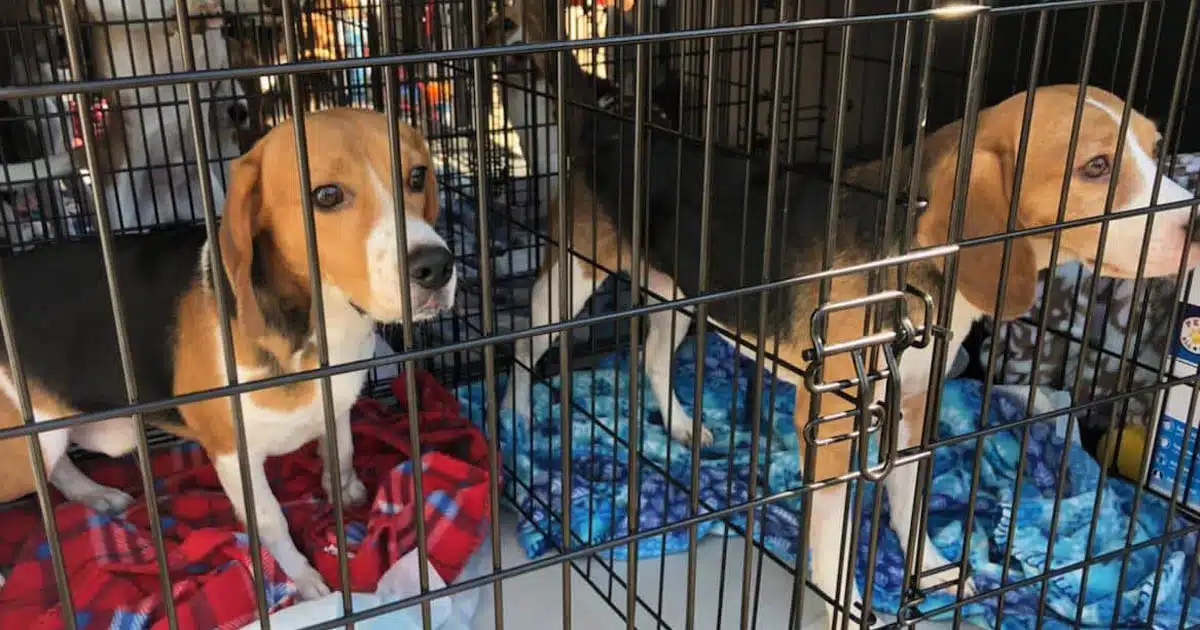
Rescue + Freedom Project saves animals like these beagles from animal testing facilities.
The $88 million NIH investment funds both the development of non-animal methods and the transition of existing laboratories away from animal use. Ryan Merkley, PCRM’s Director of Research Advocacy, described the origin of the program plainly: “That’s not an idea that came from nowhere. Our staff told NIH to do this. We asked, I should say. Last year, we went to the agency and said, ‘Hey, we got this great idea. What do you think?'”
The funding arrived on the same week that the FDA announced a change to its regulatory language, a crucial change that PCRM had pursued for more than a decade. Agency guidance documents that instructed drug developers to submit “animal testing” data are being rewritten to say “non-clinical testing” instead. The substitution sounds procedural. Its effect on industry behavior is not.
“What that says to drug companies is, ‘Oh, you mean we don’t need to do the expensive, cruel, time-consuming, unpredictive thing where we use dogs and pigs and monkeys and mice for drug testing, and we can do the cheaper, faster thing that predicts human outcomes using human organ chips and tissue chips and organoids and computational models that model human data?'” Merkley said. “We think the drug industry is really going to embrace this.”
Health and Human Services Secretary Robert F. Kennedy Jr. set out the federal position at a recent news conference. “We have a clear mandate to modernize biomedical research across the federal government,” Kennedy said. “We are putting human biology at the center of American biomedical research and replacing unnecessary animal testing with better science.”
A Vote to End Monkey Lab Torture!
Why the scientific case against animal testing has hardened
Organ on chip OOC and lab on chip LOC – microfluidic device chip that simulates biological organs and laboratory device . By luchschenF via Above Stock Images
The driver behind this shift is predictive failure. Roughly 95 percent of drugs that work in animals fail in human trials, a translation gap that costs pharmaceutical developers years and billions of dollars while producing no patient benefit. As development costs climb and regulators face pressure to speed up drug approvals, that failure rate has become a commercial problem as much as an ethical one.
Technology closed the alternative gap. Organ-on-a-chip systems, organoids, computational toxicology models and machine-learning analysis of existing datasets now supply human-relevant data that rodent studies cannot. Researchers who once argued that no substitute existed are running out of ground.
PCRM has worked both sides of that equation. The organization has funded companies developing non-animal methods and trains thousands of scientists and students each year in human-based techniques. “When they come out of grad school, they don’t want to use mice,” Merkley said. “They want to use organ chips and organoids and computational models and things that represent human biology.”
In late August, the Environmental Protection Agency announced that pesticide registrants no longer need to submit lethal dose 50 data. The LD50 test involves force-feeding large quantities of pesticides to mice, mallards and other nonhuman animals until half the test population dies. It has been standard industry practice for decades.
Companies may now use a globally recognized mathematical model that assesses toxicity by comparing new chemicals against accumulated data from prior animal, human and non-animal studies. The change eliminates thousands of nonhuman animal deaths annually and forms part of the agency’s plan to eliminate all mammalian testing by 2035. Hopefully, birds and other animals may follow.
PCRM began those conversations with the EPA roughly 20 years ago, initially through a former EPA toxicologist who joined the organization’s staff. “This is never easy. It is never fast. It requires a lot of work,” Merkley said of the agency’s slow reversal from outright resistance to acceptance.
Could Animal Testing Finally End?
University funding incentives remain the harder target
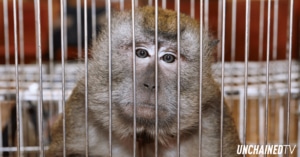
A monkey housed at the OHSU primate research center, which the university board has voted to transition away from experimentation.
Federal research grants carry indirect cost rates that route a substantial share of each award to the host institution rather than the research itself. At some universities those rates exceed 50 percent, creating an institutional financial interest in sustaining grant volume regardless of scientific merit.
PCRM says that Wayne State University illustrates the pattern alleging that, for more than three decades, researchers there conducted heart failure experiments in which dogs had devices implanted in their hearts and arteries, then were sewn shut and forced to run on treadmills with cables protruding from their backs. PCRM says it reviewed public records that documented deaths from internal bleeding and infection, alleging that approximately 300 dogs died over 35 years, funded by roughly $14 million in taxpayer-finded NIH grants against an indirect cost rate near 45 percent, with no evidence that a single heart failure patient benefited. Wayne State University is invited on to comment on PCRM’s allegations.
PCRM Urges Animal Lovers to Tell their Members of Congress to Vote for The COMPACT Act
Congressional interest is building alongside agency changes. The bipartisan COMPACT Act, introduced by Representatives Nick Langworthy and Mark Pocan, would prohibit federal public-health research funds from supporting biomedical research involving live dogs and cats while protecting animals currently in facilities. “Americans have been paying $40 million a year to fund cruel experiments on dogs and most have no idea,” said one prominent critic of government vivisection funding. PCRM’s Janine McCarthy added: “Dogs and cats belong in homes, not laboratories, and taxpayer dollars should support research that better translates to human health.”
Opponents of animal experimentation hope every American who loves their pets and other animals will call their member of Congress at (202) 224-3121 and urge them to co-sponsor and vote for the COMPACT Act.
PCRM is pressing the NIH to count laboratory animals accurately, a transparency measure that would show the public the true scale of federally funded animal use. Current reporting excludes large categories of animals, leaving the total unknown.
The organization’s efforts to cut taxpayer funding for animal experiments comes as public pressure intensifies with marches and protests against Marshall BioResources in western New York, the country’s largest breeder of dogs for laboratories, primarily supplying the drug testing sector. As FDA guidance shifts toward non-animal testing, opponents of animal experimentation hope that the demand for the dogs in that pipeline will collapse. Marshall BioResources is invited on to comment at any time.
PCRM will mark these milestones at the two California gatherings on October 10 and 11. Founder Dr. Neal Barnard and Merkley will attend both. Betsy Wason, PCRM’s Senior Vice President of Development, described the weekend as a fundraising push tied directly to advocacy capacity. “We need to fuel the tank. We need to keep this PCRM mission going strong and forward,” Wason said. VIP tickets have sold out; general seating remains limited and is available at tinyurl.com/PCRMPARTY.
The March to Abolish Animal Tests
Video Transcript
[Speaker 5] We have information resources that we're making available far and wide. We're doing rallies all across the United States to attract the press that in turn can broadcast this message to their communities far and wide as well as, and also in other countries. We're doing endless media interviews and so forth.
We're working with the American Medical Association to catch this, tell doctors that they need to talk to patients about what they're eating, about healthy foods, and about prevention. Not just treatment, as important as treatment is.
[Speaker 2] And that is my hero, Dr. Neal Barnard, founder and president of Physicians Committee for Responsible Medicine. Everybody watching, you are invited to a party to celebrate PCRM's work. We will put up the QR code over and over again throughout this show so that you can put your phone on there, put the camera on there, and get the access to sign up to the party.
Seating is limited, so I urge you to do that as soon as possible. I am so excited to have one of my favorite people on the planet, Betsy Watson of Physicians Committee for Responsible Medicine on to talk about this party and celebrating PCRM's work. Tell us all about it, Betsy.
[Speaker 3] Oh, thank you, Jane. I am so excited to be here. And I hear that you are going to join us at one of these events that we're having.
The Physicians Committee is having a weekend of, we're calling it a weekend of impact. And October 10th, which is a Saturday, and Sunday, October 11th, we are going to be celebrating in California. On the 10th, we'll be in Northern California at Moose Mountain in San Martin, which is just a little bit south of San Jose.
Dr. Barnard will be there. Ryan Merkley will be there. Our host is Dr. Richard Schmitz, a longtime PCRM supporter. And he's hosting us at his just incredible Moose Mountain Vineyard. It's a hilltop estate with the most gorgeous views. We'll have incredible food.
We're going to be honoring and recognizing Ocean Robbins and his, yeah, his father, posthumously. Posthumously, yes. Thank you, James.
But it's, you know, it's, we're also going to be raising funds all weekend to support PCRM's work. We're going to have, we're going to have some serious talk, but mostly we're going to put the fun in this fundraising weekend. And then on the next day, Sunday, we're all zipping down to Encino, where we are going to have a similar event.
Our hosts, Mick Davodian and Jeff Hoffman, are opening their home to us. The same thing on a hilltop with gorgeous views, but most importantly, we're going to be together with so many like-minded people, people who want to stop animal suffering, people who want to hear about updates from the Physicians Committee, and we are just really looking forward to it.
[Speaker 2] And one of our viewers, Tina Walker, says, that's exciting. So come to the party, Tina. Again, there's the QR code and just put your camera on there, or you can take a snapshot if you want and do it later.
But the point is, seats are going fast. Sign up because it is going to be a party. I'm going to be there.
I'm very excited because- I'm going to be there. Yay! Ryan's going to be there.
Well, I do have to say, when I'm there, it's a party. That is no lie. That is the truth.
I don't normally toot my own horn, but when it comes to partying, yeah, anything I can do to celebrate Physicians Committee for Responsible Medicine, I want to do because it is one of the most effective organizations on the planet, my favorite organization. Let's put it this way. If anything happens to me, I got it in there for PCRN because- I know that, what is it, 17,000 physicians?
[Speaker 3] More, a little bit more, and we've got many, many more supporters. We've got the physician support, but we've got support from other healthcare providers, and we've got the support from people who just want to make a big difference in the lives of animals and get people healthy at the same time. And we mentioned recognizing Ocean Robbins in Northern California.
If you're in Southern California, or even if you're into the vegan food scene at all, you're going to recognize Chef Tal Ronan. We love saving animals, we love helping people, and we also love food. So we're going to be recognizing Chef Tal for all he has done to raise the bar when it comes to vegan food and how he's making it sustainable for everyone to eat this way.
[Speaker 2] Yeah, Chef Tal, who is the famous chef of Crossroads, one of the most, the premier vegan restaurants, certainly in Los Angeles and the world. It is always a treat to go there. So the food is going to be absolutely delicious.
It's going to be a fun party. I know the LA party house very well. And let's put it this way, it's very possible somebody could end up in the giant pool.
You never know. We hope not, but they will be very healthy because they are a PCRM supporter, so they'll swim to the edge and climb out.
[Speaker 3] There'll be enough people there to help fish them out, and like you said, tickets are going fast. Our VIP tickets are already sold out, but you can still come and join us. We want you there.
It is going to be a fun time.
[Speaker 2] I can't wait to go. I will see you there, and I hope to see those who are watching there as well. I want to introduce Ryan Merkley, who knows all about the advocacy work that Physicians Committee for Responsible Medicine does.
And we're starting to see the payoff now, after decades of fighting to stop irresponsible, ineffective tests on animals, because last time I checked, I don't have a tail or paws. It doesn't apply. In 95% of the cases, drugs that work on animals do not work on humans.
There's been breakthroughs. Ryan, PCRM is a huge part of that. Tell us about PCRM's role in joining the 21st century, getting the government to go to modern methods.
[Speaker 1] Absolutely. There's so much to talk about. Let me start in a couple of places.
So Jane, first of all, I know that you've been doing a lot of work covering the Marshall Farms issue in recent days and the big march that's happening there. And it's worth noting that Marshall Farms in Western New York is the country's biggest breeder of dogs for labs, and those dogs are being bred primarily for drug testing. It is the biggest industry that uses dogs in this country.
And what we heard earlier this week was a big announcement from the Food and Drug Administration, something that we have been pushing FDA for more than a decade to do with really detailed work, meetings with their staff, scientific expertise being presented to the agency, legislators we work with pushing FDA in this direction. And one of these things is going to sound small to people. It's about words, because the FDA puts out these guidances and these regulations that tell the drug industry what kind of data to submit.
And in those regulations and guidance, for decades, there's been this phrase, animal testing, literally, quote unquote, animal testing. And so when industry sees that, they think we need to do this because that's what FDA expects. But we've seen FDA moving in recent years to accept non-animal data.
We've even seen some drugs make it through the review process without any animal testing whatsoever. And the reason we want to replace animals is, of course, just like you said, 95 percent of the time, they work in animals and they fail in human trials, and that's not good for anybody, especially the animals. But what FDA announced on Monday is really big, and it's about words.
They are replacing in these regulations the phrase animal testing with things like non-clinical testing. So something more generic that could be any form of method. And what that says to drug companies is, oh, you mean we don't need to do the expensive, cruel, time-consuming, unpredictive thing where we use dogs and pigs and monkeys and mice for drug testing, and we can do the cheaper, faster thing that predicts human outcomes using human organ chips and tissue chips and organoids and computational models that model human data?
That's great. So we think the drug industry is really going to embrace this. We think this is going to be the start of something really big in terms of getting animals out of the drug testing pipeline.
Now that's just one thing. That's just drug testing. I can go on, but I wanted to pause before I did.
[Speaker 2] Well, let's talk about that a little bit, because after decades of hard work, PCRM is finally starting to see the payoff. There was an extraordinary news conference held just two days ago where RFK Jr., Health and Human Services Secretary, said this. Let's listen and talk about it on the other side.
[Speaker 4] We have a clear mandate to modernize biomedical research across the federal government. Our standard is simple. Use the best scientific method for the questions that we're trying to ask.
And validated human-based methods can give us better information about human biology. Researchers should be able to use them. We will invest in those methods, validate them rigorously, and remove unnecessary barriers to their use while maintaining the rigorous standards that we use for safety and efficacy.
We are putting human biology at the center of the American biomedical research and replacing unnecessary animal testing with better science. Thank you all very much.
[Speaker 2] Okay, replacing animal testing with better science. It seems to me, and you're the expert, but it seems like years of work by PCRM is also being met by technological advances, organs on a chip, AI, even quantum computing that is the modern way. And so that's what is sort of in the face of the scientific community.
They can't say they have to do animal testing because, oh, look at all these alternatives that exist.
[Speaker 1] Absolutely. And that's something we've done probably more than any other organization in recent decades, which is to work with the companies that develop these non-animal methods, to encourage them, in some cases, to actually award them funding to develop new methods. We also train scientists.
This is something we do more than anybody else. Thousands of scientists and students every single year, getting them familiar with non-animal data so that when they come out of grad school, they don't want to use mice. They want to use organ chips and organoids and computational models and things that represent human biology.
So that's work we've all been laying the groundwork to do. But this is also not just the Food and Drug Administration, it's also the National Institutes of Health. And we're really excited that Secretary Kennedy is embracing this and that he is pushing both of these agencies under his purview to do this.
And I want to talk about another thing that was announced on Monday that has our fingerprints all over it. And I'm so proud of my colleagues for doing this. On Monday, the National Institutes of Health announced a giant investment in non-animal research methods, multiple grants given to people to not only develop, but also transition, develop non-animal methods, but also transition away from animals.
$88 million is being invested. And that's not an idea that came from nowhere. Our staff told NIH to do this.
We asked, I should say. Last year, we went to the agency and said, hey, we got this great idea. What do you think?
And so we've been working with NIH over the last year to get this from an idea to an actual funded proposal. And on Monday, it finally came to fruition. It's incredible.
And it's a huge step. And what it says to researchers is, remember, there are a lot of people out there who maybe have or still do use animals in labs who do not want to. And when they can follow the money that is being presented by federal agencies, they will do so.
And if they can do something that doesn't require they go home at the end of the day and wonder, like, why did I kill those mice or why did I have to deal with those dogs and monkeys in cages? And maybe I'll pour myself a stiff drink to deal with what I experienced today. There are people who want to get out of this industry.
And so we need the federal government to invest in grants that allow them to do that. And that's exactly what NIH is doing. And that's what we propose to them.
So we're really excited about that as well.
[Speaker 2] Well, your work is just so extraordinary. And that's one of the reasons why I am such a fan of PCRM, because I've watched for years, relentless. But it doesn't happen by magic.
There's no fairy dust powder that just lets it happen. But it's up to the supporters. And I'm one of the supporters.
I go to all the events that happen anywhere I'm near, because I'm just such a fan of PCRM. And that's why that party that you're having, the parties, one in Northern California and one in Los Angeles, are so crucial. Because let's face it, without the support of people, you can't do your work.
And you could just unmute and tell us. Thank you, Betsy.
[Speaker 3] Jane, I mean, there are a lot of ways people can support Physicians Committee's work. And you're right. You are there with us.
You've been a PCRM member for so long. But we ask people to do all kinds of things, to jump in and sign petitions and go to hearings and make telephone calls and meet with their legislators. But it takes funding, just like you said.
And so we need to fuel the tank. We need to keep this PCRM mission going strong and forward. And that's what we're going to do on the weekend of October 10th and 11th.
We're going to really make an impact. We're going to raise some funds so that Ryan and the rest of the team can keep moving forward, keep pushing for change.
[Speaker 2] At this crucial juncture where there are so many payoffs, it reminds me of the situation that horses faced in the 19th century. There were advocates against cruelty to horses. It was really the start of the animal rights movement to a certain degree.
And then cars came along, the electric carriage. And so it wasn't just them saying, take care of these carriage horses. Here's the alternative.
Here in your face. And that's where we're at right now with the modern technology that is able to solve, literally, I've been reading about quantum computing problems in mathematical and scientific questions that could take literally 100 years for humans. It can be solved in minutes.
So there is this modern technology that is right there. And we are all experiencing it with artificial intelligence, et cetera. They can't say they have to do it anymore.
So this is a sea change. They never had to do it. That's the truth.
But right now is a critical juncture to support PCRM because we are really, I say we, well, I'm a supporter.
[Speaker 3] You're part of it, Jane.
[Speaker 2] A cheerleader. But you guys are seeing the payoff to decades of hard work. Can you elaborate on that a little bit, Ryan?
[Speaker 1] Yeah, absolutely. I mean, let me give you a case in point that actually attaches perfectly to what you just said about these mathematical and computational models. Because just a few weeks ago, we talked about FDA and NIH, but the EPA, the Environmental Protection Agency, is also doing some big things in this area.
And just a couple of weeks ago, they made a big announcement that actually has a lot to do with the work we have been doing with EPA for two decades. So this is never easy. It is never fast.
It requires a lot of work. And what's happening at EPA proves that. So what happened at the end of August is the EPA said, hey, when you submit your pesticide testing data to us, you no longer have to do the lethal dose 50 tests.
So for anyone who doesn't know, these lethal dose or LD50 tests for decades have been used for testing chemicals, pesticides, and other things. And what it does, what pesticide testing usually involves, is force feeding huge quantities of pesticides to mice, to birds like mallards, and other animals until 50% of the animals have died. It is the crudest way to conduct science, if you can even call it that.
And yet, it's been standard practice in this industry for decades. But we've been pushing EPA, I mean, my former boss, when I first started the Physicians Committee 20 years ago, my boss was a former EPA toxicologist who was then working for us. And he started our conversations with the agency back then.
And this was an agency that when we started, was entirely resistant to replacing animals or even didn't really understand non-animal data. And so they wanted to stick with the old way. We've been slowly pushing the agency in the right direction.
And so in late August, they announced you no longer need to do the LD50 tests, killing these thousands of animals a year. What you can do instead is use a globally recognized mathematical model. And I can't even show you a picture of it because it'd be so boring.
It's literally like, to show you it on a page is just numbers. But people smarter than me certainly can understand it. Our toxicologists use it and understand it perfectly.
And it's a model that's used globally to essentially assess toxicity in the human body or in animals based on existing data. Because remember, we have decades of data from animal studies and human studies and other non-animal methods. And so why don't we use all that data to say, hey, we have a new chemical.
It looks like a chemical we've already tested. Is it going to do us harm or isn't it? And so that's what EPA is now accepting.
And it's part of the agency's big plan to get rid of all mammalian testing by 2035. And this is something we've been pushing EPA to do for decades. So again, and that doesn't happen fast.
It requires an understanding of these methods. It requires that these methods, these non-animal methods become more robust and more accepted and that the science becomes stronger. And that's exactly what we've been doing for these last 20 years.
[Speaker 2] And I want to ask you a follow up on that, because my understanding is one of the reasons why universities push animal testing so much is that they get a cut. So if a university researcher applies for a grant, we're going to kill this many animals, the LD50 test or whatever test it is, the university gets some kind of financial incentive to go along with that. And that's why a lot of this unnecessary animal experimentation is happening at universities around the country and the world.
How has this change in culture, this shift in science and government culture about animal testing impacted the university system?
[Speaker 1] Yeah. I mean, I think you saw last year when the NIH started making decisions about grants, you saw a lot of universities up in arms about that. And that's because, just like you said, federal research grants are a huge moneymaker.
It's why for the last 20 years, you've seen major universities, you go to any major university campus and you'll see new construction and they're not building new classrooms. What they're usually building is new research buildings, because the more research buildings they have, the more researchers they can hire, the more grants they can bring in. And every single grant a university gets from NIH has what's called indirect costs.
And some universities' indirect costs, that's the portion of the grant that doesn't go to the research, it goes to the university directly. Some universities have indirect costs that are over 50%, meaning most of the grant doesn't even go to the research, it goes to the university. And one good example of this, to really wrap people's heads around it, is Wayne State University.
Something I know our supporters have heard a lot about. Wayne State University in Detroit, since 1991, was conducting these egregious heart failure experiments on dogs, in which dogs would be cut open and have devices implanted in their heart, they'd have pacing wires stabbed into their heart, they'd have devices implanted in and around their arteries, they'd be sewn shut, and they would be forced to run on treadmills with these cables and wires sticking out of their backs, collecting data.
And we saw from public records that these dogs were often dying due to internal bleeding, that they were dying due to infections and other complications, and nothing good came of it. There's not a single piece of evidence that suggests 35 years of these heart failure experiments have helped a single patient suffering from heart failure. Meanwhile, 300 dogs have died.
And from Wayne State's perspective, the most important thing is $14 million have come in from NIH for these projects. And Wayne State's indirect cost is about 45%, which means about half of that $14 million just went to the university, not to the research. But here's the good news.
We've been working really hard on the Wayne State experiments. And in April, we got to a breakthrough. We were able to work with a reporter who confirmed that as of April this year, Wayne State was not using any dogs in experiments for the first time in 35 years.
That's huge. But here's the crazy thing. Wayne State, despite having no evidence that this has helped anybody, and having seen that NIH was probably not going to give it more money, is still trying to get more funds from the federal government.
They openly said in the spring, we're applying to restart these useless, cruel, deadly dog experiments. So we're working with federal legislators to make sure NIH does not give them any more money. And I just want to maybe spend a second talking about that, because we're talking about all these big things coming out of NIH and FDA, and they're exciting.
But NIH awards about, historically, awards about $20 billion worth of grants involving animals to universities and labs all across the country. $20 billion a year, historically. So that $88 million they've invested in non-immune methods, that's big.
It's really big. And it's going to send a message. But it also means that there's still billions of dollars being spent on animal studies.
And so we are working really hard to make sure that we see this change happen across NIH, and not just in individual, smaller cases.
[Speaker 2] Yeah. And as a taxpayer, I have to say, I'll speak for all taxpayers for a second. That is infuriating, that our hard-earned tax dollars are going to these useless, cruel experiments, and that everybody knows at this point.
Everybody knows. We know 95% of the drugs that work on animals don't work on humans. Heart disease, it's skyrocketing.
Cancer, certain forms of it, skyrocketing. And there's a dietary solution. A lot of what they are experimenting animals on, the solution is to eat a healthy plant-based diet.
Heart disease is largely connected to plaque, which comes from a type of cholesterol that only exists in animal products. Plants do not produce that cholesterol. So that's the other side of the PCRM equation.
And Betsy, I know you can talk about that, is that encouraging a healthy plant-based diet, which is something that the more than 17,000, how many doctors and medical experts do you have now at PCRM who are pushing?
[Speaker 3] So I'm so glad you brought that up. And PCRM is working hard to get animals off the plate, get animals out of the labs, and also make people healthy. And we have something very exciting when you talked about cancer being related to the foods that we eat and our lifestyle choices.
This year for our Let's Beat Breast Cancer campaign, we have tennis superstar Venus Williams on board, helping us spread the word about eating a plant-based diet. And in October, we're going to have a public service announcement with Venus Williams and Dr. Christy Funk playing in hundreds of AMC theaters throughout the entire month. And we're going to reach millions of people with this really straightforward, easy to hear message about eating plant-based, eating veggies, eating your fruits, eating plants.
And so part of what we're going to be doing at these parties in October, we're going to be raising money to get the word out because AMC theaters are nice, but they're not doing that for free. So we've got this excellent opportunity with this big celebrity to spread the word, and we've got to take full advantage of that.
[Speaker 2] All right. And I'm going to put the QR code up again. This is going to be a super fun party.
And will Dr. Neil be there? Dr. Neil Barnard?
[Speaker 3] Dr. Barnard will be there. He'll be giving an update on our dietary guidelines lawsuit. Yeah, we have really high hopes for that, and we're pushing hard.
He's going to talk about our clinical research. He's going to talk about all kinds of progress that's happening in Oregon with how we're trying to shut down the primate lab there. So we're going to talk about some serious updates.
But like you said, Jane, we are going to have fun.
[Speaker 2] It's going to be a great party. I can't wait to go to the LA party. And I know the San Francisco area party, the Northern California party is going to be a fabulous party as well.
So again, seating is limited. You can scan this QR code right now to join the party. Also, there is a link on the written intro.
I just want to thank both of you. Everybody at PCRM, you are my heroes. What you do is such important work.
It's the most important work to help Americans with our health, to help animals get out of labs, to save tax dollars from going to cruel, ridiculous experiments that don't achieve anything. It's the most important work out there. And I just want to say thank you for everything that you do.
And I will see you at the party and onward, rock on. And let's celebrate together because it is a team effort. It sure is.
Thanks again, Ryan and Betsy. Love you. Talk to you soon.
Thanks.
[Speaker 3] So it's a vegan Netflix. OK, that's the craziest thing I've ever heard. I love Unchained TV.
[Speaker 5] Unchained, Unchained TV. Your life will change. It's just that easy.
[Speaker 3] Unchained TV has all sorts of content for everybody. Unchained TV changed my life. Unchained TV is crushing it.
I love Unchained TV. Unchained TV is my go-to. Unchained TV.
Who knew?
Share This
About the Author: Jordi Casmitjana

 Activists Celebrate Legislative and Campaigning Progress Toward Ending Animal Tests
Latest News

Stay Tuned In
Be the first to know when new shows drop! Plus, get the hottest headlines, inspiring stories, and behind-the-scenes extras. Sign up and keep streaming!
you might also like

Groundbreaking, culture-shifting progress is underway in the fight to end animal testing, and UnchainedTV's Truth Files dives deep into this monumental shift with host Jane Velez-Mitchell and guest Wayne Pacelle, President of the Center for a Humane Economy and Animal Wellness Action.
-
The global study of vegans, the “Huge Vegan Survey”, has reached 10,000 participants but is still open to more Huge Vegan Survey logo London, England, October 1st, 2026 - The independently run Huge [...]

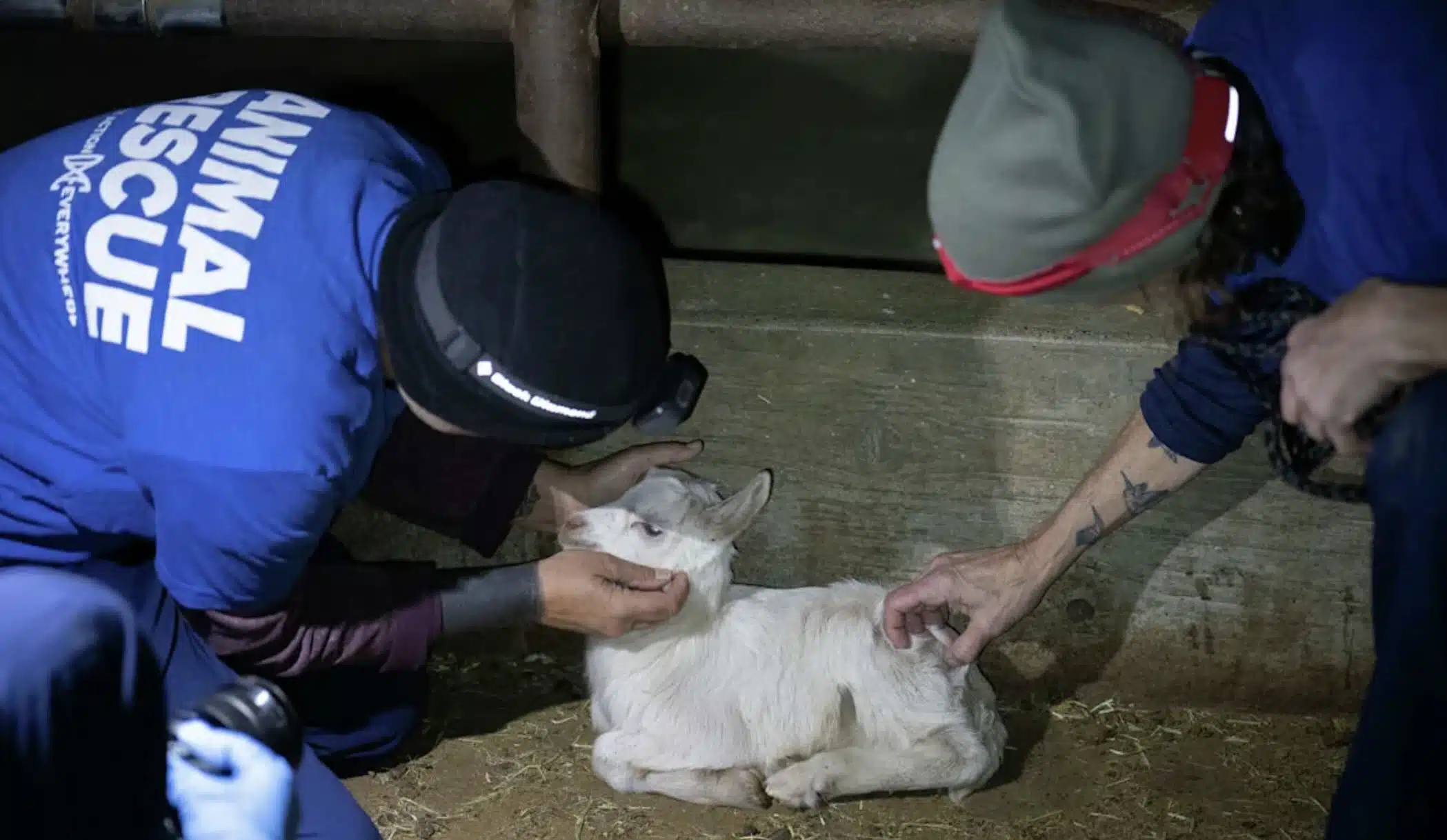
California judge grants judicial diversion for four activists in the DxE Goat Rescue Trial, leading to dismissal of charges after community service and probation.