
BREAKING: 1,500 Beagles to be Released from Breeding Facility that Supplies Labs!
Share This
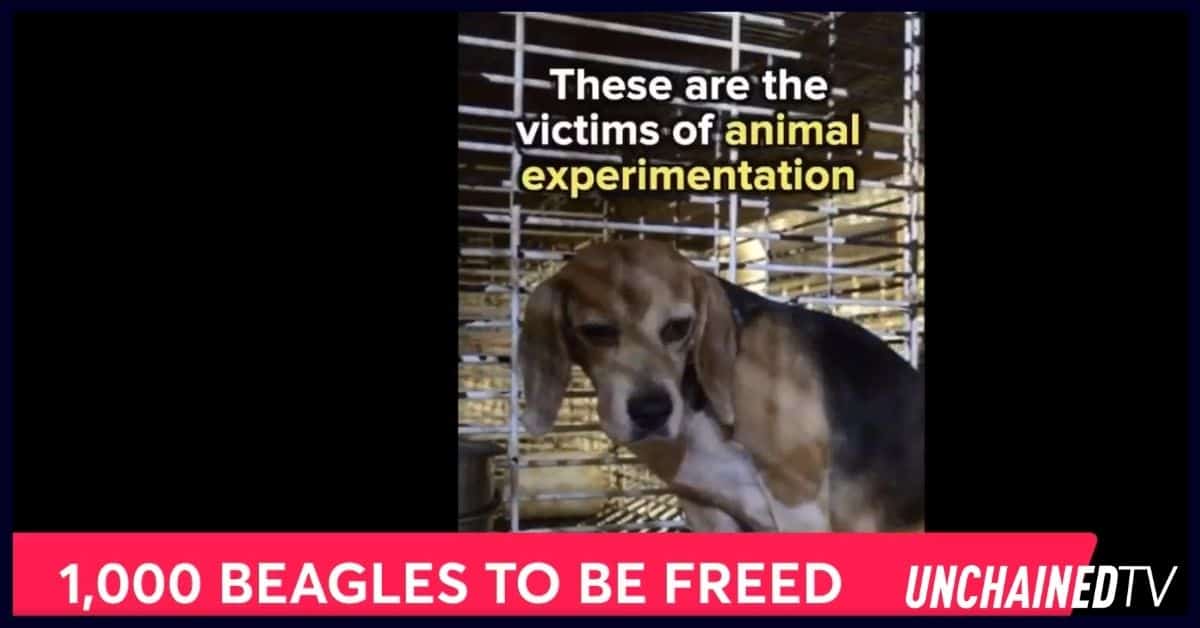
In a dramatic news conference, the Center for a Humane Economy announced a deal to remove 1,500 beagles from a troubled breeding facility that has been the site of epic conflicts between law enforcement and activists.
Madison, Wisconsin – April 30, 2026 – In what many are calling a landmark victory for animal rights, today a packed news conference was held to announce that a deal has been reach to remove 1,500 beagles from Ridglan Farms, a Wisconsin beagle breeding facility that has drawn national scrutiny from animal advocates and regulators. The deal, which involved an undisclosed payment for the 1,500 beagles, was negotiated by the Center for a Humane Economy and Big Dog Ranch Rescue.
Ridglan Farms has housed an estimated 2,000 dogs, leaving the fate of an additional 500 beagles still to be determined, although Wayne Pacelle, of the Center for a Humane Economy, told reporters that the talks regarding those 500 beagles are still continuing. Pacelle expressed optimism saying, “We are very excited to continue our discussions with Ridglan and to find an exit ramp for the remaining dogs.”
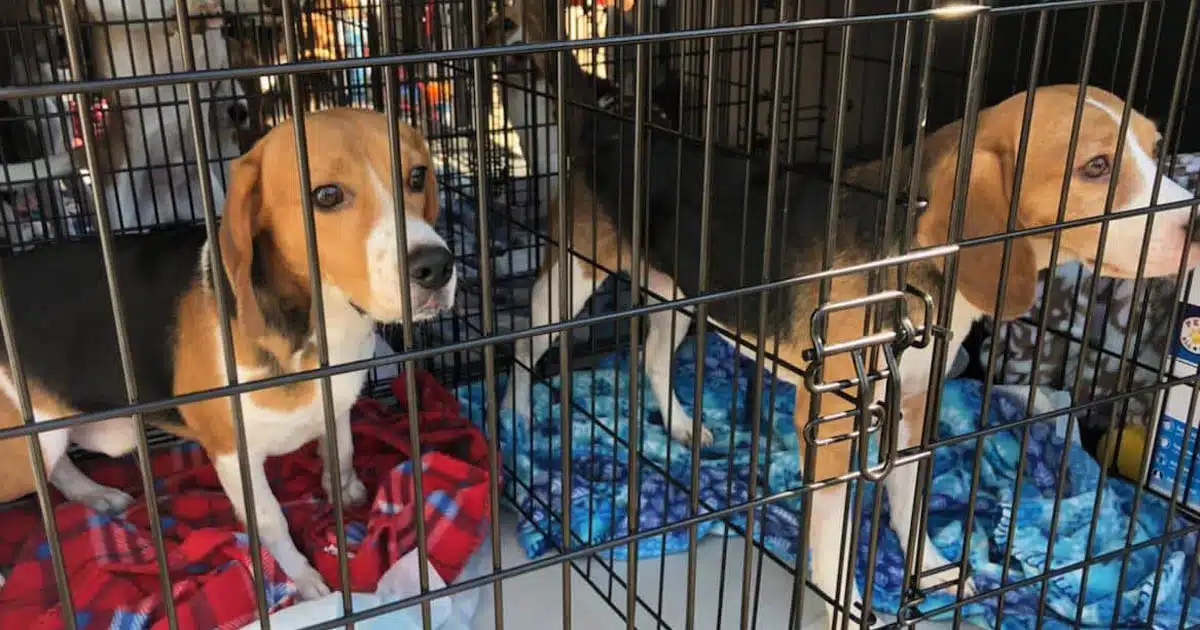
Lauree Simmons, Big Dog Ranch Rescue President, told reporters the 1,500 dogs will be transferred to “reputable, fully vetted rescue organizations.” They will receive veterinary care, including spaying and neutering. Beagle Freedom Project, one of America’s leading dog rescue organizations, told UnchainedTV that they will be taking 500 of the beagles. Pacelle indicated that there is so much demand from citizens to adopt these now famous beagles, that there won’t be enough beagles to meet the requests. Those interested can contact Big Dog Ranch Rescue or Beagle Freedom Project.
Rescue Deal Signals Breakthrough After Weeks of Escalation
Earlier this month, Ridglan Farms was the site of a horrific encounter between law enforcement and animal activists. On April 18th, about 1,000 would-be animal rescuers attempted to enter the facility to rescue beagles and were hit with tear gas fired at them by law enforcement. Numerous activists were also shot with rubber bullets, leaving many knocked to the ground and injured. The melee garnered global news coverage, including reports in the New York Times and CNN. Today, less than two weeks later, a deal emerged, although Pacelle indicated the negotiations to buy the dogs began long before April 18th.
The agreement announced by the Center for a Humane Economy and Big Dog Ranch Rescue marks a turning point in the beagle rescue campaign following years of escalating activism, legal developments, and widespread media coverage.
Advocates say the transfer could become one of the largest beagle rescue operations involving research dogs in the United States in recent years. The animals are set to be transported to reputable rescue organizations across the country, where they will receive veterinary care, rehabilitation, and eventual placement into adoptive homes. All told, about 50 organizations, described as partners, are said to be involved.
Many of the dogs have spent their entire lives in breeding or laboratory conditions and may require time to adjust to basic experiences such as outdoor environments, human interaction, and socialization.
Court Case Puts Activism Strategy in the Spotlight
At the same time, the legal battle surrounding the beagle rescue effort is intensifying.
Wayne Hsiung, a prominent figure in the “open rescue” movement, appeared in court in Madison on April 29th in connection with his alleged role in efforts to remove dogs from the facility.
He faces a felony burglary charge as a party to a crime, which carries potential prison sentence of up to 12 years and significant financial penalties. Supporters argue the actions were necessary to expose conditions inside the facility. The case is drawing national attention, with observers viewing it as a potential test of how far direct action can go under current law.
Open Rescue Actions Spark National Attention
The courtroom developments follow a series of high-profile actions that helped propel the beagle rescue campaign from a largely local issue into a nationally watched controversy.
On March 15, activists entered the Ridglan Farms facility and removed more than 30 beagles in what organizers described as an “open rescue”—a form of direct action intended to both save animals and document conditions inside industrial breeding and research operations. While 8 of the dogs were later recovered by authorities, others were transported to homes and sanctuaries across the United States.
The second, larger mobilization on April 18th drew approximately 1,000 protesters to the site, significantly escalating tensions. Multiple arrests were made as officers worked to prevent entry using tear gas, pepper spray and rubber bullets.In the aftermath, a class action complaint was filed alleging excessive force by police during the response, adding another legal dimension to the unfolding situation.
Activists involved in the campaign have also pointed to whistleblower testimony alleging that dogs at the facility were subjected to painful procedures, reportedly without anesthesia or veterinary oversight. Ridglan Farms has denied allegations of cruelty.
Together, the direct actions, public demonstrations, and competing legal claims have transformed the Ridglan Farms case into a flashpoint—raising broader questions about transparency, enforcement, and the role of civil disobedience in modern animal advocacy movements.
Personal Stories Highlight Emotional Stakes
The movement has also been fueled by personal accounts from those involved in the beagle rescue effort.
Alexandra Paul, the former Baywatch actress who participated in the March 15th rescue action, shared that her arrest for removing beagles from the facility was among the most meaningful experiences of her life, describing it as part of a broader effort to bring animals to safety. Stories like hers, widely shared on social media, have helped amplify public awareness, drawing attention to the conditions inside breeding facilities and the individuals working to remove animals from them.
What Happens Next for the Beagle Rescue Efforts
With a large-scale beagle rescue transfer reportedly underway, attention is now turning to what comes next for the remaining dogs—and for the broader system that allows breeding facilities like Ridglan Farms to operate.
This is no longer just a protest story—it is a moment where sustained activism, legal pressure, and public attention appear to be producing measurable results. At the same time, the legal case against activists raises broader questions about the boundaries between civil disobedience and criminal liability in movements seeking systemic change.
As the situation continues to develop, the Wisconsin beagle rescue effort is quickly becoming a defining moment in the national conversation around animal testing, activism, and accountability.
Share This
About the Author: Brandy Walt-Rose

Latest News



Stay Tuned In
Be the first to know when new shows drop! Plus, get the hottest headlines, inspiring stories, and behind-the-scenes extras. Sign up and keep streaming!
you might also like

The provocative animal rights documentary Viral for the Animals is reaching viewers worldwide on UNCHAINEDTV with new subtitles, helping its message travel even further. Hollywood, Ca. - October 13th, 2026 - It’s called Viral for [...]

A federal strategy would gun down 450,000 barred owls. As shooting begins in Oregon, animal and environmental advocates are expressing outrage and charging the real reason is to help the timber industry. Los Angeles, CA [...]

PCRM celebrates $88 million in NIH grants for human-based research as FDA and EPA policy shifts mark a turning point against animal testing in 2026.