[Speaker 1]
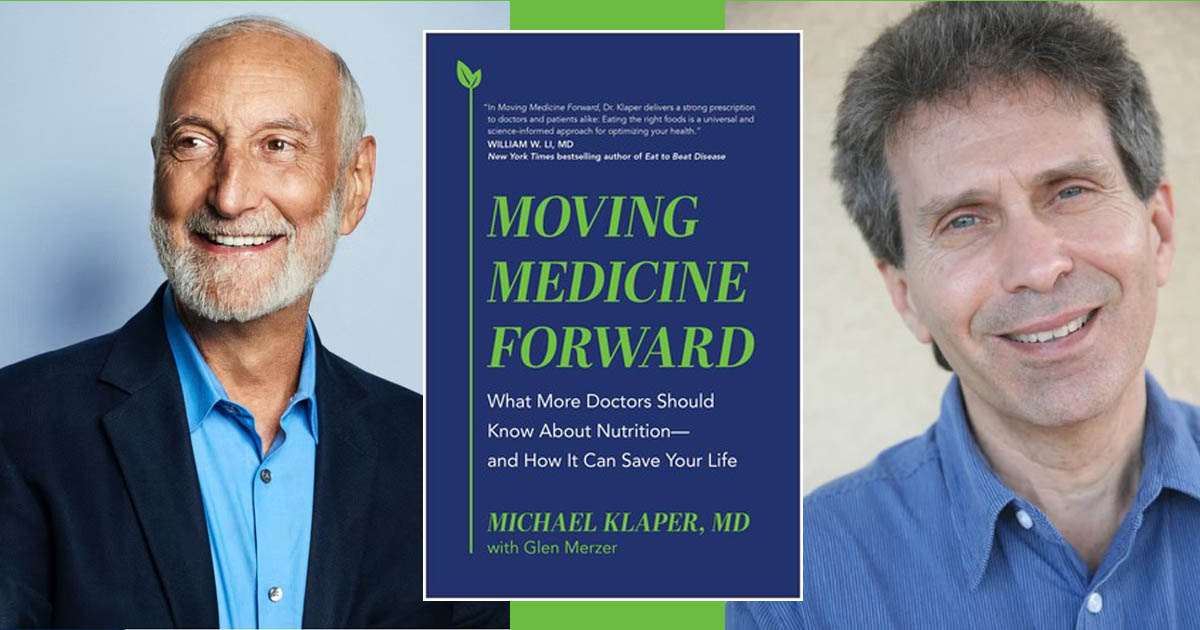
Famed Dr. Michael Clapper has a shocking new book out, Moving Medicine Forward, What Doctors Should Know About Nutrition and How It Can Save Your Life. It’s so dismal to have patients come in with these reversible diseases and just tell the patient, Oh, well, I just have to increase your statin doses and come back in a month. At that point, you’re an enabler.
It makes me want to apologize to patients everywhere for the practitioners of my profession, who I have to be charitable with here. But we’re not taught anything about nutrition. Most doctors don’t respect nutrition, even though we’re seeing these diseases all day in their clinic.
And they’re eating the same foods themselves. They’re eating the burgers and the pizzas and the lobsters and the steaks. They’re not going to tell their patients don’t eat it.
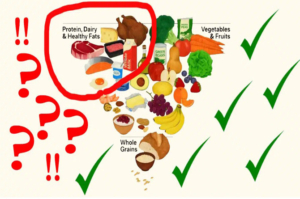
And to wit, we have the new Upside Down Food Pyramid to add insult to injury that is putting meat and cheese and milk, cow’s milk, at the top of the pyramid. We’re talking about this with my hero, Dr. Michael Clapper and his amazing co-author, Glenn Mercer. Here is the book.
I’ve been devouring it. Don’t worry, it’s plant-based. But it’s getting rave reviews because it is possibly the most important thing that we can talk about right now.
Two-thirds of Americans are overweight or obese. Early-onset dementia is going up. Colorectal cancer is going up.
They’re spending billions of dollars experimenting on animals. And it’s the 21st century. We don’t need to do that.
While simultaneously ignoring the solution that is right there on the plate three times a day. So without further ado, let me bring in Dr. Michael Clapper, the famous doctor who really tells it like it is. Dr. Clapper, for people watching who have doctors and who wonder, well, wait a second, what’s going on here?
What would you say to them and their doctors? Well, to be hopeful that a new age is finally dawning in the medical profession, which is sorely needed. We’ve been in the dark so long about something so obvious as the effect of a patient’s daily diet on their body.
And as we face this steady stream of patients with these common characteristics, most are overweight, their arteries are clogged up, their insulin receptors are all choked up with fat, so they’re insulin resistant, and they have a host of inflammatory diseases. And the doctors think that they’re so complex, etiology unknown, we don’t know the cause of these. Humbly, I suggest, doctor, please ask your patient what they ate yesterday.
Have them take you through a typical eating day and ask yourself and the patient, could your food have something to do with these medical issues? And of course, the answer is going to be yes. And then both of you can learn ways to get their diet healthy and both the doctor and the patient will benefit.
But it’s time to throw the shades up and let the sunshine in when it comes to the effect of our patient’s diet upon their daily health. Moving Medicine Forward is the book, and we will put up the QR code and the link to buy it, but it is in the description if you are watching this. How do we get this to every doctor in America and Canada and Europe for that matter?
How do we get this out there? Because honestly, I am really losing patience, doctor, with the just blindness. You know, there is an institutional bias against plant-based diets, and doctors are part of the general population, and you find that, I find, if I go into the doctor, you know, with a sprain, some of them try to connect it to the fact that I’m plant-based, and I want to say, what about all those people in the gurneys who are lining the hospital floors and they’re all sick and they’re not vegan?
It’s just, to me, the institutional bias. How do we end it, Glenn Mercer?
[Speaker 2]
Well, you asked how do we get this book to doctors. I would suggest to folks out there, after you read the book, please give it to your doctor, or even better, buy two copies and give one to your doctor. But there is a bias, and the bias is caused by the culture.
The ideas that Dr. Clapper and I put forward in this book are ideas that are not taught in medical school, and the culture promotes eating animal foods. And, you know, so what we’re up against is not science because all the science is on our side. It’s a struggle between science and culture.
And the other side that promotes eating meat is basically just saying, leave the culture alone. We’re not going to change. And so we’re just going to have to fix humans with medications since they’re not eating the way we were designed to eat.
[Speaker 1]
We seem to be going backwards to a certain degree. Now, what I say is nothing ever goes straight up. The plant-based movement is exploding.
It is growing. No matter what you read in your local paper, because the local media and the national media has been completely co-opted by the meat industry, just like our government has been completely co-opted by the meat industry. The USDA has an inherent conflict of interest.
Part of their mandate is to promote meat and dairy. So, you know, we have to think for ourselves, but I will say a lot of people are thinking for themselves. I was just at Natural Products Expo West, and the number of vegan products exploding.
Exploding. So that was very heartening. But then on the other side, as we showed you at the start, this upside-down pyramid, Dr. Clapper. First of all, Americans already consume more meat than almost any other country per capita. It’s pretty horrifying. I mean, the average American eats more than 66 pounds of pork per year.
We’ve got a serious problem with the results of that, the high cholesterol, the heart disease. I could go on and on. You’re the doctor, though.
What do you make of this new food pyramid? Oh, my. There’s so much in this commentary about where we are in a society and our culture, as Glenn so wisely pointed out.
I can imagine over the past years, as the plant-based diet has shown itself to be such a powerful tool for reversing disease, and more and more authorities came out endorsing it, the folks in the meat industry and the dairy industries are grumbling about their profits, and counting the days until they get in the control house and start pulling the levers, and that’s what happened with the last election. Now we see the effect of industry and agribusiness and the politicians that they influence finally asserting whether or not it’s true, asserting what they believe, that Americans should be eating more of the same, of course.
And this food pyramid is the tacit message. Bacon is good for you. You can eat all the steak you want.
You can eat all the cheese you want. Saturated fat is back, and that’s what we’re witnessing, this pendulum, along with the carnivore promoters and the paleo and the keto promoters. The pendulum is swinging to the animal side right now.
But, one, it’s out of truth. Mother nature doesn’t care about culture. Your arteries don’t care.
Your digestive system doesn’t care. Your microbiome doesn’t care. Packing the human intestine full of animal flesh two, three times a day, and diuretics and oils and treats, et cetera, is a recipe in my book for an epidemic of colon cancer because no one eats raw meat.
The very act of grilling the burger and frying the chicken and broiling the steak creates carcinogenic cancer-causing chemicals. They rub on the stomach wall, rub on the colon wall. And as you pointed out earlier, the colon cancer rates are going to be going up.
Well, watch what happens as people eat even more meat. There’s going to be an epidemic of heart attacks and strokes from this trimethylamine oxide that gets generated from the bacteria summoned up by a meat-based diet. The TMAO drives cholesterol to the artery walls.
There’s a stuff in meat called endotoxin. It’s the breakdown product of the bacteria on the meat. Well, this stuff makes the gut leaky, and meat proteins leak into the bloodstream, opening the door to autoimmune diseases and lupus.
We’re going to see a wave of that. The advanced glycation end products that come with cooking meat damage the arteries in the brain. We’re going to see vascular dementia.
The microbes that get spawned in the intestinal tract from a meat-based food stream summon up microbes that put out acidic byproducts that injure the gut wall and cause increases in using colitis and increasing risk of colon cancer. This is opening the door to this dreadful Pandora’s box of medical conditions. But, ooh, that steak in the mouth tastes good.
Ooh, you can eat all that you want is the message here. But, again, Mother Nature is not impressed by that. And I predict within 36, 48 months, the medical journals are going to be erupting with reports.
Carnivore diet increases increased risk of colon cancer. Paleo diet has increased risk of vascular dementia. And it’s going to hit the 6 o’clock news, and those veggie burgers are going to start looking much better.
And that pendulum will swing back. People don’t want these dreadful diseases. And this politically and economically motivated food pyramid is going to lead us there.
And we may have to learn these lessons the hard way. But the purpose of our book is to prevent this from having to play out so fully. If the doctors start realizing sooner than later, they won’t have to have these patients with the strokes and the cancers if they can help them get on a more plant-based food stream.
And that’s what the book is offering. So, you were part of this incredible film that is streaming on Unchained TV called How Not to Die. And one of the things that I got out of it, which you also address in your book here, is the risk of Alzheimer’s.
So, I want to play a little clip. This happens to be your friend, Dr. Greger, talking about Alzheimer’s. But what I really love about it is it’s showing the actual arteries in the brain and how they get clogged up with cholesterol.
And mind you, cholesterol only exists in animal products. Plants do not produce cholesterol. Correct me if I’m wrong, right?
No, you’re correct. And talk on the other side because people are terrified of Alzheimer’s. And they’re terrified of not just getting it themselves, but their parents are getting it.
Lives are being ruined. This is what our cerebral arteries should look like. Open.
Clean. Allowing blood to flow throughout our brain.
[Speaker 2]
This is what atherosclerosis in our head looks like. Clogged with cholesterol, closing off arteries, clamping down on blood flow. So, what kind of brain arteries do you want in your head?
[Speaker 1]
So, how do we make the connection, doctor, between eating animal products with the cholesterol that’s in them and what you just saw there, which is the vessels in the brain getting clogged? So, obviously, that’s going to hurt the thinking process. Oh, it most certainly will.
Alzheimer’s disease is a particular type of the vast problem that we’re concerned with called dementia. And Alzheimer’s has a protein component we can talk about, but all of them. And most of the dementias are vascular dementias, as Dr. Greger was pointing out. It’s really coming from the blood vessels choking down blood flow in the brain and the brain cells die from lack of blood flow. That’s a vascular dementia. And that’s the most folks sitting in the memory care places with the various types of dementia.
They either have a pure vascular dementia, but even the Alzheimer’s folks, their arteries look similar as well. There’s a large vascular component to Alzheimer’s dementia as well. The wise physician once says, you’re as old as your arteries.
You’re as old as your arteries. And these folks obviously have very old, old arteries functioning, no matter what their ages are. So blood flow is life.
And you want to keep those arteries as wide open as possible. And as we’ve seen, a whole food diet, a whole food plant-based diet is naturally low in fat. And actually, I can help reduce the atherosclerotic plaques that are accumulating in the arteries, at least certainly have a better chance of preventing them.
Let me go in and show some video of leafy greens, because in your book, Moving Medicine Forward, you talk about how leafy greens can undo certain damage. Can you explain that in people terms? Yes.
There’s so many good things in dark leafy green vegetables. And it has anti-inflammatory properties. That comes in handy because there’s definitely an element of inflammation going on in the atherosclerotic process.
But also there are phytonutrients that work on the chromosomes, the genes that turn on genes that promote tissue repair, that repairs the cellular mechanisms, repairs the cell membranes, the enzymes and organelles inside the cells, the cells have instructions on how to fix themselves. And the nutrients in the green vegetables turn on the genes that allow these repair processes to progress and help undo some of the damage that the classic diet with all the sugars and meats and oils and free radicals and processed foods can cause in our brain cells. Now I want to show something from your book.
I don’t even know how to pronounce this. Yes. Brazil.
In people terms. I found this fascinating, but a lot of the terminology kind of stops me in my tracks, like that mathematical equation up there. What are we saying here?
Right. What we’re saying is that a diet high in animal products leads to arteries that are clamped down their muscles. So most of the walls are a bit of spasm from all the salt and the free radical damage.
And this atherosclerotic plaque material is built up on the inside. That’s from the standard American diet based on meats and dairy and oils and sugars, et cetera. When you switch to a whole food plant-based diet and hour after hour, blood without these damaging molecules, but do have these molecules that can turn on repair processes, poor to the arteries.
The artery walls start to heal. They start to dilate a little bit and the artery walls will relax. And that opens up the channel a bit.
The atherosclerotic plaques can start reducing and that opens up the channel a little bit. And what that means is that this very slight increase in the diameter of the arteries as they die, as they relax and dilate, and the plaques will increase the flow of blood through the artery. And if we go back to that picture, the key number is up here in that equation is that number four here.
And what it’s saying is that as the artery expands, the flow of blood through that artery will increase, not directly. If the artery expands, if the radius goes up by a factor of two, the blood flowing through it does not go up by a factor of two. It goes back and goes up by a factor of two times, two times, two times two by a factor of 16.
And we know from real life, when you’re trying to suck a liquid up through a skinny straw, a straw twice as wide gives you a whole much more liquid or a lot less suction. That’s Purcell’s law. Well, this is what happens in arteries throughout the body.
As the arteries begin to heal and relax and dilate, there’s a surge of oxygenated blood and nutrient carrying blood through the, through the capillary beds and the brain and the heart and the kidneys and the muscles. It’s, it really brings a new flow of vitality through all the tissues. And so even little bits of improvements, especially in your arteries can have big results and big positive changes for your, for your whole health.
So we’re getting comments. Somebody, you probably know a wonderful activist in Sacramento area. My doctor, Linda says, Linda Middlesworth.
My doctor is vegan, but still prescribes all the statins and BP meds and never tells his patients what he knows about a healthy plant-based diet. I think he is required to advise the standard medication. So Glenn, let me ask you about the politics of all this.
It seems that you’d sort of have to be living under a rock at this point with the China study, with what the health, with the blue zone diet with all of these books. And now this incredible book, which I’m again, I have, I’m getting through it and learning so much. And it’s gotten rave reviews and you should order it, order it.
And like Linda said, give it to your doctor. But the point is that, is this a case of willful denial?
[Speaker 2]
I think so. I mean, I think that if, if doctors and medical schools wanted to face the science, they would face the science and they might want to use moving medicine forward as a textbook. But I don’t think they want to face the science.
I think that there’s a system set up in which they follow the, the path that they’ve been on, in which they teach certain subjects in medical school. And I’m sure they teach them well. They teach anatomy and they teach disease.
They teach about medications for disease. Dr. Clapper can speak to this more than I can, but they don’t particularly teach nutrition and you know, some medical schools barely touch the subject at all. I think the average medical school has about four hours of nutrition across a year or a full medical education.
And, and then there’s the question of, well, when they do teach nutrition, what nutrition do they teach? And if they, you know, there are certain certain factors in nutrition that everybody agrees upon like, you know, what, what vitamin you need to avoid scurvy and so forth. So they teach that, but they don’t dare go into the waters that are dangerous, which is whether or not you should eat animal foods.
And after all we have to admit, and we discussed this in the book, there are different ideas about nutrition. You know, Dr. Clapper and I think that all the science is on the side that we, that we’re on, which is that humans are herbivores and we shouldn’t be eating animal foods. But of course there are scientists and authors who make the opposite case who say that we should be eating meat.
And so the, the, the charge question for medical schools is that whose ideas do you teach? If you’re going to teach nutrition, do you choose a side? And we make a proposal in the book for how they should address that problem.
[Speaker 1]
How should they?
[Speaker 2]
Well, we think they should address that problem openly by saying, let’s have a debate. Let’s let both sides make their case. Like you would in a, in a courtroom, let both sides make their case, present the case for the diet that Dr. Clapper recommends. And so many plant-based leaders recommend and let the other side make their case. And then importantly, let us challenge each other as you would in a courtroom. So for example, I would love to hear the other side answer the arguments that have been made.
For example, in videos by Dr. Milton Mills about how all the physical characteristics of human beings, if you compare mammalian herbivores to mammalian omnivores to mammalian carnivores, we line up with the herbivores in every characteristic, you know, from the shape of our jaw to the saliva in our mouth, the enzymes in the saliva to the gape of our mouth, our dentition, the length of our intestines, the degree of acidity in our stomach, we line up with the herbivores. So I would just love to hear for once the other side, explain how come where does it seem to be designed to be herbivores?
And we align with the herbivores with all these characteristics, and yet they think we should eat meat. I’ve never heard any of them address that.
[Speaker 1]
Well, part of the problem with that is if you have a very charismatic person on the other side, it’s not just about the information, it’s about the delivery. So you’re really rolling the dice. I mean, I feel the facts are overwhelming and what we need to do, I think is teach plant-based nutrition in medical schools.
You have Physicians Committee for Responsible Medicine, which I’m very a huge fan of and involved in, and they have hundreds of doctors. And I think we got to get more of these plant-based doctors out there and teach a curriculum that doctors can take so that they can get educated because the information is there. But I like the debate is interesting, but I think it’s a little dicey.
Dr. Lepper? Right. And that’s a very important point.
You’re right. This should be taught in medical school. I shouldn’t have to be doing this.
None of us should be. This would be absolutely part of all medical education. But you’re right.
The doctors need a curriculum and our nonprofit organization, Moving Medicine Forward, is working on that curriculum to see the 53 medical schools that Mr. Kennedy got to agree to teach 40 hours of nutrition during four years. We’re going to be looking over their shoulder and see what they are going to be proposing gets taught in those schools. And we will be right there with our plant-strong curriculum to help them at least make sure that the plant-strong argument is fairly represented in their teachings.
Maybe your first lecture should be to RFK Jr. I mean, it’s such an anecdotal thing. It reminds me of the grandma who said, well, I smoked all my life and I lived through 100. Okay, that’s one anecdote, but we know that cancer kills.
And because he’s going to the gym every day and working out and has muscles and happens to eat animals, doesn’t equate that everybody’s going to be in great physical condition if they eat more animals. Americans, as I said, are eating more animals than almost any other country in the world. And two-thirds of us are overweight or obese.
We have terrible stats when it comes to heart disease, the leading killer. Now, colorectal cancer, early onset, right? Correct me if I’m wrong.
It’s going up. We’ve got dementia going up. And what I hear every week, a friend of mine is dealing with a parent who has dementia and it seems like they’re getting younger and younger.
And there is this whole way of looking at it that there’s a very good, let me ask you this. If somebody has the kind of dementia that’s caused by diet with the cholesterol clogging the arteries in the brain, if they switch to a whole food plant-based diet, is there a possibility of reversing Alzheimer’s? Well, when you say reversing Alzheimer’s, you know, once the tau protein, et cetera, gets laid down in the brain, I don’t know of any specific therapy that’s going to reverse it.
They’re certainly working on that. As far as the vascular component, the blood vessel component, any increase in blood flow is going to be beneficial. It’s a hard thing to measure.
And my friends, Dr. Dean and Aisha Sherzai say Alzheimer’s cannot be reversed. But they too would agree that more blood flow to the brain will help whatever surviving nerve cells are there. As my Swedish grandmother would have said, it couldn’t wait, you know, to go on a plant-based diet.
Any increase in blood flow has got to help and may well be able to reverse some of the vascular components. The book is Moving Medicine Forward. What more doctors should know about nutrition and how it can save your life.
I would have called it What Doctors Don’t Know Can Kill You. But I like this title. It’s a little more polite.
And we have Dr. Michael Klapper, lead author and co-author, Glenn Merzer here with us. I literally have the copy of the book. I’m going through it and learning so much and rave reviews.
So let’s hit some of the more, I would say, advanced notions in your book. All right. So toxic red tide.
What does this mean in people terms? You know, whatever meager training doctors get in nutrition during their education years, it’s mainly in terms of number. You need so many grams of protein, so much percentage of fat, so many calories and carbohydrates.
So it’s a numbers game. But no one really gives a visual image about what really flows through your intestinal tract, which then flows through every tissue, every cell in your body after you eat a cheeseburger or a piece of salmon or a helping of steamed kale. Very different effects in the bloodstream.
And so because as you said, we’re in the middle of this epidemic of heart type strokes, Alzheimer’s, et cetera, and most Americans are eating all that and animal products, the fast foods, et cetera. I said, what is, let’s take a look. What really does flow through your tissues after you, after you eat a fast food meal and what flows through is a, a battalion of molecules that cause molecular chaos on most every organ system in the body.
Saturated fat is pro-inflammatory though. Cooking the meat produces these advanced glycogen products that are teeming with free radicals that age your tissues. The endotoxin in the meat, as I mentioned, makes your gut leaky.
There’s this sialic acid in meat called new five GC that sets off inflammation throughout the body. And understanding now the role that inflammation plays in every disease from arthritis to depression. You don’t want to be eating food three times a day that, that stokes inflammation, but that’s what the meat eaters do with the new five GC cooking the meat, grilling the burger oxidizes the cholesterol in the animal’s muscle and the oxidized cholesterol molecules penetrate into the walls of the arteries more readily leading to the plaque formation.
When the, when all the meat protein and the amino acids flow up into the liver, the liver responds with the surge of insulin like growth factor one, one of the most powerful growth promoting hormones in the body. And if you’re a woman with an early breast cancer or a guy with a early prostate cancer, the last thing you want is your diet making you walk around with high IGF on levels of like throwing gasoline on a fire. I could go on.
There’s a, I’ve got a chart of 16 of these molecules that, that flow through our tissues after every fast food meal. And I call the collected, they’re the red tide that causes a cellular damage on every level. When one decides I’m done eating animals after hearing our program or whatever, they jump on the plant-based train.
The red tide stops. The tissues can now start repairing themselves. And now every meal, every salad, every soup, every plate of steamed greens, every vegetable curry.
And that sends through the bloodstream and through the tissues and entirely different set of molecules that promote tissue healing, that quench free radicals that promote cellular repair. Everything benefits. You know, if someone asked me what changes in the body, when one goes from an animal-based food stream to a plant-based food stream, the answer is everything changes.
It’s a different physiology. The micro bio changes, the microbes in your gut, your hormone levels change, the blood viscosity, blood’s more free flowing on every level. It changes the physiology in a beneficial way.
And that’s why we see all these remarkable reversals, whether the high blood pressure comes down and the joints stop hurting, and the diabetes goes away as the insulin receptors open up and they turn into normal, healthy people right before your eyes. It’s the most exciting form of medicine to practice. I’m the happiest doctor I know.
My patients get healthy. And we described it in the book. We’re talking about moving medicine forward, packed with life-saving information.
Order two copies, one for yourself and one for your doctor. Literally doctors, as we’re discussing, don’t get hardly any training in nutrition. And so they’re basically trained when you get sick, they’re going to medicate you or operate on you.
As opposed to let’s prevent you from getting sick in the first place. I have a couple of questions. My own ignorance, people have explained this to me a couple of times, but I really don’t understand it.
Tell me if you can explain in people terms, what inflammation actually is. Inflammation is the first stage of healing. It’s a very wonderful process.
Thank heavens for inflammation. If you cut yourself or you spill some bleach on your hand or otherwise, or get a little infection. The body marshals its forces to repair the cut, the laceration or the burn.
And it does so in a number of steps. As the tissues are injured, they release molecules into the surrounding tissues that dilate the blood vessels to increase blood flow, bringing the white blood cells to eat up germs. And the area gets red, a little tender.
But in the early stages, that’s good. That’s the early stages of tissue repair. And the inflammatory phase is an essential first stage of that process.
However, after 48 hours, a few days, depending on how long it takes the wound to seal up, the inflammatory process has done its job and the body disperses it. And the swelling goes down and the redness goes away and the tenderness goes away because the cellular repair mechanisms don’t need inflammation anymore. The blood vessels have been repaired.
The collagen has been spun across the wound, et cetera. So yay, let’s hear for inflammation. But that’s why when you got a sliver there, it’s a good thing.
It calls your attention, tender, pull the sliver out. The inflammation goes away. That’s the way it’s supposed to work.
The problem, however, is when the inflammatory process is an expensive repair process. The tissues around have to deal with all these chemicals that are being released by the white blood cells, et cetera. And it’s a molecular stress, if you will, to the tissues.
Yeah, the body can handle it for a few days, a week. But if that inflammation state is held week after week after week, if you keep injuring the tissues, if you keep injuring the blood vessels by consuming sugars and fried foods, et cetera, if you keep injuring the gut wall by dousing it with alcohol and sugars and chemicals and spawn microbes that put out acidic byproducts, if you keep that inflammation going, then disease processes start happening. Then the intestine gets leakier and proteins start leaking in the bloodstream, setting off immune reactions. The arteries start building a plaque and they start thickening.
The lining of the joints, if they keep getting inflamed from reactions to the protein that’s now leaking in the bloodstream, you wind up in inflammatory arthritis. So it’s only when inflammation is not allowed to run its natural course, when what we’re doing keeps that inflammatory fire burning in your tissues week after week, then damage is done. And it’s usually from what we’re eating and how we’re living our lives.
So it’s not a bad thing, but let it subside by healthy living. Well, you mentioned sugar, but what about meat and dairy? How does that interact with sugar?
Absolutely. As I mentioned earlier on, saturated fats, they are pro-inflammatory. They feed the inflammatory process.
And there are substances in meat. Arachidonic acid turns into a prostate gland, too. It’s a main driver of inflammation.
So meat is a pro-inflammatory substance. All meat, chicken flesh, cow flesh, fish flesh, especially when you cook them and the fats oxidize, they become even more pro-inflammatory from the free radicals that they produce. So absolutely, an animal-based diet is going to be more acidic and more pro-inflammatory as opposed to the fats and the prostate glands, etc.
What about dairy? Dairy has its own problems with it, of course. It, too, is high in saturated fat as it comes out of the cow.
And Mr. Kennedy’s for full-fat dairy products. And that’s going to be pro-inflammatory. But many of the proteins in cow’s milk certainly sets off immune reactions, the casein, the lactalbumin.
And that’s going to be the first step in inflammation. And the milk itself has bacteria in it that are killed. And their cell walls break apart.
That can set off inflammation in tissues. It’s a pro-inflammatory substance. All the animal products are.
But meat and dairy certainly have their own ways of keeping those inflammatory fires burning. I’m so excited that I get to question Dr. Michael Clapper, the author of this extraordinary new book with Glenn Mercer, Moving Medicine Forward. Absolutely get it.
You can get it in hardcover. You can get it on Kindle. And I hope you’re going to do an audio book real soon.
[Speaker 2]
Yes, it’s done.
[Speaker 1]
Super important.
[Speaker 2]
Yes.
[Speaker 1]
So when we talk about some of the subjects in your book, you have some really great graphics. And I literally went through old school. Old school, I’m reading it, and I’m taking photos and putting them up.
[Speaker 2]
Good.
[Speaker 1]
This one is perhaps the most interesting, but the one I least understood. The daisy of death. Now, again, people terms, because when I hear things like interleukin-1, my brain starts frying or thromboxane.
But in people terms, what is going on here? Right. Thank you.
Well, and this gets down to a subject you know very well, about the truth of putting meat on the table. You raise these beautiful animals, and then you take them to the slaughterhouse, and you shoot them in the head and strip the flesh off their bones. And you must take the digestive guts out of the carcass.
And when that happens, when you eviscerate the carcass, inevitably you’re going to get spillage of the gut content from the cow’s intestine, the pig’s intestine, et cetera. And that gets on the meat, and it gets on the cutting surfaces in the meatpacking plant. You can walk through the meatpacking plant with a culture tube from the microbiology lab and swab any surface in the cutting, any cutting surface in the meatpacking plant.
You’ll get this luxurious growth of E. coli, salmonella, shigella, enterococcus, these nasty bacteria that coat every steak and chop and chicken breast leaving the meatpacking plant. There’s a coating of these live bacteria on the surface of the meat.
But in the meat case, in your supermarket, the ultraviolet light shines down and kills the bacteria. And as these bacteria from the cow’s intestine and pig’s intestine die, their cell walls break apart. And the fragments of these cell walls are a lipopolysaccharide called endotoxin.
This is nasty stuff, endotoxin. It’s in the center of the daisy of death. They’re small molecules, as I said, they’re the broken up cell walls of these bacteria, and they get into the bloodstream.
They start in the intestine when you eat the burger, which is going to be endotoxin. And it’s heat stable. Grilling the burger does not get rid of the endotoxin.
It goes down your intestine, makes the gut leaky. And so food proteins start leaking out into the bloodstream. But so do the endotoxin molecules.
And it turns out one thing that increases the movement of endotoxin from the gut where you ate it out into the bloodstream is saturated fat. It increases the amount of endotoxin that makes it into your bloodstream. Thank you, Mr. Kennedy, who stopped the war on saturated fats. We’re going to see more endotoxin leading into the bloodstream. And as these endotoxin molecules flow around, the pedals of the daisy are the effects of endotoxin. And the lower left hand corner activates your coagulation.
It more likely makes your blood clot. Bradykine slows your heart down. Beta endorphins, they may dull pains that you’re having that may or may not be a good thing.
It certainly promotes the formation of free radicals. These are atoms that are missing an electron, and will rip an electron off your DNA, off your cell membranes, your molecular terrace. Endotoxin spawns lots of those.
It releases histamine. As you go around that daisy of death, you see the truth of eating meat. All meat is going to have some endotoxin in it.
And again, you need that. General Custer needed more Indians and a little bighorn here. It’s a real 21st century hazard.
So if I had to sum that up, the poop and the gross stuff in animals ends up somehow inside your body. You don’t generate endotoxin from steaming broccoli. That’s correct.
Yeah, exactly. I want to thank both of you. This book is so incredible.
Every so often I run across a book that I say, everybody needs to read this. And this is one of these books. There’s so many people touting this, that, and the other.
Miracle Cures, every time you go on YouTube or Instagram. This is science produced by one of the top doctors in the nation, who is right here. And I think we can give it to our doctors without it being insulting.
Like you might be afraid to give it to your doctor saying, wow, maybe he or she, in my case, she is going to think that I’m being fresh. So my final question to you, maybe I’ll throw this to Glenn, how would you handle that so that it’s not taken like, hey, you ignorant bleep, read this.
[Speaker 2]
That’s a great question. I’m not sure I know the answer, but maybe just say, oh, you know, I read this wonderful book. Maybe you’d enjoy reading it too, something like that.
Without saying this book has a lot of information that you neglected to learn. I wouldn’t say that. So I think if you just word it in a positive way, you might get away with it.
[Speaker 1]
I think that’s absolutely brilliant. Because I was actually thinking while you were talking, how would I hand this to my doctor without her being a little offended? And especially with the subtitle, what more doctors should know about nutrition.
But I think you’re right. And also a holiday, right? I may not see you before the holidays.
There’s always a holiday coming up. I’d like you to have this wrapped up. It’s a gift for you.
You’ve done such a nice job for me. And I thought you might find it interesting because I thought it was fascinating. Leave it at that.
Well said. I love it. So everybody, you’re getting two books, one for yourself, one for your doctor.
Are you ready? I know we’ve got some posts here where people say they have ordered it. And Tiffany says, can’t wait to get the new book.
Books, Tiffany, books. I want to thank both of you. You guys are my heroes.
Amazing work. And you never stop, Dr. Clapper. I mean, you are living proof that a plant-based world is really what we should all be aiming for.
And so I want to thank you and just say, come back soon and tell us how it goes, especially when the movie is made.
[Speaker 2]
Thank you, Jane.
[Speaker 1]
Thank you. So it’s a vegan Netflix. Okay, that’s the craziest thing I’ve ever heard.
I love Unchained TV.
[Speaker 2]
Unchained, Unchained TV.
[Speaker 1]
Your life will change.
[Speaker 2]
It’s just that easy.
[Speaker 1]
Unchained TV has all sorts of content for everybody. Unchained TV changed my life. Unchained TV is crushing it.
I love Unchained TV. Unchained TV is my go-to. Unchained TV.
Who knew? Unchained, baby.